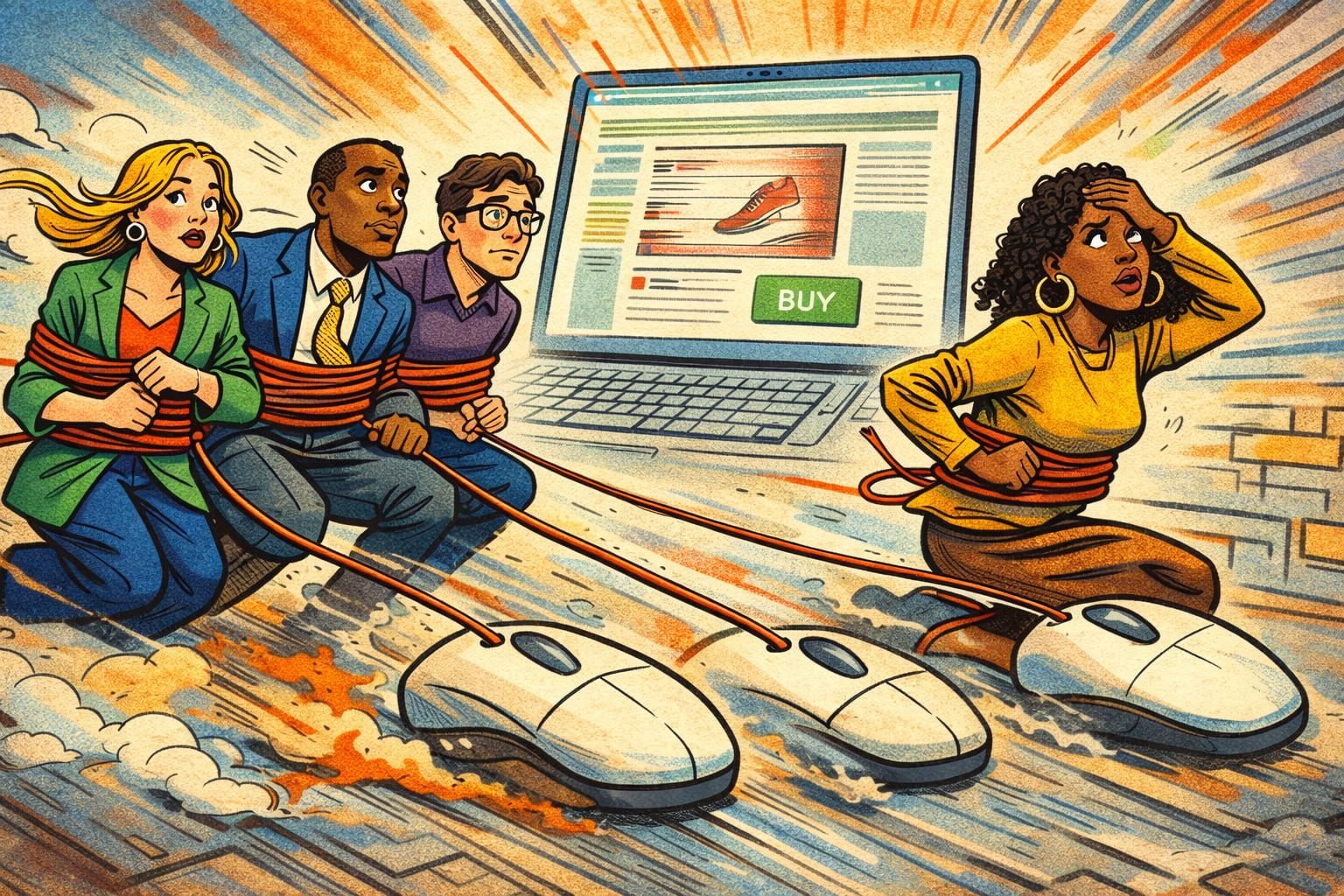
Rain hammered against café windows while a customer tapped impatient fingers beside a cooling cup of espresso. One spinning loading icon stretched a heartbeat into an eternity, and that tiny delay quietly ended a buying journey before it had truly begun. Nobody announced the decision. Nobody complained. Modern audiences simply leave when digital experiences interrupt momentum, proving that page speed has become less about technology and more about respecting human attention.
Many organizations still treat website performance as an engineering concern rather than a growth strategy. Yet every unnecessary animation, oversized image, or bloated script introduces doubt before trust has a chance to form. Amazon famously discovered that customer patience has measurable economic value, investing relentlessly in speed because convenience shapes purchasing behavior as much as pricing does. Sofia, who managed an online furniture boutique, watched abandoned carts decline after simplifying her website instead of redesigning its appearance. Faster experiences felt more confident, and customers responded without needing persuasion.
Attention behaves like water flowing downhill. It rarely fights resistance for long. Google has repeatedly emphasized page experience because search quality extends beyond relevant information into how effortlessly that information reaches people. Photographer Elias experienced an unexpected breakthrough after compressing his portfolio and removing decorative effects that slowed navigation. Prospective clients spent more time exploring projects because curiosity no longer collided with technical friction. Invisible improvements often create visible business outcomes.
A busy airport tells a surprisingly familiar story. Travelers forgive modest surroundings when signs are clear, queues move quickly, and every decision feels obvious. Confusion creates exhaustion long before inconvenience does. Digital products follow the same psychology. Apple succeeds not merely through elegant design but by reducing hesitation at almost every interaction. Visitors remember how smoothly an experience unfolded even when they cannot explain exactly why, making usability one of marketing’s quietest competitive advantages.
Teams frequently celebrate creative campaigns while overlooking operational excellence that protects every marketing investment. Booking.com continuously experiments with performance improvements because attracting visitors means little if sluggish pages waste expensive traffic. Startup founder Noor learned this lesson after discovering that mobile visitors abandoned product pages before images finished loading. Her developers trimmed unnecessary code instead of adding new promotional features. Revenue improved because removing obstacles often matters more than creating attractions.
Lanterns flickered along a narrow bridge where every steady step encouraged another until uncertainty disappeared into rhythm. Digital experiences work in much the same way. Every fraction of friction removed strengthens confidence, allowing attention to flow naturally toward action instead of escape. Fast pages do more than satisfy impatient users. They communicate competence before a single sentence is read, quietly assuring visitors that every next click will reward their trust. Build speed with intention, and attention will choose to stay.
