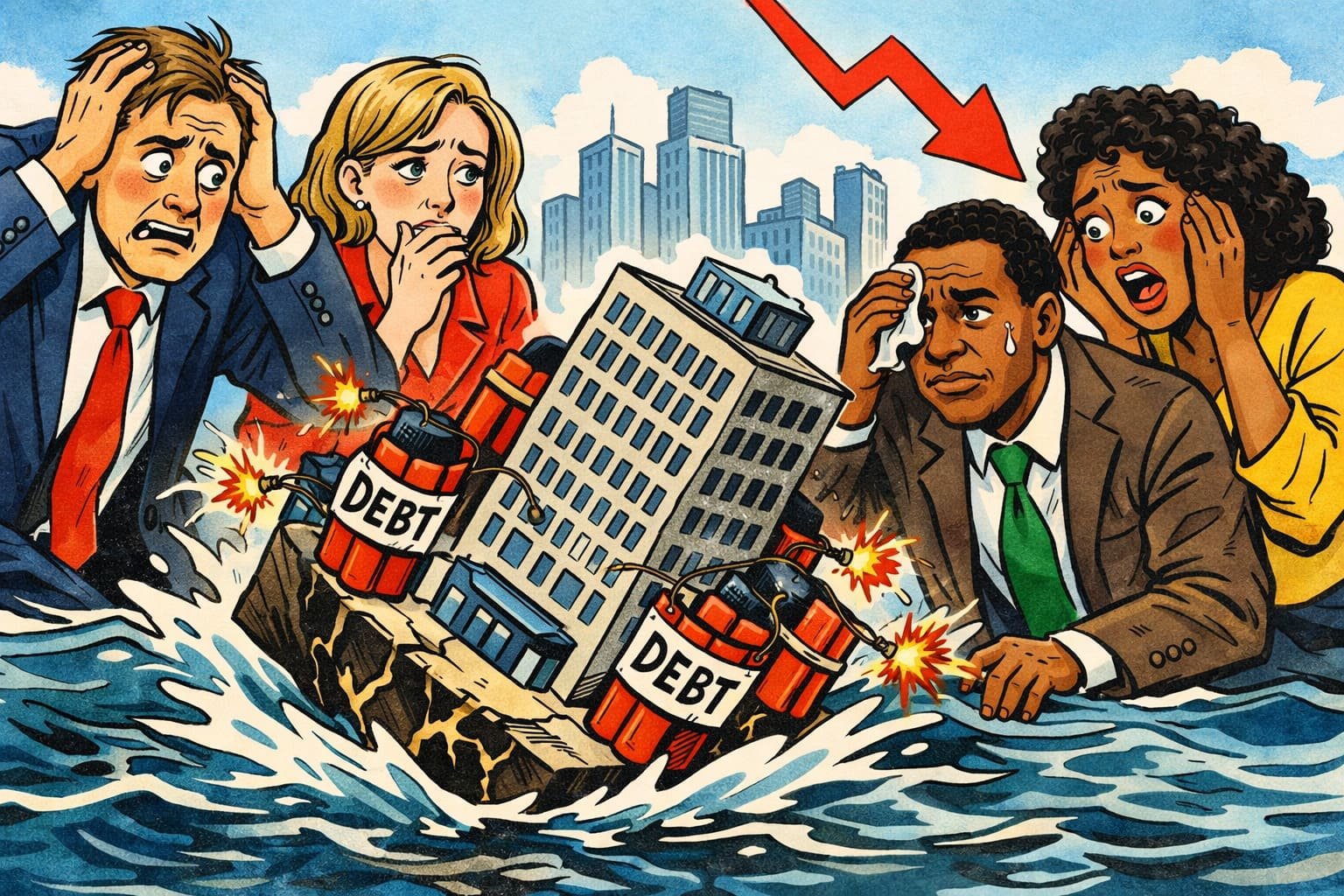
Steel elevators hummed through a prestigious office tower where polished marble still reflected tailored suits and confident footsteps. Reception desks remained immaculate, coffee machines hissed, and conference rooms buzzed with routine meetings. Nothing looked distressed. Yet inside lenders’ spreadsheets another story had already begun, because commercial real estate rarely unravels when buildings empty. Pressure usually starts when yesterday’s inexpensive loans mature and today’s financing refuses to resemble yesterday’s generous assumptions.
Commercial property depends upon a simple financial promise. Rental income must comfortably support operating expenses, debt repayments, and future investment. That promise weakens whenever refinancing costs climb while occupancy softens or property values decline. Suddenly, buildings that appeared profitable under lower interest rates struggle to satisfy stricter lending standards. Markets do not need abandoned skyscrapers to experience stress. They only need lenders who become less willing to extend credit under familiar terms.
Blackstone offered an instructive contrast by selectively selling assets, extending debt maturities, and preserving liquidity before refinancing pressure intensified across many property sectors. Meanwhile, numerous office landlords in major financial centers wrestled with shrinking valuations as hybrid work reshaped tenant demand. Shopping centers faced similar questions as consumer habits continued evolving. Different property categories encountered different challenges, yet every owner confronted the same reality. Cheap refinancing could no longer be taken for granted.
Darren inherited a modest portfolio of suburban office buildings that had generated dependable income for years. Lease renewals continued arriving, tenants remained satisfied, and maintenance costs stayed manageable. Confidence faded only when refinancing discussions began. His bank requested additional equity after reassessing property values, forcing difficult decisions despite healthy day-to-day operations. Economist Richard Thaler has often highlighted how expectations shape financial behavior, and commercial property repeatedly proves that expectations sometimes matter as much as physical assets.
Accounting quietly reveals where resilience ends and vulnerability begins. Debt service coverage ratios shrink as financing expenses consume larger portions of rental income. Loan-to-value calculations deteriorate when asset prices fall faster than outstanding balances. Impairment charges appear as owners acknowledge declining valuations, while lenders increase provisions against possible credit losses. None of these adjustments attract glamorous headlines. Collectively they determine whether refinancing becomes a manageable negotiation or an expensive struggle for survival.
Dust settles differently inside buildings waiting for their next tenant. Every empty floor whispers less about architecture than about capital patiently calculating its next move. Commercial property has endured recessions, demographic shifts, and changing workplace habits because valuable locations eventually find new economic purpose. Refinancing simply decides who survives long enough to witness that renewal. Before admiring another skyline, consider whether its strongest foundation rests beneath the concrete or inside the balance sheet.
