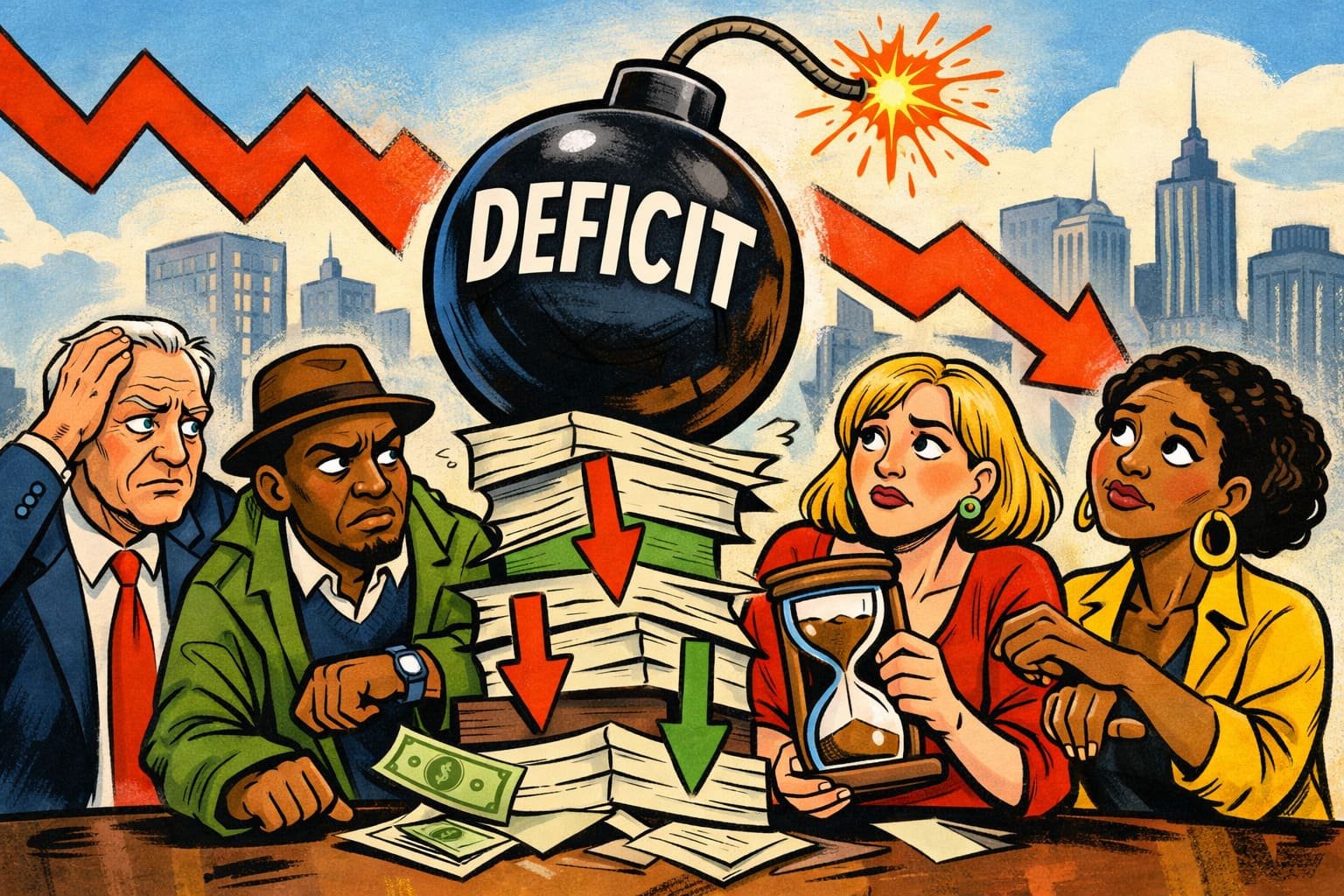
Fresh asphalt stretches across a newly opened highway while applause echoes beneath polished government podiums. Investors watching from distant trading desks notice a different detail. Borrowing keeps climbing faster than revenue. Celebration and caution occupy the same afternoon without exchanging a single word. Public deficits often begin as political promises wrapped in optimism, yet financial markets eventually demand quieter answers, asking one stubborn question that speeches cannot avoid: who will repay expanding obligations when economic conditions become less forgiving?
Budget deficits are not automatically signs of poor economic management. Governments often borrow during recessions, emergencies, or major infrastructure programs because temporary spending can stabilize growth and preserve employment. Trouble begins when structural deficits become permanent while revenue struggles to keep pace. Investors carefully monitor fiscal discipline because confidence influences borrowing costs as much as economic output. Once doubts emerge, lenders frequently demand higher returns, making future deficits even more expensive to finance through additional debt issuance.
Japan presents an intriguing case. Decades of substantial public debt have not produced immediate financial collapse because domestic investors, monetary policy, and institutional stability have supported government borrowing. Contrast that with Argentina, where repeated fiscal pressures weakened investor confidence and complicated access to affordable financing. A regional construction executive named Victor experienced similar lessons on a smaller scale. Easy credit encouraged ambitious expansion, but rising financing costs soon transformed manageable obligations into difficult strategic constraints requiring painful adjustments.
Bond markets possess remarkable patience until they suddenly do not. Investors willingly finance governments they believe maintain credible long-term fiscal plans, even during periods of elevated borrowing. Confidence weakens when spending consistently outpaces sustainable revenue without convincing reforms. Britain offered a recent reminder when proposed fiscal measures unsettled financial markets, prompting sharp movements in government bond yields before policymakers restored confidence. Markets rarely punish ambition alone. They react when credibility begins slipping faster than projections acknowledge.
Another lesson unfolded inside Leila’s family-owned engineering firm. Government infrastructure contracts fueled steady growth, encouraging new equipment purchases and additional hiring. Delayed public payments gradually strained cash flow because widening fiscal pressures slowed project funding. Instead of waiting passively, she diversified into private sector clients and strengthened working capital management. Her company remained profitable while competitors relying exclusively on public contracts struggled through mounting uncertainty surrounding delayed government obligations and unpredictable budget priorities.
Evening clouds drift above parliament buildings where debates continue long after cameras disappear. Deficits will always accompany difficult choices because every generation inherits unexpected challenges demanding immediate resources. Financial markets understand that reality. They simply expect honesty, discipline, and believable plans for restoring balance when extraordinary circumstances fade. Confidence survives remarkable levels of borrowing when credibility remains intact. Lose credibility, and numbers once dismissed as manageable suddenly become headlines that reshape economies faster than anyone expected.
