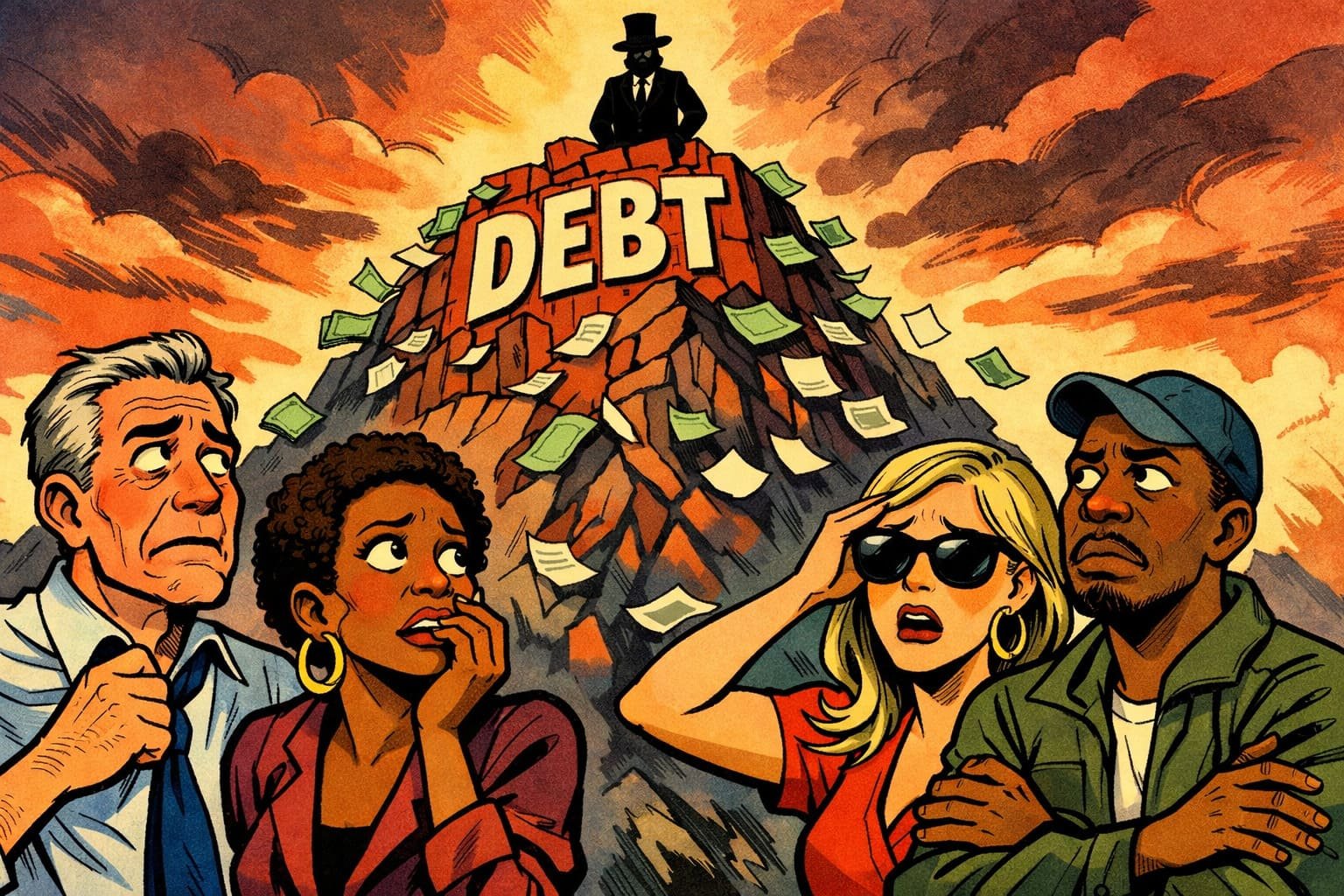
A banker closes a thick lending file just as a city council approves another ambitious project financed with borrowed money. Applause fills the room because debt often feels invisible on the day it is created. Bills arrive later. Interest compounds quietly. Every loan carries a promise borrowed from tomorrow’s income, making debt one of the few financial tools capable of creating prosperity or quietly dismantling it. That choice rarely depends on borrowing itself. It depends on what borrowed money ultimately builds.
Debt has always been a powerful economic accelerator when used with discipline. Businesses borrow to expand factories, governments finance infrastructure, and households purchase homes they could never buy with immediate savings alone. Problems emerge when repayment depends on permanently favorable conditions rather than realistic cash flows. Rising interest costs reduce flexibility, weaker revenues expose fragile assumptions, and refinancing becomes increasingly expensive. Financial strength depends less on the size of liabilities than on the quality of assets supporting them.
Netflix offers an instructive example. For years the company relied heavily on debt to finance original programming, betting future subscriber growth would justify present borrowing. That strategy succeeded because expanding cash flow gradually strengthened repayment capacity. A contrasting lesson appeared inside Olivia’s manufacturing business after she borrowed aggressively to purchase additional equipment before demand had fully matured. Sales slowed unexpectedly. Loan payments continued arriving with perfect punctuality, forcing difficult operational decisions that disciplined planning could have softened considerably.
Balance sheets reveal debt clearly, yet they rarely capture its psychological weight. Executives carrying excessive leverage often reject worthwhile investments because existing obligations consume financial flexibility. Households facing large repayments postpone education, entrepreneurship, or retirement savings. Greece’s sovereign debt crisis illustrated how prolonged borrowing pressures can eventually reshape an entire economy through fiscal tightening, slower investment, and weakened confidence. Debt influences choices long before lenders demand repayment because caution quietly replaces ambition wherever financial breathing room disappears.
Another story unfolded inside Noor’s growing logistics company. Banks eagerly offered attractive financing after several profitable years, encouraging rapid fleet expansion across neighboring markets. Her accountant asked one uncomfortable question. Would those loans remain affordable if freight demand weakened for several seasons? Expansion slowed deliberately. Competitors borrowed aggressively instead, then struggled when transport volumes softened. Noor entered the downturn with cash reserves, modest obligations, and opportunities to acquire distressed assets at favorable valuations.
Fog settles over a skyline where cranes still reach confidently toward tomorrow despite foundations resting upon borrowed capital. Debt will always remain essential because progress often requires resources before prosperity fully arrives. Yet every obligation quietly asks whether future earnings will honor promises made today. Healthy economies answer confidently because investment creates productive capacity instead of postponing unavoidable reckoning. Before signing the next loan agreement, ask whether tomorrow is being financed wisely or quietly surrendered before it arrives.
