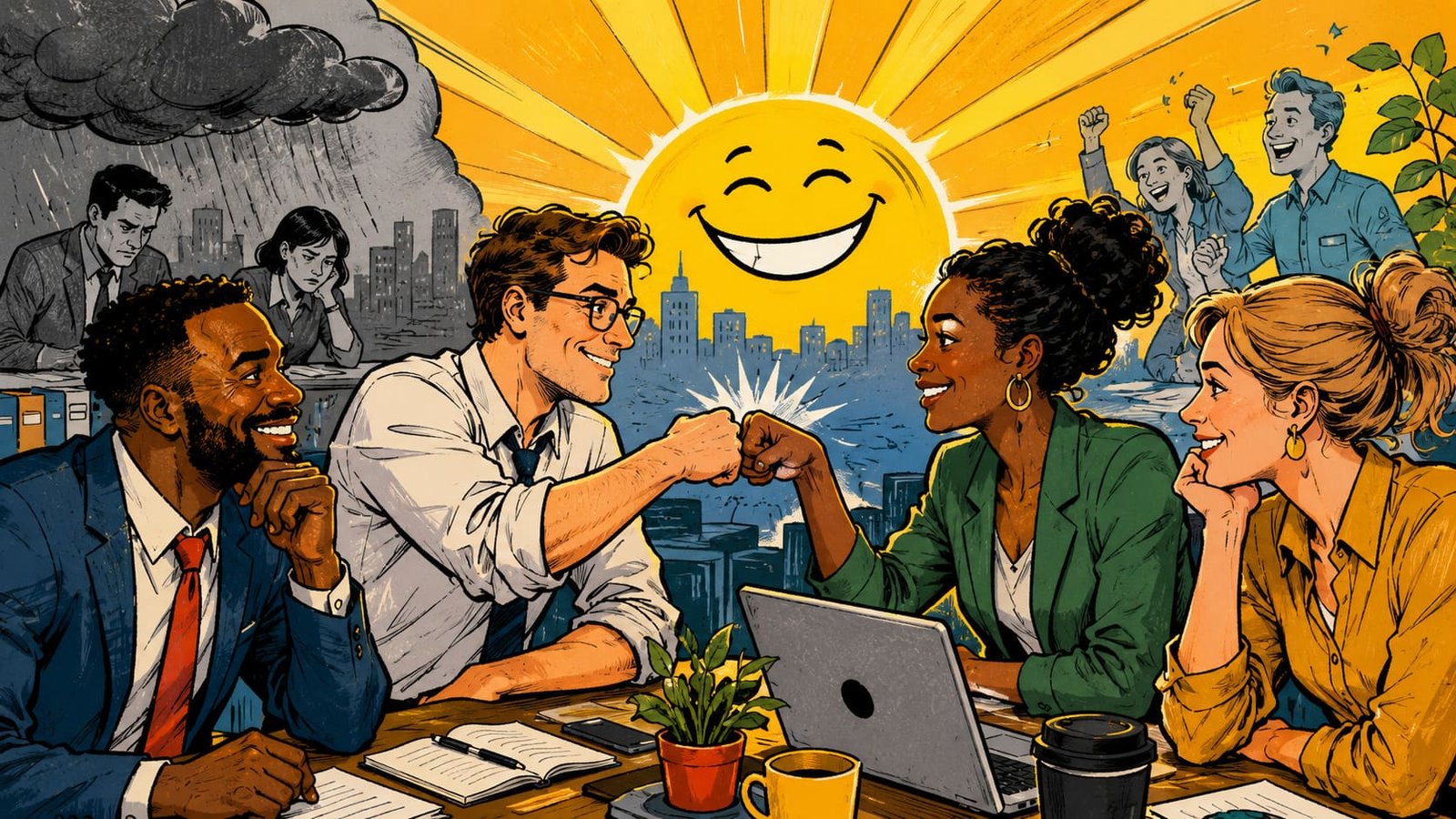
Thunder rolled above a crowded skyline while fluorescent lights hummed inside an office that suddenly felt smaller than yesterday. Nobody had announced bad news, yet shoulders tightened, conversations shortened, and hopeful ideas quietly disappeared before reaching the table. Negativity often enters organizations without permission. One sarcastic remark, one dismissive glance, or one defeated manager can redraw an entire workplace atmosphere, proving that morale rarely collapses all at once. It fades through ordinary moments people stop noticing.
Positive thinking is frequently misunderstood as forced optimism or cheerful slogans pasted onto office walls. Real optimism works differently. It acknowledges pressure while refusing to let pressure define every decision. Psychologist Martin Seligman spent years studying learned optimism, showing that people who believe setbacks can be overcome recover faster and remain more engaged. Healthy organizations do not ignore problems. They cultivate confidence that problems can be solved together, turning uncertainty into shared purpose instead of shared despair.
Marketing director Isabel discovered that lesson after her company lost a major client everyone expected to renew. Panic spread almost instantly. Instead of searching for someone to blame, she gathered the team and asked one unusual question. “What strengths helped us earn that client in the first place?” Conversation shifted. New ideas surfaced. Energy returned. Southwest Airlines has long demonstrated a similar principle by encouraging humor, resilience, and employee empowerment during difficult periods, reinforcing morale before performance begins recovering.
Street musicians reveal an unexpected truth about teamwork. One performer may miss a note, yet the melody survives because everyone else continues playing with confidence rather than panic. Organizations thrive through the same rhythm. Barbara Fredrickson’s research suggests positive emotions broaden people’s ability to think creatively, solve problems, and build stronger relationships. Hope does not erase difficulty. Hope expands the number of responses available when difficulty arrives, making adaptability far more likely than emotional paralysis.
A regional insurance company experienced that transformation after branch manager Kamau noticed employees speaking only about targets they had missed. Successes disappeared into silence. He introduced a simple weekly ritual where colleagues shared one meaningful customer story before discussing performance. A claims specialist described helping a family rebuild after devastating loss. The room changed. Numbers still mattered, yet everyone remembered why those numbers existed. Purpose quietly replaced exhaustion because meaningful work had become visible again.
Lanterns shimmered across calm water while gentle ripples carried each reflection much farther than anyone standing nearby could predict. Workplace morale behaves in remarkably similar ways. One encouraging conversation travels through meetings, projects, friendships, and difficult seasons long after the words themselves have faded. Organizations become extraordinary when optimism is practiced instead of advertised. Every hopeful choice invites another, so what kind of emotional legacy will your next conversation leave behind?
