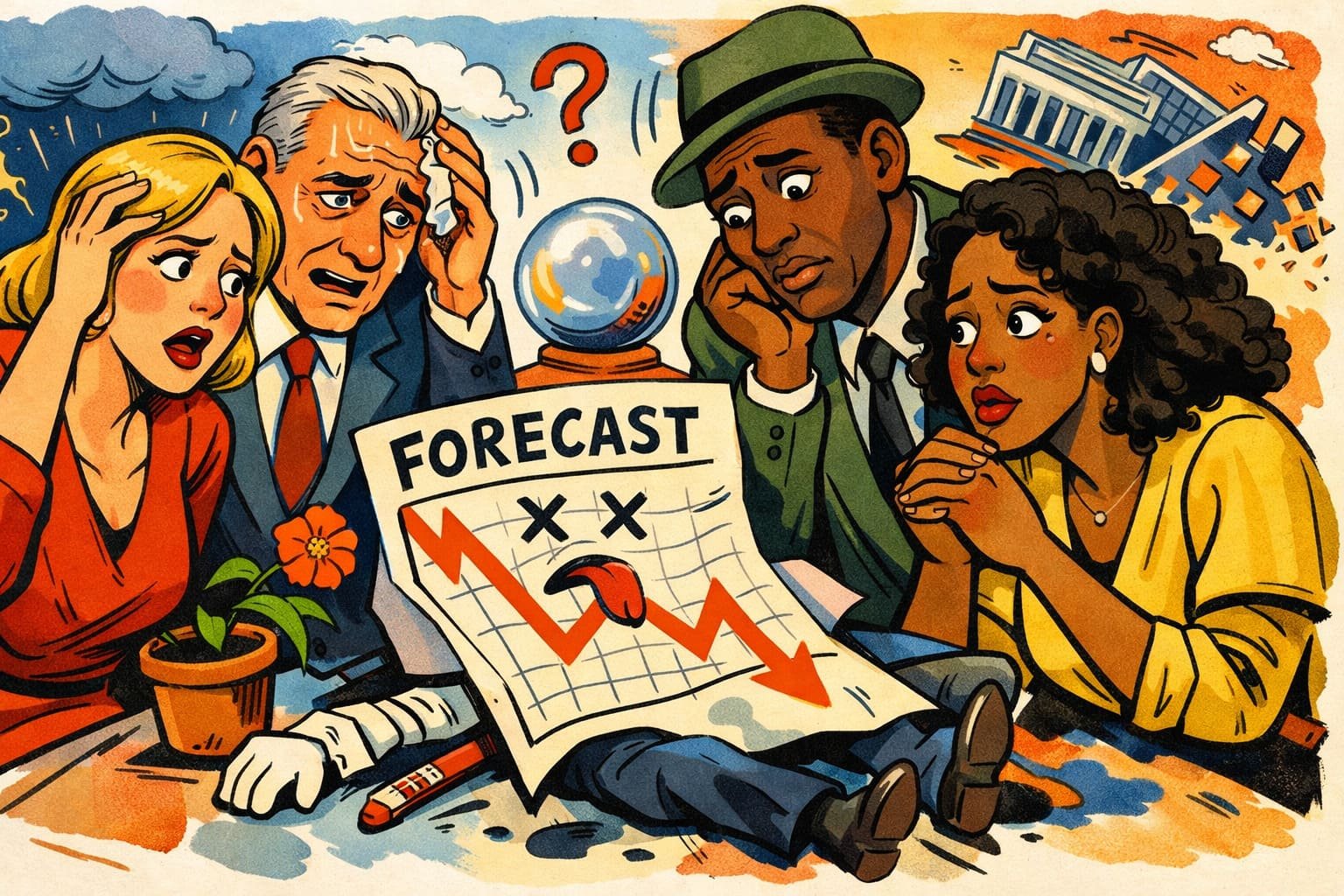
Trading screens flashed green before turning crimson within minutes, leaving economists, investors, and business leaders staring at forecasts that suddenly belonged to yesterday. Conference rooms filled with confident presentations only hours earlier now echoed with uncomfortable revisions. Every prediction seemed to expire before the meeting ended. Markets had become less like carefully written novels and more like improvisational theater, where every unexpected entrance rewrote the entire script.
Economic uncertainty is not merely the absence of information. It is the presence of competing possibilities that make planning unusually difficult. Businesses struggle to decide whether to invest, hire, expand, or conserve cash because each decision carries greater financial risk when future conditions remain unclear. Inflation, geopolitical tensions, supply chain disruptions, changing monetary policy, and shifting consumer behavior frequently collide, creating an environment where even experienced analysts acknowledge that confidence can become a dangerous luxury.
The pandemic offered perhaps the clearest demonstration of this reality. Organizations that projected stable demand suddenly confronted empty offices, disrupted logistics, and changing customer priorities. Airlines grounded fleets while technology companies experienced explosive growth almost overnight. Priya, who operated a regional packaging manufacturer, watched orders disappear from hospitality clients before surging unexpectedly from online retailers. Her company survived not because forecasts proved accurate, but because leadership adjusted quickly whenever reality refused to cooperate with carefully prepared spreadsheets.
Financial planning becomes especially demanding during uncertain periods. Budget assumptions lose reliability, cash flow projections require constant revision, and investment appraisals become more sensitive to changing variables. Berkshire Hathaway has often maintained substantial liquidity, reflecting Warren Buffett’s long-held belief that financial flexibility becomes especially valuable when uncertainty dominates markets. That philosophy extends beyond investing. Organizations with healthy balance sheets, disciplined spending, and manageable debt generally possess greater resilience when unexpected shocks interrupt ordinary business conditions.
Behavioral finance reveals another complication. Human beings naturally seek certainty even when none exists, making overly confident forecasts surprisingly attractive. Daniel led a growing logistics company where managers repeatedly insisted demand would normalize within months. Each forecast felt reassuring, yet each revision became more expensive than the last. Eventually the leadership team abandoned rigid annual planning in favor of shorter review cycles, discovering that adaptability often delivered greater value than prediction itself.
Clouds gathered above city skylines without asking economists for permission, much like uncertainty itself arriving without appointment or apology. Every generation believes today’s volatility is uniquely overwhelming, yet resilient organizations rarely succeed by guessing every twist correctly. They succeed by remaining financially disciplined, intellectually curious, and operationally flexible while uncertainty unfolds around them. Forecasts will continue changing because economies are living systems rather than mathematical equations. Real strength belongs to those who prepare for surprise instead of certainty.
