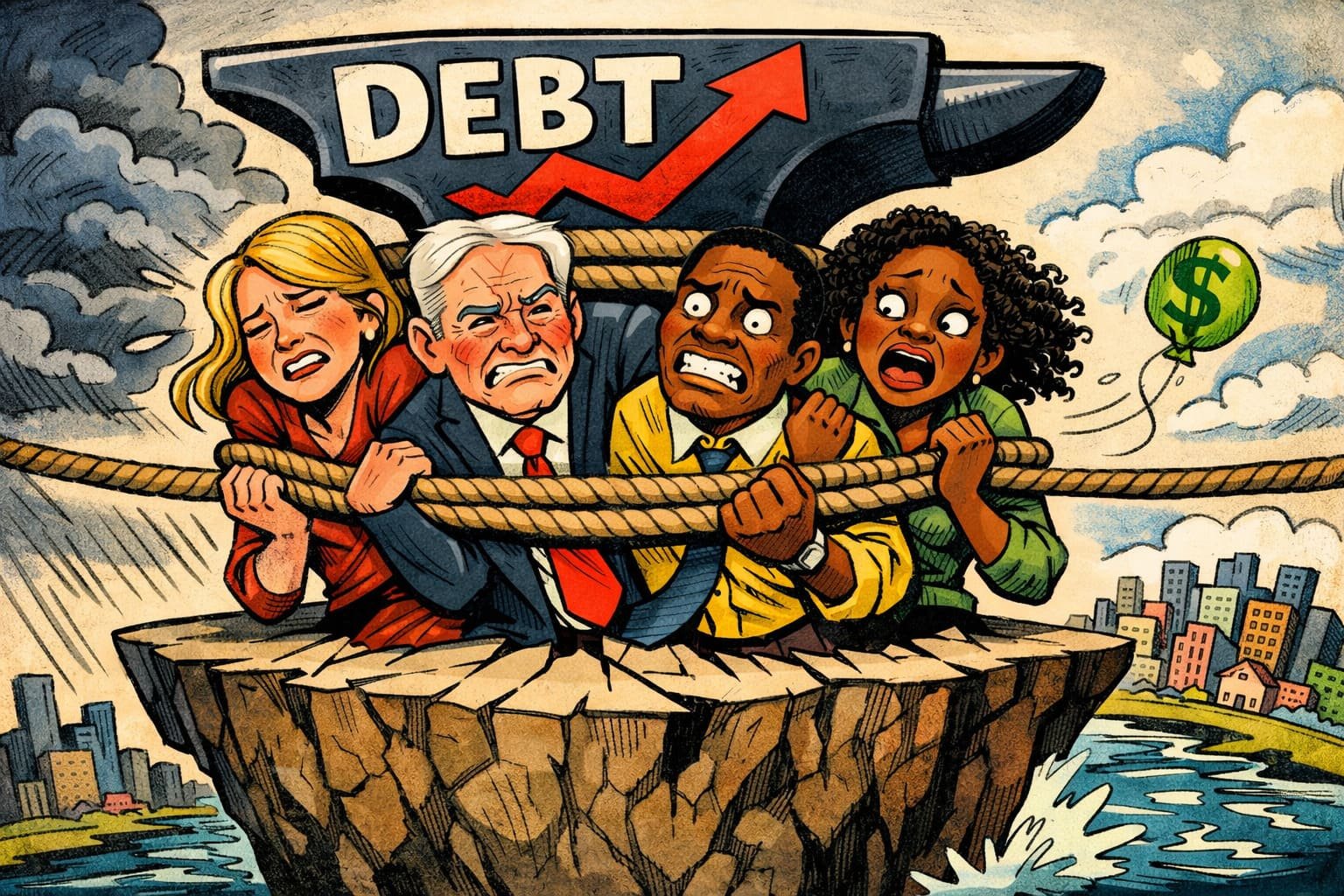
There is a special kind of panic that arrives without sirens. No bank run on camera. No dramatic emergency session with doors slamming. Just a slow rise in the price of borrowing until the budget begins to move like a chest under pressure. Borrowing costs climb, and fiscal space starts suffocating in plain sight. That phrase, fiscal space, can sound like consultant wallpaper. In real life it means whether a government still has room to respond to crisis, invest in growth, cushion households, or simply survive the next shock without cutting muscle to pay the lender.
Cheap money spoiled a generation of public debate. For years, borrowing often looked painless enough that political language drifted into fantasy. Governments could refinance at low rates, central banks kept conditions supportive, and serious arguments about debt service felt strangely old-fashioned. Then inflation returned, rates rose, and the old arithmetic kicked the door open again. Debt rolled over at higher costs. New borrowing grew more expensive. The era of casual fiscal expansion met the era of expensive refinancing, and the mood changed from generous to claustrophobic.
This squeeze is especially severe because it rarely arrives alone. A country facing higher borrowing costs is often already dealing with weak growth, social pressure, infrastructure needs, healthcare strain, or external shocks. The state does not get a polite quiet room to handle one challenge at a time. Everything lands together. That is why rising borrowing costs are so dangerous. They do not just add expense. They take away options. They force governments to choose between unpleasant things while pretending there was still a menu.
The image that fits best is not fireworks. It is a room losing oxygen. Every increase in debt-service burden makes future budgets tighter. Every refinancing round becomes more painful. Every new initiative faces the same question, not whether it is good, but whether the treasury can still breathe while carrying it. Fiscal space suffocates because policymakers cannot easily expand into downturns, disasters, or strategic investment when interest payments are already crowding the frame. A state may remain solvent and still feel trapped, which is often how the danger first appears.
A transport minister once pushed hard for a rail modernization plan after years of delays. The proposal was sound, the need obvious, the business case respectable. Then the sovereign funding curve shifted upward and debt-service projections worsened. Suddenly the whole project was not debated on merit, but on breathing room. Was there enough space left after interest, pensions, wages, and mandatory spending? The answer drifted from yes to maybe to later. That is what higher borrowing costs do. They turn good ideas into hostages of timing and financial mood.
There is a brutal feedback loop here. When borrowing costs rise, governments may cut productive investment to stabilize the near term. That weakens future growth capacity. Slower growth then makes debt dynamics harder to manage, which can keep financing pressure elevated. It is the fiscal equivalent of skipping maintenance to cover the mortgage. The house looks manageable until the roof remembers weather. Markets notice this too. A country that protects short-term calm by sacrificing long-term capacity can end up paying a credibility penalty on top of the financial one already underway.
This is why composition matters as much as scale. Borrowing for productive investment can still make sense in a higher-rate world if returns are real, governance is strong, and the plan is credible. Borrowing for recurring promises, vague subsidies, or political sugar highs is far harder to defend when rates are biting. States that fail to distinguish between these uses end up talking about all borrowing as if it were one species. It is not. Some debt buys engines. Some debt buys confetti. The bond market is not sentimental about the difference.
Households understand this intuitively. A mortgage for a well-chosen home is one thing. Credit card debt funding habits is another. Governments resist the comparison because they are not households, and that is true in important ways. Yet the emotional logic still holds. Once financing costs rise, every borrowed commitment feels heavier. The state becomes more cautious, more brittle, and often more deceptive in its public language. Officials keep using the rhetoric of possibility while the underlying budget has shifted into narrow-corridor mode. Citizens sense the mismatch and start doubting everything else too.
The sensible response is neither panic nor denial. It is prioritization with backbone. Governments need to lengthen maturities where possible, protect high-return investment, improve revenue honesty, and stop pretending that every pre-rate-shock promise remains equally affordable. This is not glamorous work. It does not belong in campaign montages with stirring soundtracks. It is the unromantic labor of preserving choice. Fiscal space is precious precisely because it cannot be conjured at the moment of emergency. It has to be protected in calmer times, before the air gets thin.
There is a philosophical cruelty in rising borrowing costs. They expose whether the state spent the easy-money years building resilience or merely decorating itself with commitments. When the squeeze comes, there is nowhere to hide. Every old promise must compete with the higher price of past borrowing. That is why suffocation is the right word. The budget is not just tighter. It is increasingly unable to inhale new possibility. The future keeps asking for investment, adaptation, and reform. The debt-service line keeps replying first.
Soon the documents look normal again, neat tables, tidy language, solemn promises about responsibility. Yet behind them the budget is moving in shorter breaths. Fiscal space has not vanished in one spectacular collapse. It has been crowded, compressed, and leaned on until ambition itself starts wheezing. That is the quiet horror of higher borrowing costs. They do not merely punish past choices. They narrow the range of future courage. The country then faces its hardest question, not whether it can still borrow, but whether anything truly worthwhile can still fit inside a state that is running out of air.
