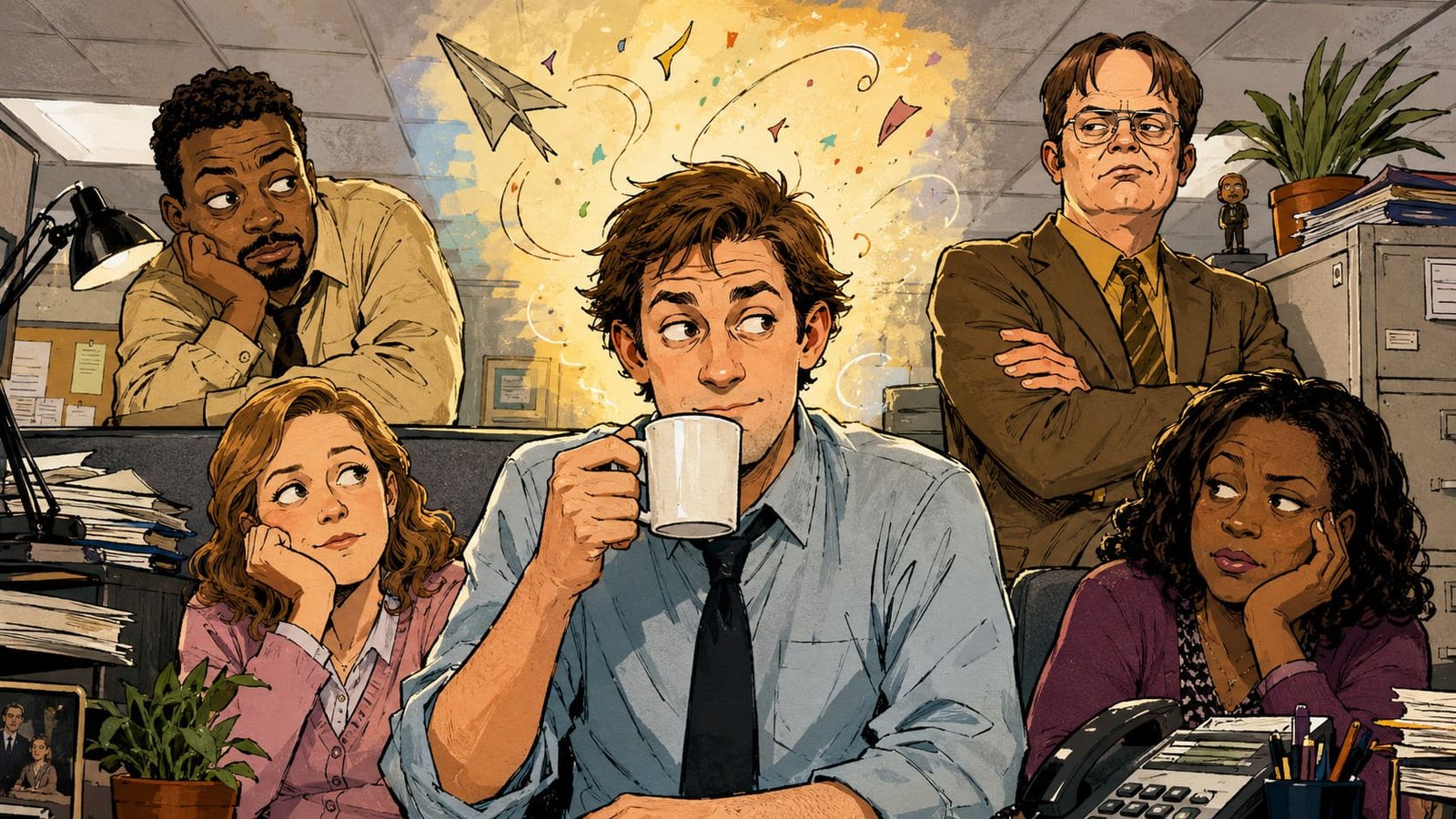
The fluorescent lights hummed with the quiet cruelty of routine. Beige walls absorbed ambition like wet cardboard. Somewhere near the copier, a stale donut hardened beside an abandoned memo no one would ever read. That is the strange miracle of The Office. A television series built around paper sales somehow became one of the sharpest emotional studies of modern work culture ever created. Most corporate stories chase glamour, power, or catastrophe. The Office studies something far more unsettling: ordinary emotional survival inside systems so repetitive that people begin performing versions of themselves just to stay psychologically awake. Beneath the awkward jokes and deadpan silences sits a haunting observation about contemporary adulthood. Many people spend most of their lives inside rooms they never dreamed about while quietly searching for meaning between meetings.
Michael Scott remains one of television’s most misunderstood leadership portraits. On the surface, he appears painfully incompetent, desperate for approval, emotionally impulsive, professionally chaotic. Yet the brilliance of the character lives inside that contradiction. Michael wants love more than authority. He mistakes attention for connection because modern workplace culture has trained countless managers to believe morale can be manufactured through forced enthusiasm and motivational theater. Steve Carell plays him with such aching vulnerability that even his worst decisions feel strangely human. The character reflects an uncomfortable reality many organizations refuse to admit: leadership positions often attract emotionally hungry people searching for validation through hierarchy.
The genius of the show comes from its understanding of workplace anthropology. Every employee inside Dunder Mifflin represents a recognizable survival strategy within bureaucratic systems. Jim survives through irony. Dwight weaponizes loyalty and structure. Pam quietly suffocates beneath politeness and unrealized ambition. Stanley emotionally exits long before retirement arrives physically. Angela transforms judgment into armor. Kelly turns attention into emotional oxygen. The office itself behaves less like a business and more like a social ecosystem where loneliness, ego, insecurity, and aspiration negotiate temporary peace treaties beside vending machines. Anyone who has spent years inside institutional environments recognizes the emotional choreography immediately.
A small moment involving Pam at reception captures the emotional intelligence of the series beautifully. She answers phones, organizes paperwork, smiles politely, and slowly realizes her life has drifted into passive observation rather than participation. That storyline resonates because modern work culture quietly produces millions of emotionally suspended lives. Daniel, a customer support supervisor in Toronto, once admitted he spent three years eating lunch alone in his car because the office felt emotionally louder than traffic. Nobody bullied him. Nobody excluded him intentionally. The exhaustion came from constant performance. The Office understands that subtle psychological fatigue better than most prestige dramas obsessed with louder forms of suffering.
The documentary format sharpens the series into something almost philosophical. Characters glance toward the camera like prisoners discovering tiny cracks in reality itself. Those looks become emotional confessions without dialogue. A raised eyebrow from Jim often communicates more truth than entire monologues from traditional dramas. That mechanism mirrors contemporary social existence perfectly. Modern professionals constantly manage dual identities: the performed self and the observed self. Social media intensified that split dramatically. Employees now curate personalities across Slack channels, LinkedIn profiles, Zoom calls, and corporate retreats while privately negotiating exhaustion, resentment, ambition, or grief. The Office predicted that fractured emotional landscape long before remote work and digital branding became normal life.
What elevates the series beyond sitcom territory is its refusal to mock ordinary people cruelly. The humor can be brutal, but it rarely feels cynical. Even Dwight Schrute, arguably television’s strangest salesman, receives moments of dignity and emotional depth. His obsession with authority, preparedness, and discipline hides profound insecurity about belonging. That pattern repeats across the entire cast. Characters behave irrationally because human beings are irrational creatures trying desperately to feel significant inside impersonal systems. A startup founder in Berlin once described office culture as “adult daycare with performance reviews.” The joke spread online because it contained painful truth. Workplaces often become emotional replacement structures for community, identity, and purpose.
The series also functions as a devastating critique of corporate performativity. Diversity seminars become disasters. Team-building exercises collapse into emotional chaos. Productivity initiatives drift toward absurdity. Yet none of this feels exaggerated anymore. Modern organizations frequently substitute symbolic gestures for meaningful cultural change. Employees learn to speak fluent corporate language while privately disengaging from the values those phrases supposedly represent. The Office exposes that disconnect relentlessly. Michael Scott constantly seeks authenticity through superficial methods because the institution itself lacks emotional vocabulary beyond slogans and quarterly targets.
Then comes the emotional ambush that explains why the series endured long after its era. Beneath the satire lives genuine tenderness toward ordinary existence. People fall in love beside printers. Friendships emerge through shared boredom. Quiet acts of loyalty appear in break rooms and parking lots. The office becomes a strange accidental family not because the system deserves romanticizing, but because human beings instinctively create meaning even inside emotionally awkward environments. Somewhere beneath the fluorescent lighting and painfully forced birthday parties sits a truth modern ambition rarely acknowledges: most lives are not transformed through dramatic revolutions, but through small moments of recognition shared with other tired people trying to make existence feel slightly less lonely. The elevator doors close softly. Someone reheats coffee that already tastes burnt. Another meeting begins. Still, hidden beneath the ordinary machinery of work, fragile human connection keeps surviving like a stubborn little rebellion nobody quite knows how to eliminate.
Editorial Disclaimer: Whether a TV Show is rooted in fiction or inspired by real events, the actions, decisions, and behaviors portrayed within are not intended to be encouraged, replicated, or endorsed in real-world settings. This review exists solely to analyze the storytelling, characters, themes, and business dynamics presented in the TV Show for educational, analytical, and entertainment purposes. Any ethical or unethical conduct depicted in the TV Show does not reflect the views, values, or endorsements of ESYRITE.
