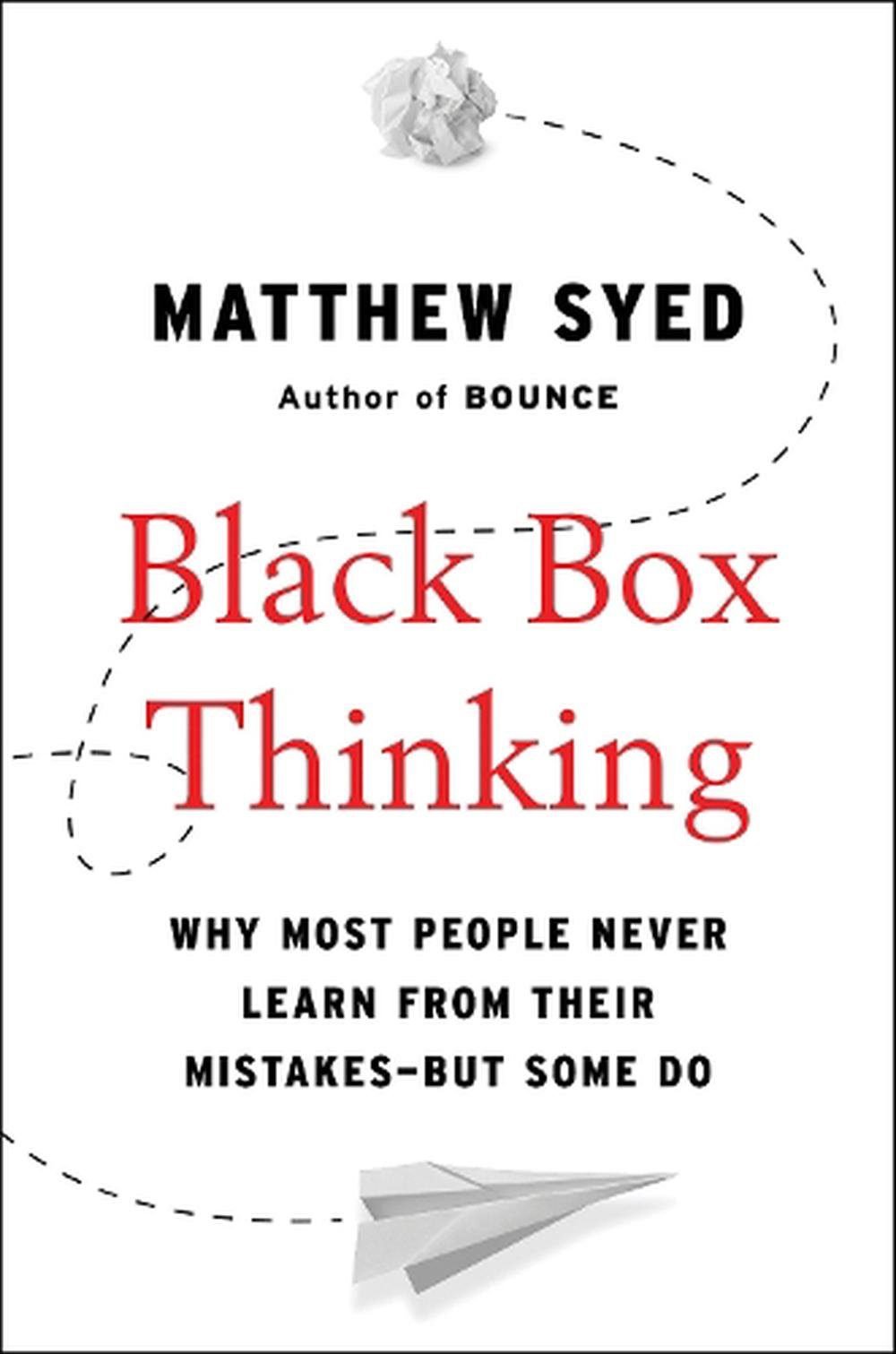
The operating room smelled faintly of antiseptic and invisible pressure. Machines hummed softly beneath fluorescent light while exhausted professionals moved with rehearsed precision around decisions carrying life-or-death consequences. Somewhere else, in a glass corporate tower thousands of miles away, executives reviewed disastrous quarterly losses while carefully avoiding the one conversation capable of preventing future collapse: what actually went wrong? In Black Box Thinking, Matthew Syed delivers one of the most psychologically revealing examinations of failure ever written. The book is not truly about mistakes alone. It is about the terrifying human instinct to protect identity even when truth could save us.
Syed builds the book around the metaphor of airplane black boxes, devices designed to preserve evidence after catastrophe so future disasters become less likely. Aviation evolved into one of the safest industries in human history not because pilots stopped making mistakes, but because the system became obsessed with studying failure honestly. Every near miss, every technical malfunction, every communication breakdown becomes data for improvement. That mindset contrasts sharply with many organizations, governments, schools, hospitals, and individuals where mistakes trigger shame, denial, blame-shifting, or defensive silence instead of learning. The difference is civilization-shaping.
The book becomes especially powerful when comparing aviation with medicine. Syed exposes how healthcare systems historically punished transparency so aggressively that preventable errors often remained hidden behind professional prestige and institutional fear. Doctors avoided admitting mistakes because careers, reputations, and emotional identity felt threatened by vulnerability. The result was devastating. Patients suffered repeatedly from errors already understood privately but never openly examined collectively. That insight expands far beyond medicine. Many modern systems operate the same way. Institutions frequently protect image more aggressively than reality.
A technology executive named Gabriel Moretti once led a product launch that collapsed spectacularly after software vulnerabilities exposed user data across multiple regions. During emergency meetings, senior leadership focused obsessively on public relations containment while quietly discouraging engineers from documenting internal communication failures that contributed to the breach. Gabriel eventually pushed for a full postmortem analysis despite resistance from executives terrified of accountability. The findings revealed dozens of small ignored warning signs scattered across departments for months. Years later Gabriel reflected that the breach itself was not the real catastrophe. The real danger was the organizational instinct to prioritize emotional self-protection over systemic truth. Syed’s philosophy breathes through moments like that. Progress depends on environments where reality matters more than ego.
The brilliance of Black Box Thinking lies in how deeply it understands human psychology. Most people imagine failure automatically produces wisdom. Syed dismantles that comforting myth completely. Failure alone teaches nothing. Reflection teaches. Analysis teaches. Accountability teaches. Systems capable of examining mistakes without emotional collapse teach. Without those structures, people simply repeat patterns while constructing narratives protecting self-image. That insight explains why some organizations evolve rapidly after setbacks while others spiral through identical disasters repeatedly under slightly different branding.
The book also challenges the mythology surrounding talent and genius. Syed argues many high performers improve not because they avoid failure, but because they engage with it more intelligently. Elite athletes review mistakes obsessively. Great chess players analyze lost games relentlessly. Innovative companies prototype aggressively because small controlled failures generate information faster than perfectionism ever could. This mindset feels almost revolutionary in cultures where public embarrassment is treated like existential destruction. Fear of looking incompetent often prevents people from becoming competent at all.
A surgeon named Dr. Lena Hoffman once described attending a conference where aviation safety experts demonstrated how cockpit culture evolved by encouraging junior crew members to question captains openly during emergencies. The idea shocked many medical professionals because hospital hierarchies often punished questioning authority implicitly. Dr. Hoffman later helped redesign communication protocols inside her surgical department to encourage speaking up without fear during procedures. Error rates declined significantly. She eventually realized something uncomfortable: institutions become dangerous the moment authority matters more than truth. That realization pulses through every chapter of Black Box Thinking.
Syed also explores how modern culture distorts relationships with failure through performance obsession. Social media amplifies polished outcomes while hiding iterative struggle. Schools reward correctness more consistently than experimentation. Workplaces celebrate confidence while quietly punishing uncertainty. Under those conditions, people become emotionally terrified of mistakes because errors threaten identity rather than informing growth. The result is stagnation disguised as professionalism. Black Box Thinking offers a radically healthier alternative. Treat failure as information instead of moral condemnation. That shift changes learning completely.
A startup founder named Nadia El Karim once spent years hiding a failed product launch from new employees because she viewed the collapse as personal humiliation rather than strategic education. During a retreat, one young designer finally asked why the company never discussed earlier mistakes openly despite celebrating later success constantly. Nadia realized the silence itself had become dangerous. Teams kept repeating avoidable problems because institutional memory remained emotionally buried. She eventually created monthly “failure review” sessions where departments analyzed unsuccessful experiments publicly without punishment. Innovation accelerated almost immediately because fear stopped suffocating honest conversation. Nadia later described the shift beautifully: “We stopped treating mistakes like crimes and started treating them like maps.” That sentence could summarize Syed’s worldview entirely.
There is also something deeply human about the book’s underlying optimism. Syed does not argue people become great by avoiding pain. He argues growth becomes possible when pain transforms into understanding rather than denial. That philosophy feels especially urgent now, in a world increasingly addicted to certainty performance and ideological tribalism. Many individuals and institutions would rather protect narrative consistency than confront uncomfortable evidence. Black Box Thinking quietly insists civilization advances only when people develop the emotional maturity to examine failure without disintegrating psychologically.
Late tonight another exhausted professional still rewrites explanations for a mistake they secretly refuse to confront honestly. Somewhere else, a smaller team quietly studies its failures carefully enough to become stronger tomorrow than it was yesterday. Office lights flicker against rain-soaked windows. Aircraft move silently across dark skies carrying passengers who trust systems built upon generations of brutally honest learning. That is the enduring force beneath Black Box Thinking. The book reveals that progress does not belong to the flawless. It belongs to the people courageous enough to face reality without armor, study their errors without vanity, and transform humiliation into intelligence before repetition turns preventable mistakes into irreversible catastrophe.
Editorial Disclaimer: Whether a book is a work of fiction, a memoir, or inspired by real events, the ideas, actions, decisions, and behaviors discussed within are not intended to be encouraged, replicated, or endorsed in real-world situations. This review is published solely for educational, analytical, literary, and entertainment purposes, with the aim of examining the book’s themes, storytelling, characters, philosophies, and broader cultural or business insights. Any ethical or unethical viewpoints, practices, or conduct presented in the book do not necessarily reflect the views, values, or endorsements of ESYRITE.
