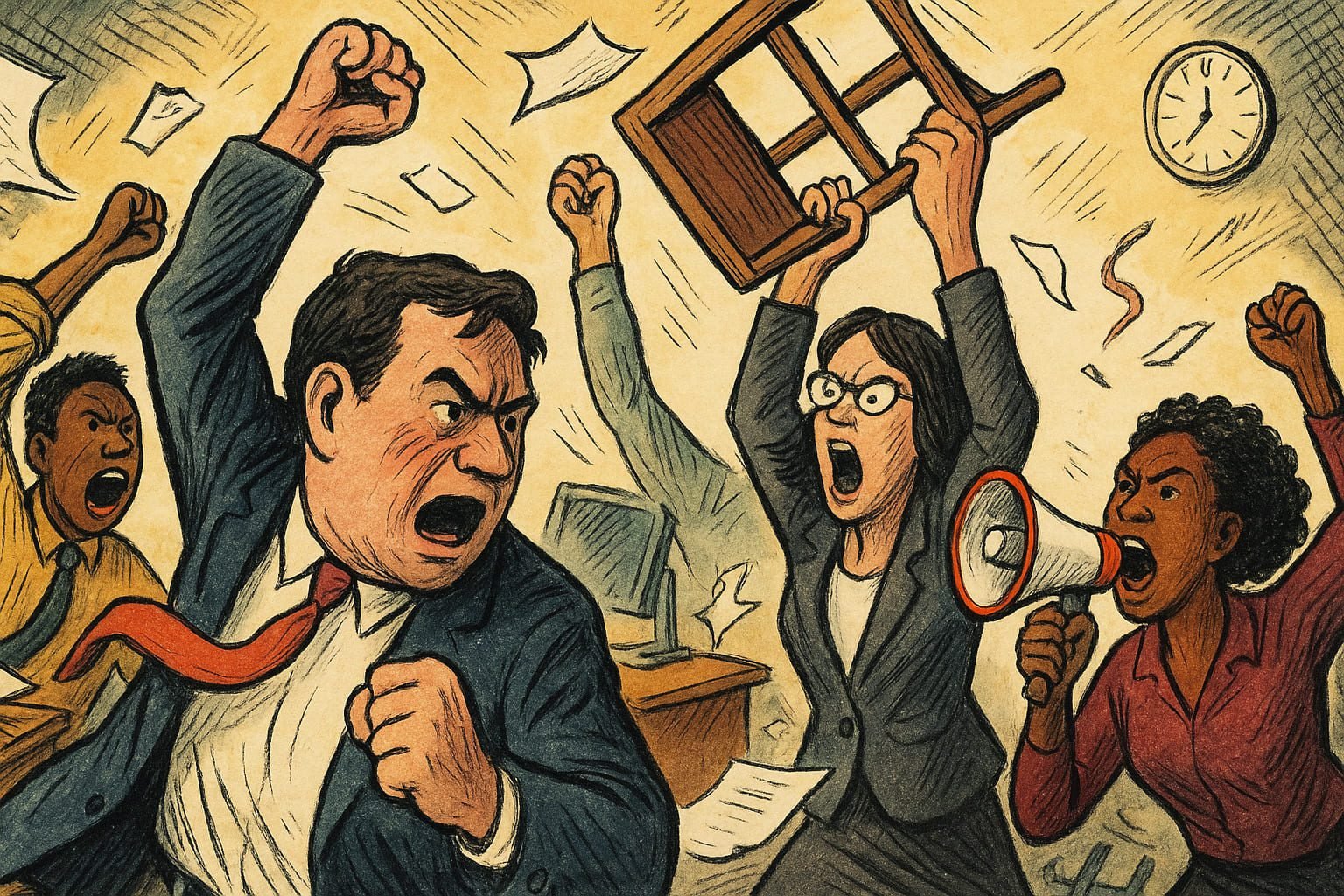
The office looked calm enough to impress any visitor. Desks were occupied, meetings stayed on schedule, and deadlines appeared to be under control. Yet beneath the polished routine, something dangerous was growing. Nobody complained anymore. Nobody challenged weak decisions. Nobody offered new ideas. Leaders celebrated the absence of conflict without realizing they were witnessing something far worse. Silence had quietly replaced trust, and the cost of that silence was about to become painfully visible.
Many executives mistake quiet workplaces for healthy cultures. Employees who rarely question decisions are often praised as cooperative and professional. The reality can be completely different. Silence frequently signals fear, exhaustion, or resignation rather than satisfaction. When people stop speaking, organizations lose their greatest early warning system. Small problems remain hidden until they become expensive crises. By then, fixing the damage demands far more effort than preventing it would have required.
The strongest organizations deliberately create environments where disagreement feels safe. Constructive conflict challenges assumptions before costly mistakes take root. Healthy debates sharpen ideas, expose blind spots, and encourage innovation. Leaders who invite criticism gain something far more valuable than agreement. They gain perspective. Employees become active contributors instead of passive observers. Progress accelerates because people feel respected enough to share what they genuinely think rather than what they believe management wants to hear.
History offers a powerful lesson through NASA’s investigations following the Space Shuttle Challenger disaster. Reviews revealed that engineers had expressed serious concerns before launch, yet those warnings failed to influence the final decision. Communication breakdowns and organizational culture played a significant role alongside technical challenges. The tragedy became a lasting reminder that ignored voices can carry devastating consequences. Every organization, regardless of industry, faces similar risks when honest conversations quietly disappear.
A growing logistics company experienced its own wake-up call. Its operations manager, Priya, noticed that warehouse employees rarely questioned unrealistic delivery targets. Everything appeared efficient until customer complaints suddenly surged. During a confidential listening session, workers admitted they had recognized scheduling problems months earlier but feared appearing negative. Leadership immediately introduced open feedback forums and anonymous reporting channels. Service quality improved because people finally believed their voices mattered as much as performance metrics.
Management expert Amy Edmondson describes this environment as psychological safety, the belief that people can speak honestly without fear of embarrassment or punishment. Organizations embracing this principle consistently learn faster because mistakes surface earlier. Employees contribute ideas with greater confidence, knowing curiosity is welcomed instead of criticized. Innovation flourishes not because brilliant people suddenly appear, but because existing talent finally feels safe enough to participate fully in shaping the future.
The lesson extends well beyond corporate offices. Families, schools, community organizations, and governments all depend on honest communication to remain resilient. Every leader eventually creates one of two cultures. One rewards appearance over truth. The other rewards truth even when it feels uncomfortable. The first produces temporary harmony followed by lasting problems. The second experiences occasional tension but builds stronger relationships grounded in mutual respect and shared responsibility.
The most dangerous workplace is not the one filled with difficult conversations. It is the one where difficult conversations quietly disappear. Organizations rarely collapse because people cared too much. They stumble because people stopped believing anyone wanted to hear the truth. Lasting leadership begins the moment silence loses its power and honest voices become the organization’s greatest competitive advantage. Every unanswered concern carries a hidden cost. The choice is whether to hear it while there is still time.
