The warehouse smelled of cardboard, ring lights, ambition, and cold pizza abandoned beside editing laptops at three in the morning. Somewhere in the chaos, a teenager filmed skincare tutorials beside stacked inventory while a former accountant rehearsed motivational monologues into an iPhone balanced against cereal boxes. Across social feeds, strangers transformed into brands overnight. Modern fame no longer arrived through velvet ropes or Hollywood agents. It erupted from bedrooms, basements, parking lots, barber shops, gaming chairs, and overstimulated minds desperate to matter publicly before the algorithm moved on to fresher prey.
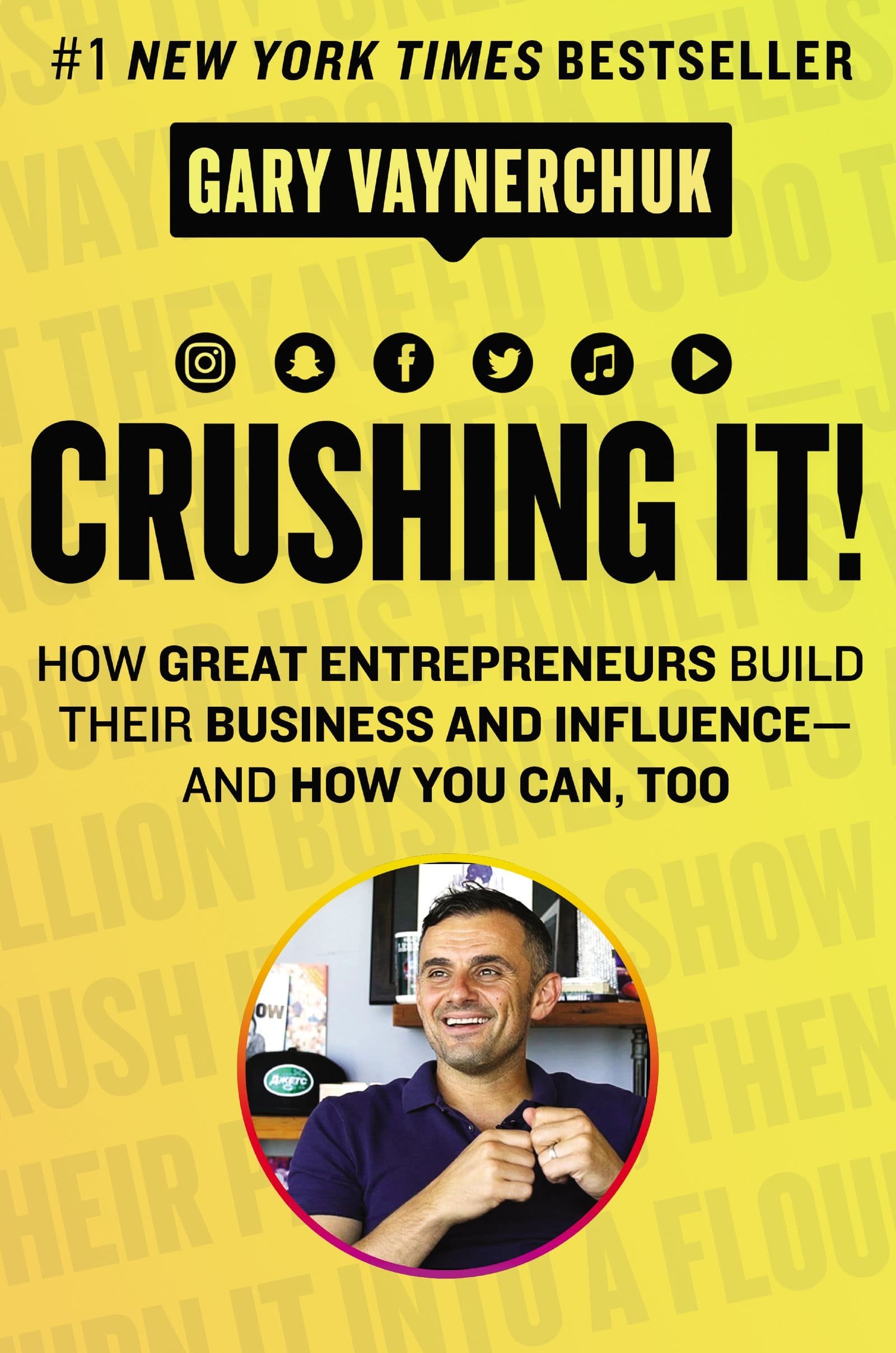
Crushing It! How Great Entrepreneurs Build Their Business and Influence-and How You Can, Too captures that cultural earthquake with the breathless energy of someone watching the old economic order collapse in real time. Gary Vaynerchuk does not merely discuss entrepreneurship. He documents the rise of a new social species: individuals turning personality, attention, storytelling, and relentless content production into economic infrastructure. The book feels less like business advice and more like a field report from the early days of digital identity capitalism.
That distinction matters because Vaynerchuk understands something traditional institutions underestimated for years. Trust was migrating away from faceless corporations toward emotionally recognizable individuals. Audiences no longer wanted polished perfection alone. They wanted proximity. Voice. Energy. Imperfection. Narrative intimacy. The internet transformed ordinary people into miniature media networks competing for emotional real estate inside overstimulated human minds. Vaynerchuk recognized the shift before many legacy businesses stopped laughing at it.
A hairstylist named Mireya learned this accidentally after posting short behind-the-scenes videos from her tiny salon during lunch breaks. The clips were messy. Lighting looked uneven. Her laugh occasionally cracked mid-sentence. Yet viewers became obsessed because the videos felt alive rather than manufactured. Customers started traveling across cities just to book appointments with the woman they already felt they knew emotionally through their screens. Larger beauty chains with glossy marketing budgets could not replicate the atmosphere because authenticity, once engineered too aggressively, begins smelling synthetic.
That emotional texture sits near the center of Crushing It! How Great Entrepreneurs Build Their Business and Influence-and How You Can, Too. Vaynerchuk repeatedly argues that attention follows emotional consistency more than polished image management. The internet rewards people capable of sustaining recognizable identity across time. Some readers misunderstand this as encouragement toward endless self-promotion. The deeper insight is subtler and more unsettling. Modern business increasingly rewards people willing to transform private personality into public infrastructure.
The book also exposes how profoundly the economy shifted beneath traditional gatekeepers. Media executives once controlled visibility. Publishers controlled distribution. Television networks decided cultural relevance. Social platforms detonated those barriers violently. Suddenly musicians, chefs, comedians, fitness trainers, investors, gamers, teachers, and niche hobbyists could bypass institutions entirely if they understood storytelling and audience psychology well enough. The result feels liberating and exhausting simultaneously. Opportunity expanded dramatically. So did competition for human attention.
A former schoolteacher named Idris experienced this after launching a channel explaining complex history topics through dramatic storytelling and dark humor. Traditional educational publishers dismissed his style as too unconventional. Students online devoured it instantly. Soon sponsorship deals arrived alongside speaking invitations from institutions that previously ignored him completely. Idris later admitted the strangest part was psychological rather than financial. The internet had turned his personality into economic leverage. Every joke, opinion, and emotional expression now carried business implications. Freedom and exposure arrived together like twins arguing constantly.
That tension gives the book unusual cultural relevance. Vaynerchuk celebrates hustle relentlessly, yet beneath the optimism lurks a deeper question about identity itself. What happens when personal existence becomes inseparable from audience maintenance? The creator economy promises autonomy while quietly demanding permanent visibility. Many entrepreneurs now live inside endless cycles of posting, engaging, documenting, performing, responding, optimizing, and staying culturally legible enough not to disappear beneath algorithmic tides. The audience becomes both customer and invisible employer simultaneously.
Vaynerchuk understands this ecosystem intimately because he helped normalize the idea that consistent attention compounds into economic power. His philosophy resembles a strange fusion of immigrant survival mentality, hip-hop self-mythology, sports psychology, and internet-native media instincts. Work relentlessly. Publish constantly. Care deeply about community. Move faster than institutional hesitation. The approach feels electric partly because it mirrors broader societal acceleration. Everything speeds up online except human emotional processing.
A craft coffee founder named Yuna discovered the darker edge of this dynamic after her quirky café videos exploded across social platforms unexpectedly. Revenue surged. Interviews followed. Investors circled aggressively. Yet daily life began dissolving into content extraction. Customers expected emotional access continuously. Staff interactions became potential clips. Even exhaustion started feeling monetizable. One night after filming her fifth promotional segment beside espresso machines still smelling of burnt caramel beans, Yuna realized she could no longer distinguish genuine moments from future content opportunities. Success had quietly installed surveillance cameras inside ordinary life.
The deeper brilliance of Crushing It! How Great Entrepreneurs Build Their Business and Influence-and How You Can, Too lies in how accurately it predicted cultural evolution. Influence itself became infrastructure. Attention became currency. Narrative became leverage. Today entire industries revolve around creators functioning simultaneously as entertainers, advertisers, communities, brands, and emotional companions for millions of strangers scrolling through loneliness beneath glowing screens.
Yet Vaynerchuk’s philosophy also contains something undeniably hopeful. The democratization of media allowed voices previously ignored by elite institutions to build independent livelihoods through direct audience connection. Small-town artists gained global reach. Marginalized perspectives found communities. Unconventional thinkers bypassed traditional approval systems entirely. The internet became chaotic, manipulative, addictive, inspiring, exploitative, liberating, and strangely intimate all at once. Vaynerchuk did not create that reality. He simply understood it earlier than most.
Late one evening inside a dim apartment lit only by laptop glow and passing traffic outside rain-streaked windows, a young illustrator named Samira refreshed analytics obsessively after uploading a vulnerable video discussing creative burnout. The numbers climbed rapidly. Comments poured in from strangers describing similar exhaustion, ambition, and fear of invisibility. For several minutes she felt profoundly connected to humanity through the screen. Then came the quieter realization afterward. Even vulnerability had become part of the economy now. Emotion itself carried engagement metrics.
That uneasy recognition lingers throughout Crushing It! How Great Entrepreneurs Build Their Business and Influence-and How You Can, Too. The book is not merely teaching branding strategies. It is documenting the emergence of a civilization where attention functions like oxygen and identity behaves increasingly like a commercial asset. Some readers will find empowerment in that reality. Others will sense the psychological cost hidden beneath endless visibility.
Across bedrooms, coworking spaces, coffee shops, garages, podcasts, livestreams, and sleepless editing sessions tonight, millions are still building digital empires from fragments of personality and Wi-Fi signals while algorithms decide whose voices rise or vanish. Some will become wealthy. Some will become famous. Many will quietly discover that turning the self into a business creates a strange hunger no follower count fully satisfies. Because eventually the hardest question stops being how to capture attention. It becomes whether anything remains untouched once the performance never truly ends.
Editorial Disclaimer: Whether a book is a work of fiction, a memoir, or inspired by real events, the ideas, actions, decisions, and behaviors discussed within are not intended to be encouraged, replicated, or endorsed in real-world situations. This review is published solely for educational, analytical, literary, and entertainment purposes, with the aim of examining the book’s themes, storytelling, characters, philosophies, and broader cultural or business insights. Any ethical or unethical viewpoints, practices, or conduct presented in the book do not necessarily reflect the views, values, or endorsements of ESYRITE.
