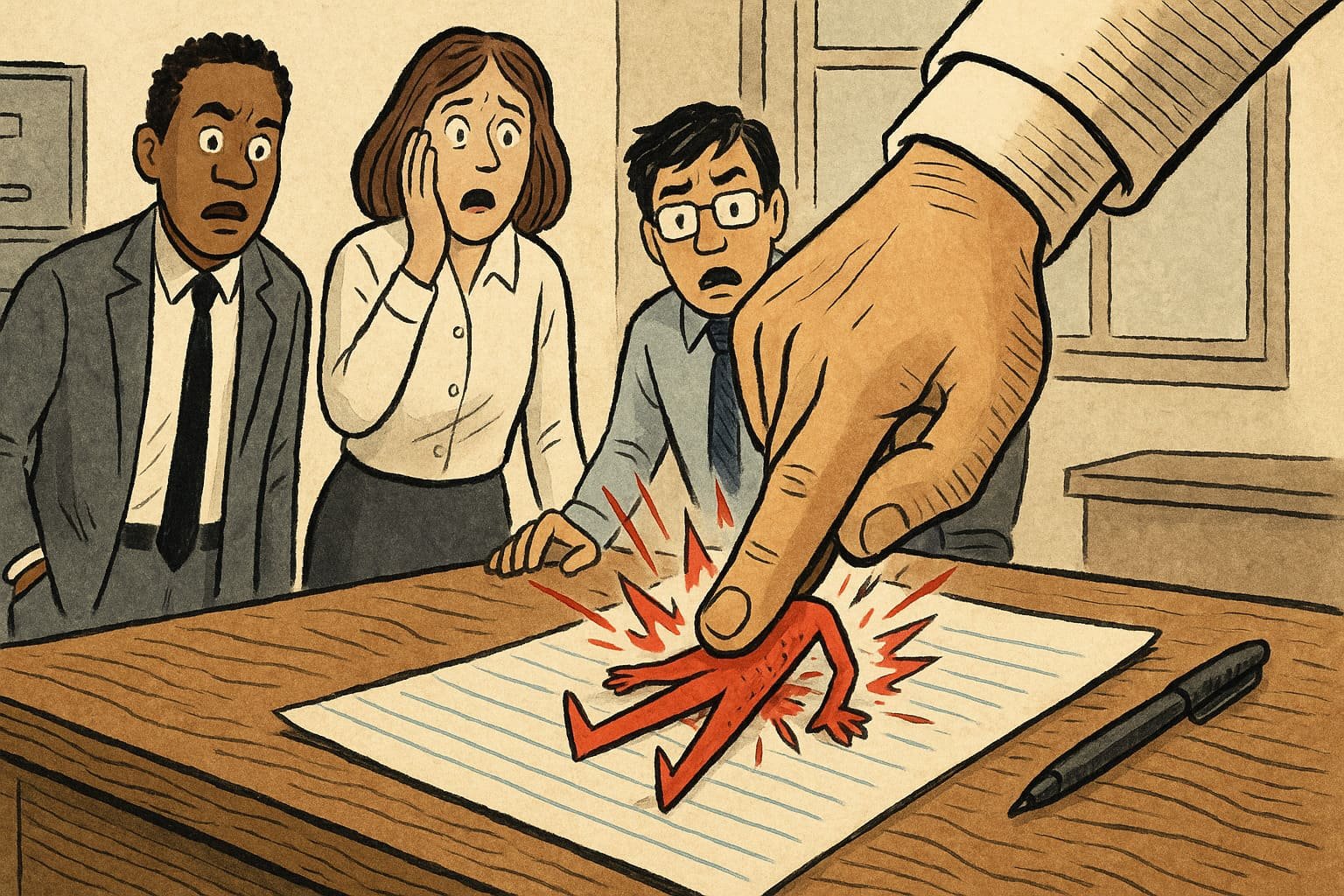
Imagine this: you’re in your office, halfway through the fifth Zoom call of the morning. Your heart is thumping like a techno beat, your palms are slick, and your to-do list is now just a blur of red flags. Sound familiar? Welcome to the business apocalypse; a world where capitalism’s engine doesn’t just demand your time, it feeds on your nervous system. This article isn’t about hustle culture tips or motivational fluff. It’s a survival guide for leaders, founders, and corporate warriors trying to stay human in an increasingly mad business world.
We don’t just burn out anymore. We melt. Business madness isn’t just external pressure; it’s emotional erosion. When deadlines roar louder than your inner voice, when profit charts eclipse personal boundaries, and when your temper turns board meetings into boxing rings, it’s time for a reset. In this piece, we’ll uncover what emotional regulation actually looks like in leadership, why “calm” isn’t a weakness, and how to wield feelings as a strength, not a liability. This isn’t therapy. It’s a strategic recalibration for the emotionally overloaded. It’s about taming your feelings without losing your fire.
Quick Notes
- Emotions Are Not Enemies: Unchecked feelings can destroy deals, but understood emotions can spark innovation.
- The Myth of the Stoic CEO: Vulnerability isn’t weakness; it’s a secret weapon for real trust and sustainable leadership.
- Emotional Regulation Is Strategy: Calm isn’t about detachment; it’s how high performers retain control under pressure.
- The Human Factor Scales: Empathy, self-awareness, and emotional flexibility are core growth multipliers.
- Soft Is the New Sharp: Taming feelings isn’t about suppression; it’s refining raw emotion into tactical clarity.
Feelings Don’t Make You Weak, Ignoring Them Does
In the ultra-competitive business world, emotions are often treated like liabilities. Executives are trained to “manage” feelings like they’re pests rather than internal compasses. But here’s the plot twist: ignoring emotions doesn’t make you stronger; it just blinds you. Sarah Blakely, founder of Spanx, credits her emotional intuition not her education as her sharpest decision-making tool. Emotional suppression might win a quarterly meeting, but over time, it loses your team, your creativity, and your sanity.
Let’s be clear: emotional intelligence is not corporate coddling. It’s operational insight. Understanding your emotional triggers helps you understand the hidden triggers of your market, your clients, and your staff. Jeff Bezos is famously data-driven, yet even he emphasizes “emotional clarity” before major decisions. Suppressing emotion creates fog; embracing it sharpens focus. Feelings are not distractions from the job; they are signals that something in the system needs adjusting.
Consider the story of Troy, a startup founder who exploded at his CTO during a product demo gone wrong. That one outburst lost him both the engineer and a key investor. Not because of the failure, but because his reaction revealed a lack of emotional maturity. Had Troy paused, acknowledged his stress, and approached it with composure, the story could’ve ended very differently. Instead, unprocessed emotion killed momentum. The lesson? Feelings left unchecked are feelings weaponized.
Modern leadership isn’t about emotional neutrality. It’s about emotional mastery. High-functioning teams mirror their leaders’ emotional temperature. When you normalize reactivity, you get volatility. When you model composure, you create a culture of resilience. The emotional tone you set becomes your company’s operating system. Are you installing chaos or calm?
The narrative needs to change. Emotional self-awareness is no longer a luxury of “nice” leaders. It’s a hardcore strategic asset. Your business doesn’t need a robot CEO. It needs a human who knows when to roar and when to retreat. And most importantly, someone who knows the difference.
Leading Isn’t About Control. It’s About Response.
Leadership used to be equated with control of people, outcomes, processes. But what if the true marker of leadership is emotional response, not micromanagement? Think of Jacinda Ardern—her leadership during global crises wasn’t memorable because she controlled every outcome, but because her responses were anchored, honest, and human. Today’s markets move too fast for perfection. But they respond to empathy and swift adaptation.
Micromanaging emotions is like taping over a leak with a sticky note. It doesn’t hold under pressure. Leaders who can’t regulate their reactions end up breeding environments of fear and confusion. When your mood dictates your company’s morale, you’re no longer leading; you’re emotionally hijacking your team. Control is brittle. Response is resilient.
Consider Noah, a mid-size agency owner. When a key client walked, he didn’t lash out or rush to patch losses. Instead, he called a team meeting, admitted his disappointment, and invited ideas. The result? The team not only respected him more, but came up with a strategy that attracted three new accounts. Emotional honesty didn’t fracture trust; it built it.
Self-regulation isn’t about bottling your anger, it’s about channeling it into progress. It’s knowing the difference between a knee-jerk reaction and a thoughtful decision. Emotional discipline doesn’t neuter your passion; it weaponizes it for precision. Like a samurai sword, your emotions need sharpening, not shaming.
If your business feels chaotic, start by watching your own reactions. The way you respond in crisis sets the tone for everyone else. Do you spiral, snap, or steer? Your team is watching. So is your market. Response is the new reputation.
Empathy Doesn’t Kill Profit: It Multiplies It
Let’s address the boardroom bias: that empathy is soft, slow, and bad for business. That myth is not only outdated; it’s dangerous. Companies that treat humans like machines eventually break down. But teams led with empathy innovate faster, retain talent longer, and navigate crises better. Feelings aren’t distractions. They’re data.
Take the example of Brian Chesky at Airbnb. When COVID tanked the travel industry, Chesky didn’t just fire people via template emails. He held live Zoom meetings, offered extended health coverage, and helped employees find new jobs. This emotional transparency didn’t weaken the brand. It turned employees into lifelong brand advocates. Empathy became exponential ROI.
Empathy also opens creative doors. When you understand what your team fears, craves, and values, you unlock deeper collaboration. Emotional understanding breeds psychological safety, which is the seedbed of innovation. You can’t build a disruptive product with a team that’s emotionally constipated. You need space for bold ideas, weird questions, and yes; vulnerability.
There’s also a brutal irony at play: leaders who avoid emotions in the name of productivity end up spending more time cleaning up emotional fallout. Burned-out employees quit. Mistreated partners disengage. Cold brands lose customer loyalty. Empathy isn’t a warm fuzzy perk. It’s operational insurance.
If your workplace feels emotionally dead, profits won’t bring it back to life. Culture is a heartbeat. And it pumps from the leader’s chest. You want a resilient business? Then start building emotionally fluent teams.
Emotional Burnout Is a Business Risk
We talk about financial audits and cybersecurity, but rarely about emotional breakdowns. And yet, one unmanaged burnout episode can derail an entire quarter. Founders don’t just crash. They crumble silently, buried beneath unchecked pressure. Emotional burnout isn’t personal weakness. It’s an unmeasured business liability.
Burnout doesn’t knock. It creeps. You’ll notice it in missed details, short tempers, and creeping cynicism. Before you know it, your strategic vision turns foggy. Your decision-making degrades. And worst of all, your passion goes flat. This isn’t melodrama. It’s what happens when you run your business like a machine and forget you’re not one.
Take Rebecca, a VP in a high-growth SaaS firm. She used to be the company’s engine. But after a year of nonstop crises, she snapped at a junior analyst in a public Slack channel. That moment, viral in internal memes, gutted morale. It wasn’t just a bad day. It was a red flag waving at leadership. They brought in executive coaching, restructured workloads, and introduced regular emotional check-ins. Productivity didn’t dip; it doubled.
Recovery from burnout requires more than a yoga mat. It demands a culture shift. It means normalizing mental health conversations, modeling self-care, and embedding emotional literacy into your operations. Leaders who see emotions as strategic levers, not liabilities, build antifragile companies. Ones that bend but never break.
If your startup feels like it’s on fire, don’t just throw water. Find the emotional spark. Was it unprocessed grief? Chronic overdrive? Lack of feedback loops? Burnout isn’t a character flaw. It’s a warning system. And ignoring it doesn’t make you brave. It makes you blind.
Calm Isn’t the Absence of Chaos. It’s Command Over It.
In high-stakes business, calm isn’t a passive state. It’s an active power move. Think of it as emotional command: the ability to think clearly when everyone else is panicking. Calm isn’t weak. It’s the posture of those who’ve wrestled the storm inside and won. In chaos, calm leaders aren’t quiet because they’re scared. They’re silent because they’re choosing their move.
Elon Musk’s demeanor during SpaceX’s many early failures wasn’t hyper. It was focused. Calm leaders aren’t disengaged. They’re dialed in. That stillness becomes a stabilizer. When you show restraint, others stop spiraling. Your control becomes their anchor. That’s not soft power. That’s elite performance.
But here’s the truth: calm is earned, not inherited. It comes from brutal self-awareness, disciplined habits, and emotional reps in the gym of experience. You build it by learning to breathe when angry, to pause before replying, and to sit with discomfort without outsourcing it to someone else. It’s tactical serenity.
Calm is also contagious. Your team watches how you show up under pressure. If you model grounded behavior, you teach people to lead themselves. If your voice shakes, their work does too. Calm leadership isn’t about image. It’s about internal alignment. The war outside doesn’t matter if you’ve made peace inside.
So the next time your company hits turbulence, don’t ask how to fix the problem. Ask how to hold your presence. Don’t just steer the ship. Be the ocean it sails on. Calm isn’t a reaction. It’s an identity.
Your Emotional Operating System
Let’s be blunt; the business world isn’t getting easier. It’s getting louder, faster, more volatile. But here’s the insight few dare to speak: your emotions aren’t barriers to success. They are the infrastructure of sustainable leadership. The modern businessperson isn’t just managing metrics. They’re managing energy, identity, and meaning. Taming your feelings gently isn’t weakness. It’s mastery.
So, if your company feels like it’s spinning out, don’t look at your numbers first. Look in the mirror. Are you reacting or responding? Are you projecting chaos or holding composure? Emotional fluency might be the most underrated KPI in today’s world.
And if you think emotional intelligence is fluff, remember this: history doesn’t remember the loudest CEO. It remembers the one who turned panic into progress and led not just with logic, but with heart. This is your moment to recalibrate, to choose stillness over shouting, precision over panic. Not just for you. But for the legacy you’re building.
Ask yourself this: Are you leading from your feelings or through them?
Because in a world gone mad, emotional mastery isn’t just rare. It’s revolutionary.
