
New York’s skyline glitters like an altar to ambition, where fortunes and families rise or fall with every heartbeat of the trading floor. “Wall Street: Money Never Sleeps” unleashes a drama that slices through the heart of finance, throwing viewers into the storm of 2008’s economic meltdown. Gordon Gekko’s legendary return electrifies the screen, his shadow stretching far beyond the canyons of Wall Street into every corner of personal ambition, betrayal, and redemption. Each frame pulses with the raw energy of greed’s evolution, as the old king of excess stares down a new era of volatility and moral ambiguity.
Shia LaBeouf’s Jake Moore becomes the story’s wild card—a young proprietary trader desperate to avenge his mentor’s ruin while chasing dreams that feel just out of reach. Carey Mulligan’s Winnie Gekko, torn between love and trauma, adds layers of vulnerability that ground the financial chaos in emotional reality. Their relationship becomes a microcosm of generational pain and hope: can trust survive in a world built on risky bets and empty promises? The question lingers with every market swing, every personal confession, and every secret deal brokered in the shadows.
The film doesn’t just resurrect Gordon Gekko’s ruthless wisdom; it interrogates whether the world has truly learned anything since his first fall from grace. Michael Douglas’s performance remains magnetic, balancing regret, cunning, and unexpected flashes of humanity. His character doesn’t merely haunt the margins of the new financial crisis—he seizes the narrative, provoking fresh debates about legacy, loyalty, and what it really means to win.
Money, in Oliver Stone’s vision, is never just currency; it’s love, revenge, security, and a weapon all at once. Each decision, whether driven by hope or desperation, triggers ripple effects that upend careers, destroy friendships, and ignite redemption arcs as volatile as the Dow itself. Stone transforms arcane financial lingo into human drama, connecting the dots between abstract trades and the people who risk everything for one more shot at the dream.
As Wall Street’s engine lurches between ruin and rebirth, audiences are treated to a spectacle that mirrors real-life headlines—where CEOs plead for mercy, regulators scramble to contain chaos, and ordinary lives are swept up in decisions made by a handful of men in suits. The film’s narrative is both cautionary and thrilling, a portrait of capitalism on the brink that refuses to let viewers look away.
Quick Notes
- Gordon Gekko returns after years in prison, ready to rewrite the rules of the game.
- The 2008 financial crisis forms the backdrop, intensifying the stakes for every character.
- Jake Moore’s quest for vengeance collides with his love for Winnie and a thirst for success.
- Themes of betrayal, forgiveness, and second chances play out both on Wall Street and at home.
- Real-life echoes: the story draws inspiration from historic collapses, making it resonate with anyone affected by the meltdown.
The Pulse of Power: Plot Unfolds in a Ruthless Arena
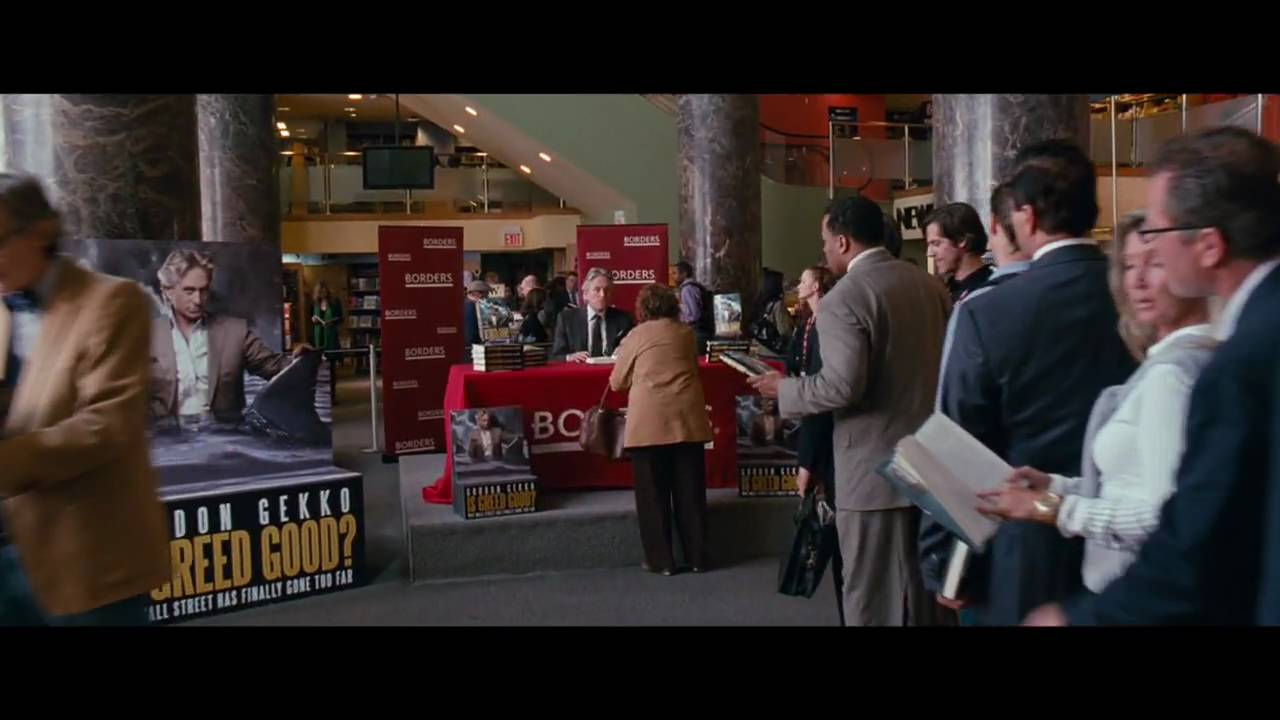
Gordon Gekko’s reappearance isn’t greeted by applause but by suspicion. Stripped of his empire and haunted by personal loss, he reenters a Wall Street transformed by new players and dangerous bubbles. Released from prison, he pivots from outcast to author, his book “Is Greed Good?” becoming a blueprint for both warning and seduction. Jake Moore sees him as a gateway to wisdom and revenge, desperate to save both his career and his relationship with Winnie, who dreads repeating her family’s legacy of pain.
Jake’s mentor, Louis Zabel, faces ruin as financial dominoes fall, pushing Jake to the edge of despair. In a moment reminiscent of the Bear Stearns collapse, Zabel’s firm crumbles under the weight of toxic assets and boardroom betrayals. Jake’s rage against the system crystallizes into a vendetta against Bretton James, a ruthless banker at Churchill Schwartz whose cold ambition rivals even Gekko’s in his prime.
The young trader becomes entangled in Gekko’s schemes, forming an uneasy alliance fueled by secrets and half-truths. As Jake navigates treacherous markets and moral gray zones, he realizes every partnership has hidden costs. Gekko’s charisma is both a blessing and a curse, drawing Jake into the same temptations that destroyed others before him.
The financial crisis isn’t just a backdrop—it’s a living antagonist, destabilizing relationships, institutions, and hopes. Regulators scramble to plug holes in a sinking ship, while power brokers maneuver to shield themselves from disaster. Oliver Stone’s camera lingers on anxious faces and ticking clocks, translating the abstract terror of a credit crunch into human terms.
In a climactic series of twists, loyalties are tested and lines between right and wrong blur beyond recognition. Jake and Winnie must decide whether love can withstand betrayal, while Gekko engineers a move that could either destroy or redeem him. The final act delivers both justice and heartbreak, refusing to settle for easy answers or neat moral resolutions.
Greed, Guilt, and Glory: Unmasking Wall Street’s Hardest Lessons
Money’s grip extends far beyond stock tickers. Jake’s journey shows how ambition can morph from fuel for progress into a trap, ensnaring those who fail to draw boundaries between professional risk and personal integrity. He learns that no matter how brilliant or passionate you are, trusting the wrong mentor can shatter everything you love. The film’s take on mentorship is brutally honest: not every guide is a hero, and sometimes the greatest lesson is learning to walk away from someone you once idolized.
The story drives home the truth that no one operates in isolation. Each financial move—each handshake, leak, and gamble—ripples through families and markets alike. Gekko’s own fall and rise are haunted by the daughter he lost to Wall Street’s heartless calculus. Winnie’s fear of repeating her father’s mistakes turns her into a voice of conscience, reminding viewers that every trade has a human cost. Real-life examples of Enron and Lehman Brothers remind us that the pursuit of profit often blinds organizations to the devastation they leave behind.
Redemption in finance doesn’t come easy. Gekko’s efforts to reconnect with Winnie, regain his reputation, and find meaning after prison reflect a real-world phenomenon: even the most disgraced tycoons seek second acts, but the path is littered with temptations and betrayals. The film echoes the true stories of CEOs like Michael Milken, who after scandal, reemerged in philanthropy and finance—proving that legacy is always up for negotiation.
Trust emerges as the rarest commodity of all. Jake’s relationship with Winnie, battered by secrets and half-truths, underscores how easy it is for ambition to crowd out honesty. The story mirrors countless real scenarios: think of whistleblowers who risk everything to expose corruption, or couples who must choose between loyalty and survival. True resilience, the film suggests, comes from staying grounded when temptation calls.
Perhaps the sharpest insight is that crises reveal character. As Wall Street teeters on the edge, those who thrive are not always the smartest, but the most adaptable, courageous, and ethical. The film’s characters serve as mirrors to our own choices: Will you cut corners when the pressure mounts, or will you stand firm and accept the cost? Each viewer leaves the theater asking: “How much am I willing to risk for a shot at greatness?”
Money’s Mirage: Lessons That Outlive the Closing Bell
Ambition alone doesn’t guarantee fulfillment. Jake’s meteoric rise and gut-wrenching setbacks show that a relentless chase for recognition and wealth can hollow out one’s core values. Even the brightest futures can be derailed by ego, haste, or the wrong alliances. Gekko’s experience spotlights how easily one’s reputation, built over years, can dissolve in a single moment of weakness. Across boardrooms from New York to Nairobi, executives face similar dilemmas—where one bold move can either propel a legacy or ignite a scandal.
Loyalty is currency, but its value fluctuates wildly in a world where alliances shift with each new opportunity. Jake and Winnie’s love story feels universal, echoing couples who have weathered economic storms together or crumbled under the weight of secrets. In the real world, trust often determines whether a business or family can withstand external shocks. Case studies like the collapse of Lehman Brothers reveal how even the strongest partnerships unravel when individual interests take precedence over collective well-being.
Forgiveness isn’t weakness; it’s survival. Gekko’s path to redemption underscores the power of humility in a realm defined by arrogance. Organizations such as J.P. Morgan, which emerged from crisis by acknowledging past failures and rebuilding trust, demonstrate that honest reckoning paves the way for sustainable success. The willingness to admit mistakes, make amends, and rebuild from scratch separates fleeting winners from enduring leaders.
Adaptability trumps intelligence. As the 2008 crisis unfolded, firms that survived were those agile enough to change course, cut losses, and innovate under pressure. Jake’s story mirrors that reality—he learns to pivot, rethink strategies, and prioritize values over mere profit. Tech giants like Apple or Amazon, who weathered their own financial storms and pivoted their business models, illustrate the same principle: resilience means more than riding a bull market; it requires the courage to transform under fire.
Ultimately, the movie’s most valuable takeaway is that no fortune is worth sacrificing one’s soul. Both Gekko and Jake confront moments when they must choose between crossing an ethical line or holding fast to their integrity. In a business world still reeling from scandals like the Wells Fargo fake accounts or the collapse of Wirecard, the film’s warning remains urgent. Short-term gains, however dazzling, can never compensate for the loss of character.
The Unforgiving Game of Wall Street—A Spectacle, a Lesson, a Warning
No other industry lays bare the paradoxes of human ambition like Wall Street. “Money Never Sleeps” seduces audiences with its high-wire tension, quick-witted banter, and flashbulb glitz. Every scene crackles with the knowledge that for every dream achieved, another is sacrificed. The trading floor is a gladiator arena, where fortunes are made and lost with the flick of a finger and a ruthless grin. The movie captures that pulse, painting a picture that feels both exhilarating and faintly terrifying.
The human stories woven through the chaos linger long after the credits roll. Winnie’s heartbreak and Jake’s determination to do right by her elevate the stakes beyond mere dollars and cents. Their struggles call to mind countless families whose lives were torn apart by the financial crisis, echoing the very real consequences of unchecked risk-taking. These narrative threads keep viewers invested, making the film as much a love story as a corporate thriller.
What elevates “Money Never Sleeps” above its predecessor is the nuanced portrait it paints of redemption. Gekko’s transformation from villain to antihero isn’t just for show—it invites viewers to reflect on the power of change, the possibility of forgiveness, and the enduring hunger for a second chance. The character arc resonates with anyone who has ever failed spectacularly, then dared to believe they could rise again.
Stone’s direction fuses entertainment with insight, offering both spectacle and substance. For every flashy montage of ticker tapes and glass towers, there’s a quiet moment of reckoning—a phone call, a confession, a handshake that could heal or destroy. The balance of spectacle and substance is what makes the film linger in memory. It feels both timely and timeless, speaking to anyone who has ever faced a crossroads in business, love, or life.
At its core, the film asks a simple, shattering question: What is the real price of winning? The answer will be different for every viewer. Some may see caution, others hope, and still others, a rallying cry to rewrite the rules. As long as money moves the world, the story of Wall Street will never truly sleep.
Disclaimer
It’s also critical to remember that whether the movie is either a work of fiction or real life depiction it must be emphasized that the actions depicted within are not encouraged in reality and shouldn’t be imitated.
