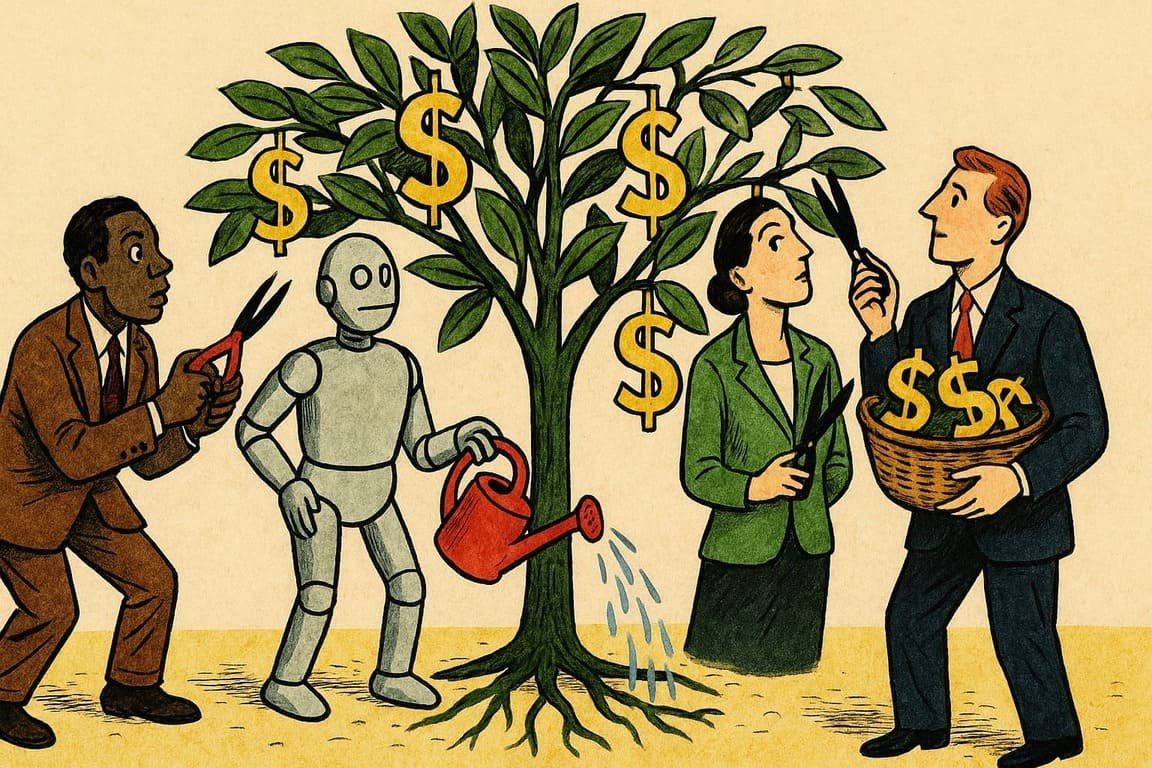
The city pulses after midnight, electric blue screens glowing in offices that never truly sleep. Beneath the glow, an accountant leans over a latte, eyes darting between spreadsheets and dashboards, searching for patterns only the machine seems to understand. Down the hallway, a nervous founder clutches her phone, refreshing an analytics app with trembling fingers, desperate for a sign that tomorrow’s sales will outpace today’s anxiety. In the basement, servers blink in a silent dance, quietly connecting every click, transaction, and outburst across continents.
Outside, rain sweeps through the empty street, while above, a drone hums, making its nightly run for an online grocer. There is no applause for this ballet, no confetti for the code. Yet within these pixel-lit walls, empires are being built and destroyed, not by brute force or lucky breaks, but by invisible armies of smart tools—each one sharpening its edge in the shadows. These are the unheralded allies of the modern age, carving new routes to sustainable profits while old strategies crumble in the rearview.
Ambition has always been hungry, but in this new economy, hunger alone isn’t enough. The hustlers who rise don’t just grind; they automate, optimize, and outsmart the competition at speeds no human could match. Across the world, the boldest names in tech and retail share a secret: sustainable profit is never an accident. It is the compound interest of relentless innovation, where smart tools multiply the gains and protect against the storms.
Nobody celebrates the day their supply chain went AI-native or their customer care switched to predictive chatbots, yet every profit curve from that moment climbs with an eerie smoothness. The old playbook demanded charisma and caffeine; the new one rewards those who let machines do the heavy lifting. The real winners are hiding in plain sight, quietly stacking advantages that last long after the initial hype.
On this stage, technology isn’t just a tool. It is the quiet architect of every sustainable fortune—a shadowy partner that never tires, never blinks, and never stops searching for a smarter way forward.
Quick Notes
1. Secret Weapons Aren’t Flashy: The most profitable tech isn’t glamorous. It works quietly in the background, making old-school hustle look slow by comparison.
2. Data Is the New Compass: Sustainable profit comes from knowing, not guessing. The best teams read digital signals like maps to hidden treasure.
3. Automation Eats Waste: Tasks once burning hours now vanish in a click. This isn’t about replacing people—it’s about removing bottlenecks before they sink you.
4. Adaptation Beats Scale: Big isn’t bulletproof. The fastest survivors tweak, learn, and pivot with every algorithm update.
5. Humanity Still Wins: Behind every smart tool stands a team who questions, tests, and dares to try again. Machines amplify bold ideas, but people give them purpose.
Profit Without the Noise—How Smart Tech Turns Routine Into ROI
Picture a corner bakery struggling every morning, staff racing to fill orders as receipts pile up and ovens groan with missed timing. Across town, a rival café calmly opens at sunrise, the air scented with precision. Their secret? An inventory tool that automatically reorders flour before the bins run low and a scheduling app that adjusts shifts with a tap. Profit doesn’t just appear; it is engineered into every transaction by software that never sleeps.
Smart tools thrive in routine. The true edge isn’t in grand gestures or risky moonshots, but in getting the small details right every single day. A Nairobi retailer once lost thousands to expired stock and late deliveries, until a simple AI-driven tracker exposed hidden patterns in seasonal demand. With a few tweaks, the waste vanished, margins soared, and the store became a case study for quiet transformation. Owner Brian Kiplagat said, “It felt like magic, but it was just a smarter spreadsheet.”
Technology flattens chaos. Customer support platforms route every query to the right agent, automating follow-ups and tracking satisfaction in real time. The result? Fewer angry reviews, more repeat buyers, and a staff free to solve complex issues instead of battling inboxes. At a regional telecom, customer churn dropped as bots tackled routine troubleshooting, while humans handled the real puzzles.
Profit without drama becomes possible when every mundane task is handled by digital hands. No more frantic runs for printer paper, no lost invoices, no panic at payroll time. Managers now walk the floor, actually coaching teams rather than putting out fires. Even the delivery drivers feel it, their routes mapped by algorithms that shave minutes, miles, and fuel from every journey.
The best smart tools aren’t status symbols or flashy upgrades. They’re the quiet heartbeat beneath every thriving business, turning the messy grind into a relentless profit engine. When the noise fades, only the results remain.
Data-Driven Dreams—How Insights Become Sustainable Wealth
Every entrepreneur loves a hunch, but today, wild guesses burn cash faster than a casino weekend. The new breed of business leader craves evidence, not just gut instinct. With smart analytics, every data point—click, swipe, sale, or support ticket—becomes a signal pointing toward a better way to win. The shift is seismic: from guessing to knowing, from stumbling to strategizing.
Data tells stories. At a small Kenyan logistics startup, founder Mary Mwangi realized her fleet’s biggest cost wasn’t fuel but time lost at poorly chosen stops. By tracking GPS breadcrumbs and delivery logs, she identified the hidden traffic black holes and re-planned routes, cutting hours from each day. Her profits grew without hiring a single extra driver. The numbers didn’t just inform; they inspired action.
The most successful teams don’t drown in dashboards. They focus on the few key signals that matter. A food processing company in Eldoret switched from monthly spreadsheets to live analytics. Within weeks, they uncovered a bottleneck that had quietly cost millions in slow production. A single upgrade later, the profit needle moved, and competitors wondered how they’d pulled ahead.
It’s not just about finding problems, but seeing possibilities. Data reveals new markets, forgotten customers, and product trends that no brainstorming session ever could. One Nairobi-based SaaS company discovered a surge in users from South America—insights hidden until a sharp-eyed analyst dug into app logs. Within months, the company pivoted to serve this new audience, doubling growth.
Sustainable profits come from pattern recognition and relentless improvement. Smart tools don’t just deliver charts—they deliver clarity. The future belongs to those who turn insights into action before rivals know what hit them.
Automation Revolution—Where Human Talent Finally Shines
Every office knows the pain of time lost to drudgery. Endless meetings, double-entry paperwork, and busywork that sucks the joy from real problem solving. Automation flips the script: suddenly, the machines take the monotony, freeing people to do what only humans can. The companies who win are those who build systems to give people back their brains.
A mid-sized insurance agency once burned whole afternoons on manual policy renewals. After automating renewals, the team reclaimed hours each week. Senior manager Daniel Njuguna quipped, “Now our best people actually talk to customers, not printers.” The bottom line improved, but so did morale. Employees swapped tedious form-checking for brainstorming sessions that led to two new products in a year.
Automation isn’t a job killer—it’s a talent multiplier. In a family-owned Nairobi bakery, automating inventory and scheduling meant bakers could invent new recipes, experiment with gluten-free doughs, and test packaging ideas. The old “busy equals productive” myth was replaced by “smart equals sustainable.” Profit followed passion.
Smart tools shine brightest when they erase the invisible costs nobody ever measures: burnout, absenteeism, missed chances. At a leading BPO in Mombasa, AI-powered scheduling cut absenteeism and overtime, saving real money and energy. Instead of policing breaks, managers encouraged skill-building and career growth. Customer satisfaction soared, and turnover quietly shrank.
Automation brings its own hurdles. Resistance is natural, especially from those who equate routine with relevance. The leaders who thrive make the transition human, turning skeptics into champions with clear wins and personal growth. Every successful rollout features micro-stories: an overwhelmed accountant who finally leaves work before sunset, a junior clerk who automates a report and gets promoted.
The truth is simple: when machines handle the boring stuff, people make the magic. The tools may be smart, but the advantage always feels human.
Adaptive Strategy—When Tech Makes Survival Look Easy
The graveyards of business history are filled with giants who mistook size for strength. The real winners are not the biggest but the most adaptable—the ones who treat technology as a living toolkit, not a rigid cage. Survival depends on speed, curiosity, and a willingness to rewrite the rules before the market does it for you.
A Nairobi apparel company learned this the hard way. When the pandemic shattered supply chains, founder Jack Omondi used his ERP system to source new suppliers and track orders in real time. While competitors waited for the world to “return to normal,” his firm landed contracts in new markets and secured reliable vendors. The payoff wasn’t in quarterly numbers, but in lasting resilience.
Smart tools thrive in chaos. A hospitality group facing sudden lockdowns switched to online ordering and delivery overnight, launching a customer app built with no-code tools. By the time others joined the digital stampede, their brand was already synonymous with convenience and safety. Their CEO, Amina Hassan, said, “We moved fast because the tools were ready. Speed became our moat.”
Adaptation means letting go of what worked yesterday. The most forward-thinking organizations continually test, measure, and update their systems—never falling in love with a single platform or trend. A small Nairobi digital agency now uses AI to optimize ad campaigns daily, beating bigger rivals who check performance monthly. Winning is no longer about headcount, but about hustle.
Sometimes the right move is to pivot, sometimes to double down. The advantage comes from a feedback loop: experiment, analyze, adjust, repeat. Every market shift is an opportunity for those with eyes open and systems ready. The laggards are left wondering where all the customers went.
Smart tools don’t just help you survive. They teach you how to thrive, turning every setback into a springboard for profit.
The Human Factor—Purpose, People, and Profitable Progress
The smartest technology in the world is useless without people willing to dream, experiment, and sometimes fail spectacularly. Smart tools only deliver sustainable profit when they amplify a culture of curiosity and courage. Leaders who hide behind dashboards miss the point; those who invite everyone to play with new tools unlock true transformation.
Culture eats strategy for breakfast, and now it dines on tech for dessert. At a social enterprise in Nairobi, staff were encouraged to “break” the new CRM system in every way possible. Every glitch became a lesson, every workaround an innovation. Within months, the team had invented three new customer engagement flows—profits rose, but so did loyalty and team spirit.
The best leaders use technology to flatten hierarchies, not enforce them. At an international logistics firm, drivers contributed ideas for route optimization apps, resulting in real savings and a viral reputation for efficiency. Each small experiment added up, creating a momentum impossible to fake or buy.
Human stories drive sustainable profits. When employees feel empowered to suggest new apps or question old workflows, even the smallest change can pay off. A janitor at a Nairobi hospital suggested tracking supplies via barcodes, slashing monthly wastage and winning a staff award. True tech advantage is never top-down; it grows wild and unpredictable, like creativity itself.
Smart tools won’t fix broken values, toxic bosses, or a culture allergic to risk. Profits become sustainable when technology is used to unlock potential, not just squeeze margins. The companies who build lasting wealth invite every employee to bring their best, bravest, quirkiest ideas to the table—and then give them the tools to make it real.
The future belongs to organizations where human ambition and digital advantage move as one, unstoppable force.
Midnight Breakthrough—Where Profit Finds Its Soul
Beneath a velvet sky streaked with neon, a silent office pulses with energy. A CEO stands alone in the boardroom, illuminated by a constellation of blinking servers and restless monitors. Outside, the city churns with possibility, every streetlamp reflecting a thousand untold stories. Here, in this charged silence, profit has taken on a different shape: not just a line on a balance sheet, but a living, breathing legacy.
She recalls the chaos of the early days: the panic of payroll week, the sting of failed launches, the thrill of a single customer’s thank you email. Each challenge, each experiment, each hard-won insight became a brick in a new foundation—one built not on guesswork, but on smart tools wielded by smarter hands. Now, every system hums with purpose, every process a testament to curiosity rewarded and risk redeemed.
In this moment, the divide between man and machine blurs into something electric. The profit is real, but so is the pride. Every lesson etched in late-night code, every failure reframed as innovation, every profit curve shaped by courage and relentless learning. The journey was messy, unplanned, achingly human—and all the more beautiful for it.
Tomorrow, new storms will rage and new tools will emerge. Yet this company will face them armed with adaptability, heart, and the secret weapon of a team that knows how to dream together. The true technology advantage is not in the code, but in the spark it ignites.
You can chase shortcuts or cling to what’s safe. Or you can ask yourself: What kind of profit do you want to build—a fleeting gain or a legacy that survives every storm?
