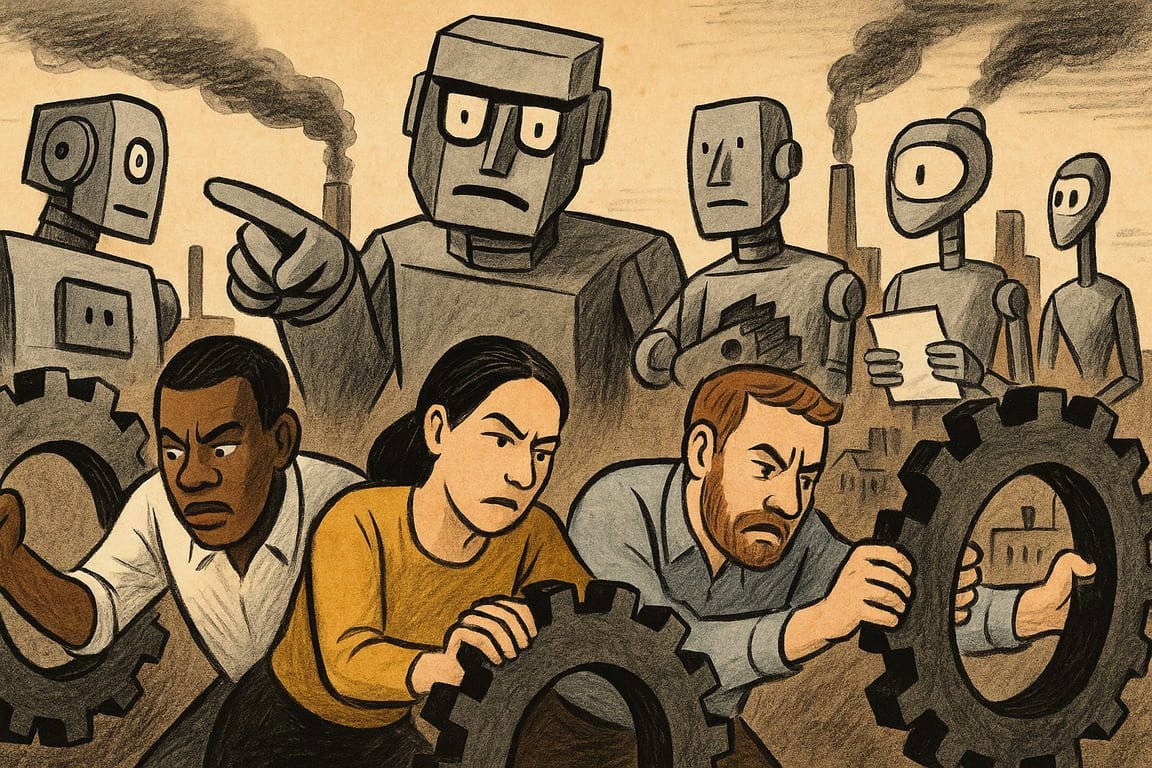
Blue emergency lights washed across deserted factory walls while silent robotic arms continued moving with unsettling precision long after human footsteps had faded. Nobody argued. Nobody celebrated. Every flawless motion exposed a question hanging heavier than steel: when machines become astonishingly capable, what exactly remains uniquely human? Society often imagines technological revolutions arriving like explosions, yet history suggests they arrive quietly, disguised as convenience until ordinary habits suddenly become relics.
Every major technological leap rewrites expectations before rewriting industries. Artificial intelligence is no exception because its greatest influence lies not in replacing people outright but in changing how decisions are made, knowledge is shared, and value is created. Microsoft has woven AI into everyday productivity tools, transforming routine office work into collaboration between human judgment and machine assistance. Samuel, an experienced insurance analyst, first feared automation until repetitive paperwork disappeared, leaving more time for difficult conversations requiring empathy and careful reasoning.
Popular culture often portrays intelligent machines as villains marching toward domination, borrowing imagery from films like The Terminator or The Matrix. Reality looks less dramatic yet far more disruptive because algorithms quietly influence hiring, healthcare, education, finance, entertainment, and transportation every single day. A logistics company led by Noor adopted predictive AI to optimize delivery routes, reducing wasted fuel while allowing drivers to spend less time navigating traffic. Progress emerged not from replacing workers but from redesigning work around stronger decisions.
Every breakthrough introduces new responsibilities alongside fresh opportunities. Artificial intelligence reflects the data, incentives, and priorities chosen by people, making governance as important as innovation itself. IBM has consistently emphasized trustworthy AI, encouraging transparency and responsible deployment rather than blind technological enthusiasm. Professor Timnit Gebru has repeatedly argued that society should examine who benefits from intelligent systems and who bears unintended consequences, reminding leaders that technical brilliance without accountability creates fragile progress.
Technology systems succeed when humans understand their role inside them rather than competing against them. History shows that calculators never eliminated mathematics, spreadsheets never eliminated accountants, and navigation apps never eliminated thoughtful travel planning. Intelligent machines follow the same pattern by amplifying capable professionals while exposing outdated processes that survived only because nobody questioned them. Organizations thriving through digital transformation are usually those that redesign culture, skills, and leadership alongside software instead of treating technology as a miracle cure.
Aurora colors rippled across a frozen horizon where distant silhouettes paused before taking another deliberate step into unfamiliar terrain. Every generation inherits tools that reshape civilization, yet each generation also chooses whether wisdom keeps pace with invention. Machines may become astonishingly intelligent, but purpose, trust, curiosity, and moral courage remain profoundly human responsibilities. The defining question is not whether artificial intelligence will change society, but whether society will change wisely enough to guide artificial intelligence.
