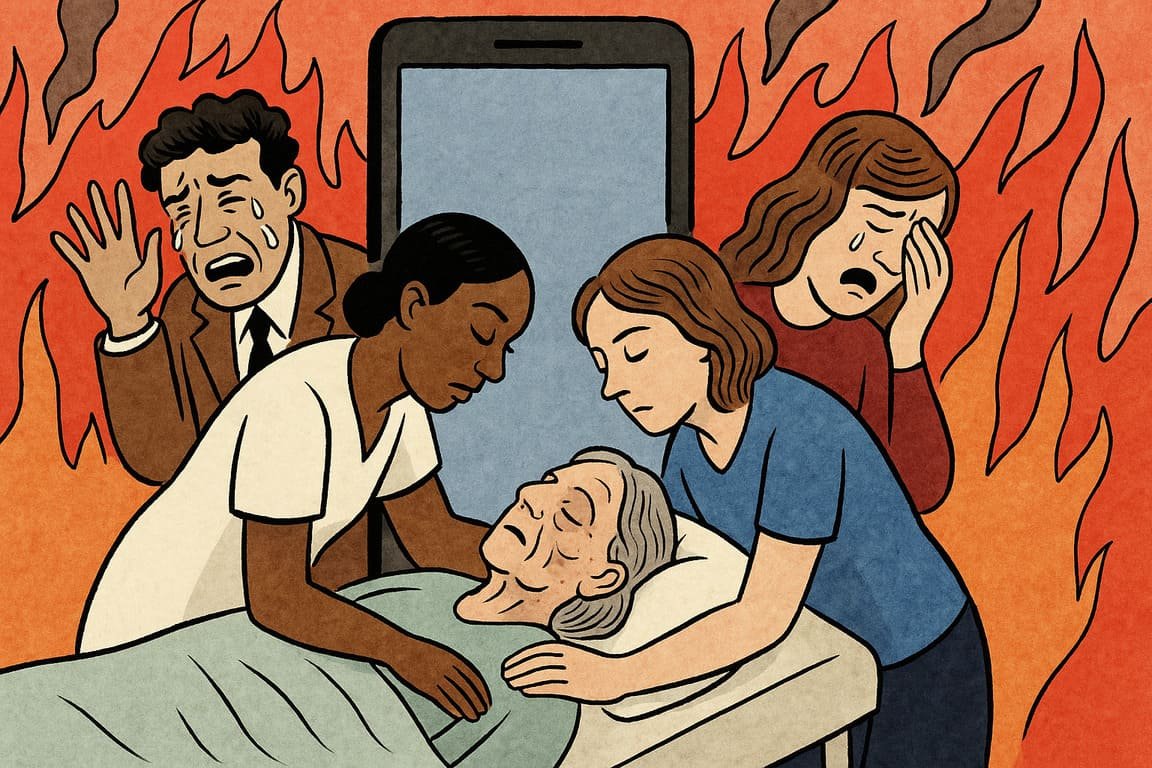
Somewhere in the neon-lit glare of a midnight office, rows of blue light flicker across hollow faces. A thousand conversations hum at once, each voice echoing from glass screens, bouncing around the empty space where warmth used to live. The world’s largest corporations—Amazon, Tencent, Meta—aren’t built on concrete, but on silent networks that push people together, yet leave them cold. On this silent battlefield, empathy once thrived: a simple word, a touch, a knowing glance in a crowded room. Now, armies of code churn silently, rewarding only speed, not kindness, as if compassion has been marked obsolete by a machine’s logic.
Not long ago, a senior manager at a global software firm found herself staring at a cascade of Slack notifications, each one colder than the last. She’d lost count of the number of “urgent” threads about a junior team member’s missed deadline, yet not a single message asked if he was okay. By the end of the week, he’d quit. She still remembers the absence—a gap where empathy should have been, replaced by a performance metric.
Zoom calls fill every hour with pixelated faces and frozen smiles, but hearts beat quietly, alone. In this arena, business rivals duel for market share, and customers plead for support from faceless bots that apologize, but never care. Once, workplace rituals meant shared birthday cakes and commiseration in break rooms. Now, joy and suffering both vanish into algorithmic oblivion.
You don’t notice empathy slipping away until it’s gone. This is the new digital colosseum, where competition is relentless and mercy has no seat. Can caring survive in a world where tech rewards only the ruthless, and every gesture is measured, stored, and ranked? Welcome to the greatest business tragedy of the age: the brutal tech crisis that is killing caring.
Quick Notes
- The Heartless Efficiency Trap: When every second counts, companies reward speed, not compassion. Tech platforms make empathy optional, and soon, nobody bothers to check in.
- Metrics Over Meaning: Digital dashboards track productivity in real time, but the human pulse goes unmeasured. When people become data points, their struggles disappear.
- Remote Work’s Cold Frontier: Endless notifications, faceless avatars, and bots in place of managers—all combine to isolate workers, creating silent suffering behind polished profiles.
- Algorithmic Apathy: Automated responses and customer service bots deliver answers, not comfort. Businesses lose their soul as machines handle human pain with pre-programmed scripts.
- The Human Reboot: The few leaders who revive empathy—like Satya Nadella’s transformative “empathy is everything” pivot at Microsoft—spark loyalty and innovation. The future belongs to those who refuse to let tech kill caring.
The Cold Machine Wins: How Tech Trains Us Out of Caring
Scroll through any major corporation’s Slack, and you’ll see it: short, sharp directives, no greetings, no gratitude, just tasks to be finished. Once, new hires shadowed mentors and learned the rhythms of care—how to recognize when a teammate was burning out or quietly struggling. Today, onboarding means a link to a digital manual and a string of checklists, as if emotion is a glitch to be debugged.
Managers like Lena, a logistics supervisor at a fast-growing fintech, admit to feeling invisible behind their dashboards. She remembers early days when her boss would check in after a rough week, even if numbers lagged. Now, she dreads each Monday’s metrics review: charts up, mood down, with no questions about the personal story behind the stats.
Remote work promised freedom, but for many, it’s solitary confinement. “Every meeting ends exactly on the half-hour. Nobody lingers to ask how you really are,” says Marcus, a project manager in Berlin. Colleagues turn into icons, conversations into bullet points, and the art of listening fades into static.
Pop culture mirrors the problem. In “Severance,” a streaming hit, employees literally cut off their emotions to survive workplace pressures. The satire stings because it rings true—tech trains us to prioritize output, not connection.
A few companies fight the tide. Buffer, known for its radical transparency, publicly shares both successes and mental health setbacks. Their CEO, Joel Gascoigne, posts regular updates about his struggles and triumphs, encouraging staff to do the same. Still, these are rare exceptions in an industry that values machine-like reliability over messy humanity.
Metrics Replace Meaning: When People Become Data Points
Every workplace now thrives on dashboards, KPIs, and real-time scoreboards. Productivity is tracked minute-by-minute, but nobody tracks emotional well-being. Instead, employees are reduced to avatars and bar graphs, each representing efficiency but never exhaustion.
Last quarter, a retail giant’s warehouse staff started missing quotas. Management responded with tighter tracking: more scans, stricter timers, less conversation allowed on the floor. Within weeks, turnover soared, but leadership celebrated the “streamlined workflow.” For the people on the floor, the story was one of lost meaning—tasks got done, but nobody felt seen or valued.
This data obsession even invades customer service. Automated surveys appear after every interaction, asking for a five-star review. There’s no space to say you just needed a sympathetic ear, or that the bot misunderstood your anxiety. If you don’t fit the categories, your struggle vanishes.
A well-known example: an airline’s customer rep, Anna, once got national praise for going off-script and spending hours comforting a stranded traveler after a family tragedy. That story went viral, but the company quietly changed its protocols soon after to limit call times, fearing costs would rise. One act of empathy, then a thousand small acts of restriction.
Theoretical frameworks like McGregor’s Theory X and Theory Y show this tension. The best workplaces assume people are motivated by trust and meaning, not only metrics. Yet most modern systems still treat people as “resources” to be optimized. This leaves the soul of business starved.
Isolation by Design: Remote Work’s Empathy Blackout
A sea of remote workers sits in their kitchens, bedrooms, and rented co-working spaces, connected only by jittery Wi-Fi and a parade of virtual backgrounds. For many, each workday feels like an endless loop—log in, join the call, smile on cue, log out. The small rituals that once built trust—a shared lunch, a walk after a tough meeting—disappear.
In one legal startup, a junior associate named Priya spent weeks perfecting her briefs. She received “thumbs up” emojis, but no real feedback. Her boss later admitted, “I never realized she felt invisible.” When Priya finally resigned, nobody noticed for days.
Pop culture isn’t blind to this pain. The sitcom “The Office” built its heart on awkward, mundane office moments that, together, fostered connection. Today’s version would be silent: just floating heads, brief interjections, and muted microphones.
Some companies try virtual happy hours or “donut chats,” but the warmth of spontaneous, face-to-face empathy rarely translates online. The lack of casual, unscheduled conversation—the “water cooler effect”—means struggles stay hidden, and silent suffering grows.
Dr. Tasha Eurich, an organizational psychologist, points out that empathy drops 40 percent when conversation is digital-only. The subtle cues—tone, body language, the look in someone’s eyes—get lost. Teams drift from camaraderie to quiet competition, and leaders wonder why nobody sticks around.
The Algorithmic Apathy: When Bots Replace the Human Touch
Businesses are eager to automate everything. Customer service? Outsourced to chatbots. Employee support? Handled by AI-powered wellness apps that check in with a cheery “How are you feeling today?” but never follow up if you reply, “Terrible.”
In a major telco, a manager named Rami watched his team’s morale drop after the rollout of a bot-powered HR system. Where once a sympathetic HR rep would notice patterns and reach out privately, now every issue generates a ticket—and a robotic response. When Rami flagged a team member’s crisis, he was told to “open a support request.”
Tech companies pitch AI as the cure for inefficiency, but algorithms don’t read subtext. A team in Atlanta recently had to rely on a chatbot to handle bereavement requests. The bot sent flowers but missed the point: the grieving employee felt unseen.
“Westworld,” the sci-fi series, hints at this dystopia: hosts mimic empathy but lack true feeling, leaving visitors cold and haunted. In business, it’s the same. Genuine comfort cannot be programmed, and yet the industry keeps trying.
Some startups buck the trend. Zappos, famous for legendary customer care, lets agents go off-script, even if it costs time. Their stories—like the agent who sent pizza to a snowed-in caller—prove that one act of unscripted empathy can build loyalty worth more than any algorithm.
Empathy as a Superpower: Leaders Who Refuse to Let Caring Die
In a digital world set to reward speed and efficiency, the rarest leaders double down on empathy. Satya Nadella’s arrival at Microsoft famously shifted the company’s culture from cutthroat to compassionate. He made “empathy” a company value, not just a buzzword, and the impact rippled through teams and products alike.
Netflix co-founder Reed Hastings admitted in a rare interview, “It’s not the code that builds a company—it’s the way people are cared for during the hardest moments.” Netflix’s success comes not just from smart algorithms, but from creative freedom and emotional safety.
Frontline managers can change lives with one thoughtful question. Ask Lillian, who manages a retail chain in Lagos. She lost her father during a product launch and was terrified to tell her team. Her boss noticed the change in her voice, paused the launch, and brought in support. That moment of empathy made her fiercely loyal—and inspired her own leadership style.
Empathy sparks innovation. At IDEO, designers are trained to “walk in the shoes” of customers, visiting their homes and sharing meals to truly understand their lives. This leads to products that feel human, not just functional.
True caring is contagious. When leaders show vulnerability and reach out, teams mirror the behavior. Empathy multiplies, even in digital spaces, when someone dares to start the chain reaction. The organizations that thrive tomorrow will be the ones that refuse to let caring die.
When the Last Light Flickers: The Silent Revolution of Care
Inside the vast, humming server rooms of tomorrow’s corporations, a single desk lamp glows. A lone figure sits among humming machines, reading an email that simply asks, “How are you, really?” For a moment, the noise fades, and something rare fills the room—a sense that connection still matters, even when algorithms would have us forget.
Empathy isn’t a bug in the system. It’s the update every business needs, the feature that can’t be coded or outsourced. When the last line of code has run, and the screens go dark, the measure of any organization will be the warmth that lingers long after the machines power down.
Every reader, every leader, faces the same silent choice: Will you let the cold machine win, or will you fight for the spark that makes us human? You get to choose whether the next message you send will carry data, or deliver care.