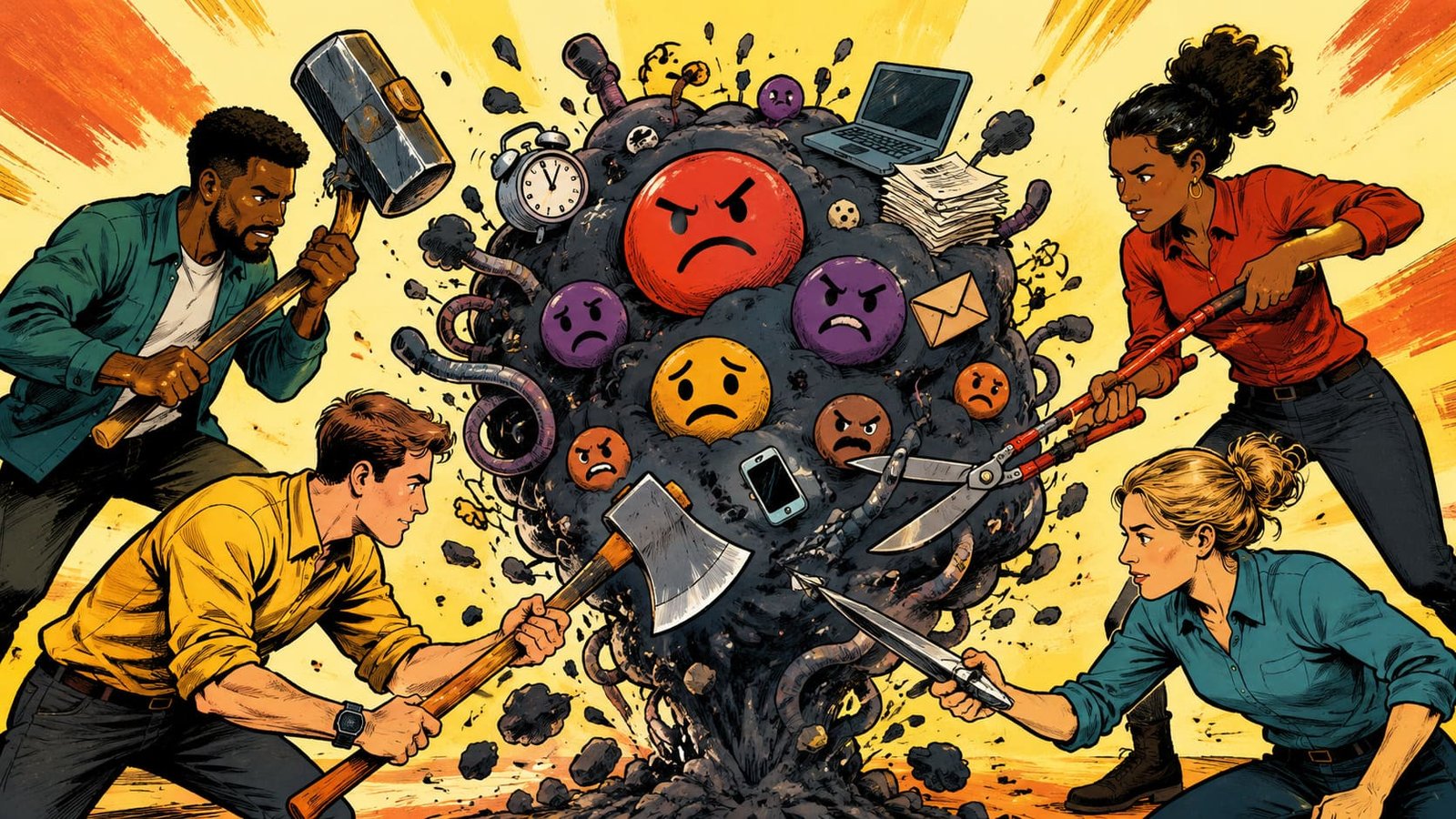
A chair scraped across polished concrete, then another, until an ordinary meeting sounded strangely like distant thunder. Faces stayed composed, laptops glowed, coffee cooled, yet one anxious glance ricocheted across the room faster than any email. Stress behaves that way inside organizations. Rarely announced, always contagious. What begins as one overloaded calendar, one hurried reply, or one exhausted manager quietly becomes a workplace climate, shaping conversations, decisions, creativity, and trust before anyone realizes a cultural shift has already begun.
Organizations often treat stress as an individual weakness instead of a system signal. That mistake carries a hidden price. Employees rarely burn out because of one difficult afternoon. They wear down after countless moments when uncertainty, unrealistic expectations, and emotional pressure become routine. Psychologist Amy Edmondson has long argued that people perform better when psychological safety exists, yet safety disappears surprisingly fast when tension spreads unchecked. Healthy cultures are not built by eliminating pressure. They are built by preventing unnecessary pressure from multiplying through everyday interactions.
Imagine a product manager named Elena preparing for a software launch. A delayed supplier triggered one frustrated conversation with her director, who unknowingly passed that frustration into another meeting. By lunchtime, designers questioned priorities, engineers avoided difficult conversations, and customer support anticipated complaints before receiving any. Nothing catastrophic had happened. Everything simply felt heavier. Contrast that with Microsoft, where leaders have increasingly emphasized empathy, continuous learning, and manager coaching under Satya Nadella’s leadership. Performance remained important, yet emotional tone also became a strategic resource rather than an afterthought.
Curiously, beehives offer a lesson many boardrooms overlook. Bees communicate danger through rapid behavioral signals, allowing entire colonies to react almost instantly. Humans do something remarkably similar at work. A nervous leader who rushes every discussion silently teaches everyone else to hurry. A calm leader facing identical challenges sends an entirely different message. Daniel Kahneman’s work on fast thinking reminds us that people absorb emotional cues before logical explanations. Culture therefore travels through behavior first, policy second, and motivational posters somewhere far behind.
Another story unfolded inside a manufacturing company led by operations executive Ravi. Production targets climbed while absenteeism quietly followed. Initial conversations focused on attendance numbers until one supervisor asked a different question. Why had break rooms become silent? Workers admitted they feared raising small problems because every concern seemed to disappoint management. Leadership redesigned shift discussions around listening before directing. Productivity recovered gradually, yet turnover fell even faster because employees experienced respect before efficiency. Strange as that sounds, dignity often outperforms urgency in sustaining performance.
Far across an empty corridor, footsteps echoed without revealing who approached, leaving every unopened office door carrying quiet anticipation instead of fear. Workplaces rarely transform through spectacular speeches or expensive wellness campaigns. They change because ordinary people interrupt stress before stress rewrites everyone else. Each conversation becomes either another spark or a small bucket of water. Ask yourself this: what emotional chain reaction will your next interaction begin?
