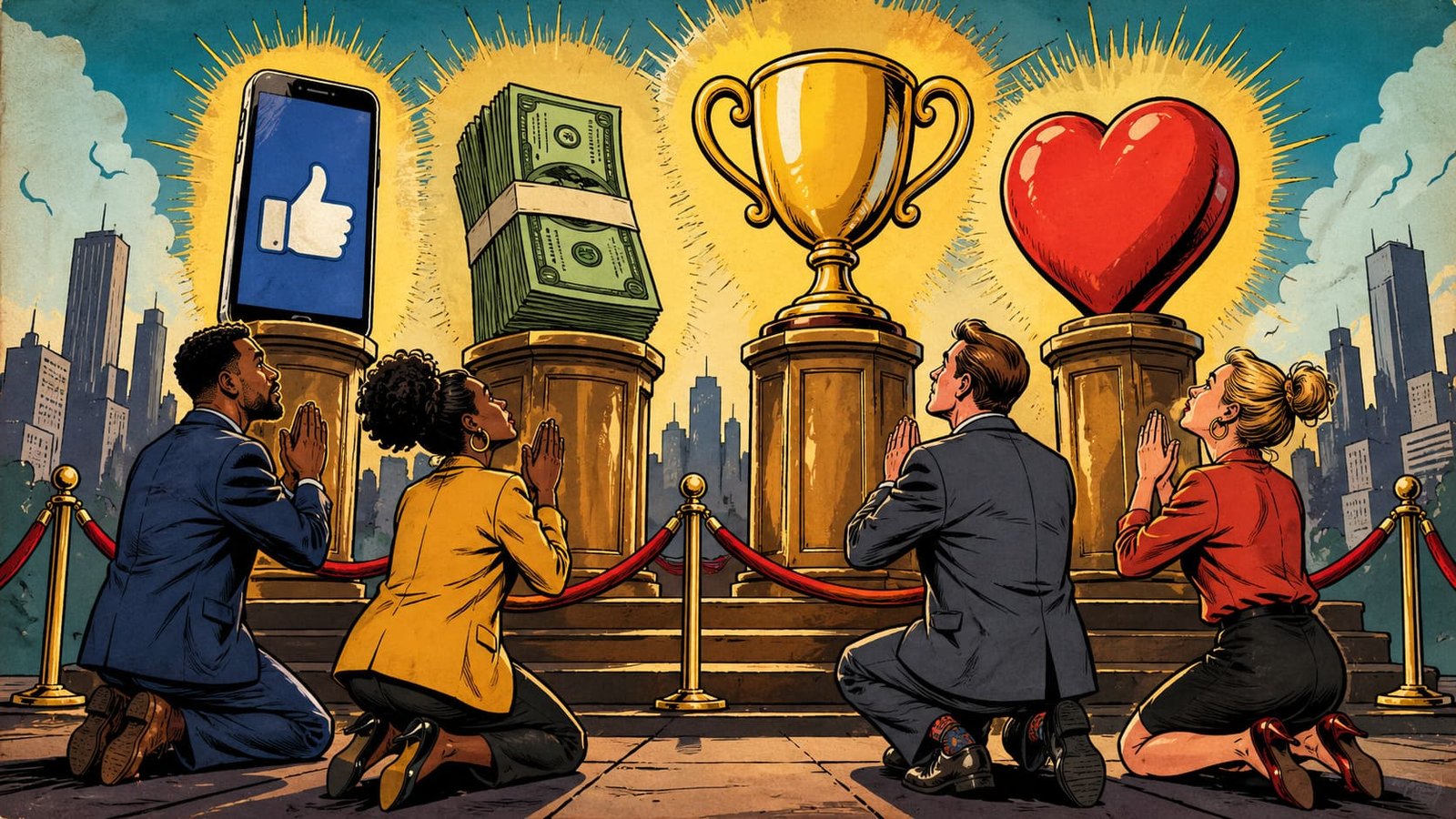
A massive screen flickers in a packed arena, light spilling across faces that glow with anticipation. No sermon is spoken, no doctrine recited, yet something sacred seems to pass through the air. Hands rise, eyes fixate, bodies lean forward in unison. It looks like entertainment. It feels like reverence. In an age that prides itself on rational thinking, symbols continue to wield a strange and undeniable authority. They move people faster than arguments, deeper than logic, and more collectively than reason ever could. Even when belief appears to fade, symbols remain, quietly commanding attention, shaping behavior, and creating moments that feel almost ritualistic.
The power of symbols lies in their ability to compress meaning into a single image or gesture. Where language explains, symbols evoke. They bypass the slow work of analysis and strike directly at emotion. A national flag, a corporate logo, a simple icon on a screen can carry layers of history, identity, and aspiration without saying a word. Consider Mei, a brand strategist who spent months refining a visual identity for a global campaign. She noticed that audiences responded not to the detailed messaging, but to a single image that captured the essence of the brand. That image became the focal point, the anchor that everything else revolved around. It was not just design. It was a symbol that people could feel.
Modern culture often underestimates this dynamic, assuming that information alone drives decisions. Data is essential, but it rarely inspires action on its own. Symbols create a sense of connection that information struggles to achieve. They give people something to rally around, something to recognize instantly, something that feels larger than individual experience. This is why movements, whether social, political, or cultural, invest heavily in imagery. A single visual can unify diverse groups, creating a shared identity that words alone cannot sustain. The symbol becomes a shorthand for belonging.
The relationship between symbols and power becomes especially visible in moments of collective emotion. Concerts, sporting events, and large gatherings often generate an atmosphere that feels almost transcendent. The crowd moves as one, responding to cues that are often visual rather than verbal. A sports captain raising a trophy, a performer stepping into a spotlight, a crowd waving lights in unison, these moments carry a weight that extends beyond the immediate context. They create a sense of unity, a shared experience that lingers long after the event ends. The symbol becomes a focal point for that emotion.
There is also a subtle interplay between symbols and identity. People use symbols to express who they are, what they value, and where they belong. Clothing, accessories, digital avatars, even the way someone curates their online presence, all function as symbolic expressions. A designer named Rafael once described his work as creating visual language for identity. He observed that clients were less concerned with functionality and more interested in what the design communicated about them. The symbol became a way to signal alignment with certain values or communities. It was not just aesthetic. It was personal.
Pop culture amplifies this phenomenon by constantly generating new symbols that capture the imagination. Memes, icons, and viral imagery spread rapidly, shaping conversations and influencing perception. These symbols often emerge organically, reflecting shared experiences or cultural tensions. They can be playful, ironic, or deeply serious, yet they all share a common function. They distill complex ideas into something immediately recognizable. This immediacy gives them power, allowing them to travel quickly and resonate widely.
The persistence of symbolic power suggests that it fulfills a need that reason alone cannot address. Symbols create coherence in a fragmented world. They provide a focal point for attention, a way to organize experience around something tangible. Without them, meaning risks becoming abstract, difficult to grasp, harder to share. Symbols make meaning visible. They give it form, allowing it to be recognized and repeated. This visibility reinforces their influence, creating a feedback loop that strengthens their role in culture.
There is, however, a tension embedded in this dynamic. Symbols can unify, but they can also divide. Their power to evoke emotion can be harnessed for connection or for conflict. This duality makes them both valuable and potentially dangerous. Understanding their influence requires recognizing that they are not neutral. They carry the intentions of those who create and use them, shaping perception in ways that are often subtle yet profound.
At the edge of that glowing arena, a figure stands apart from the crowd, watching as thousands respond to a single image projected above them. The reaction feels immediate, almost instinctive, as if something deeper than thought is at work. The world outside continues to celebrate logic, to prioritize analysis, to believe that understanding comes from explanation. Inside, a different truth unfolds. Symbols do not wait for understanding. They create it. They gather people, focus attention, and give shape to feelings that would otherwise remain diffuse. And in that quiet authority, they reveal that even in a world that claims to move beyond belief, something still commands the instinct to kneel.
