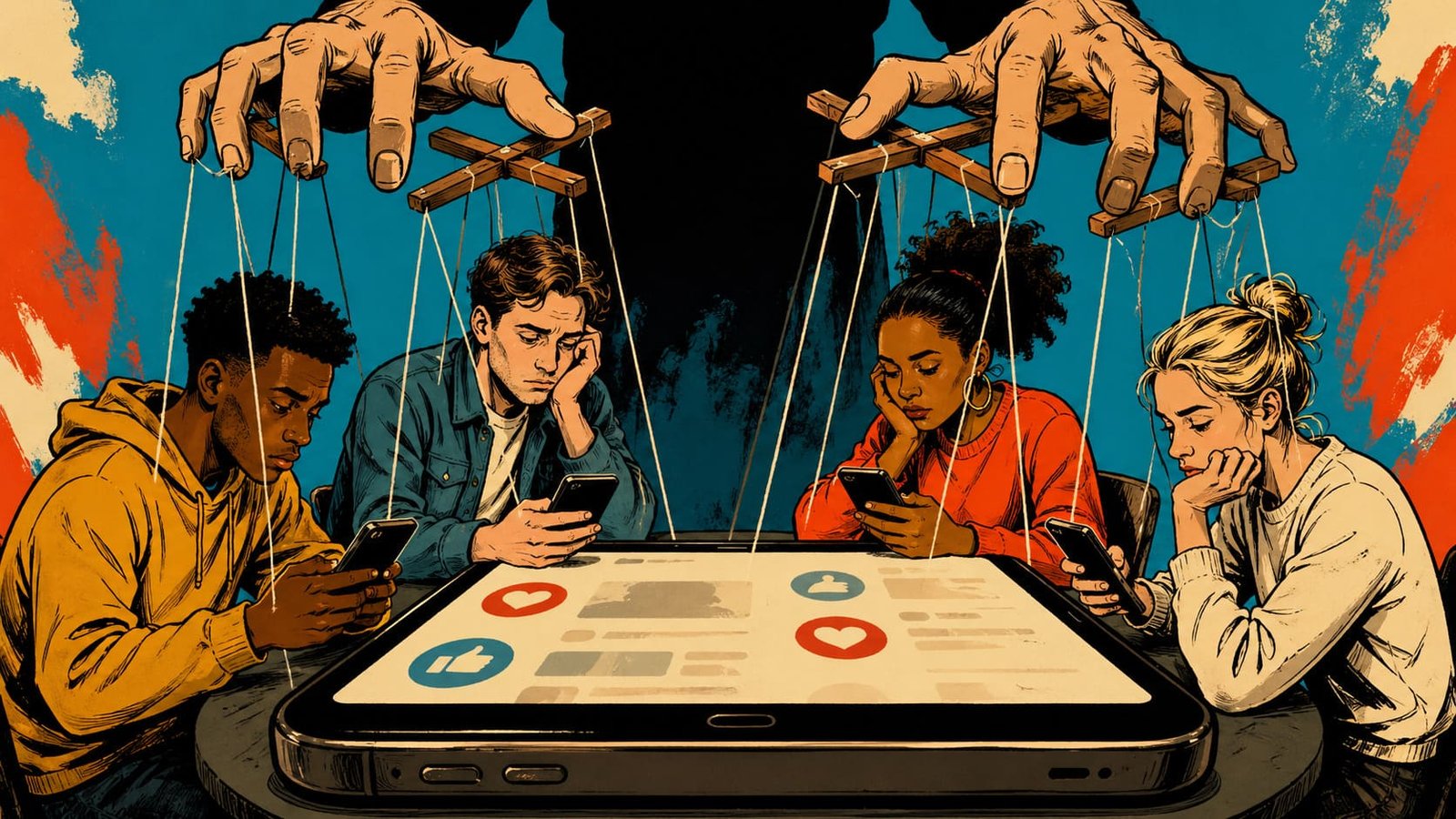
A quiet exchange unfolds behind every swipe, invisible yet precise. A screen lights up, a finger hesitates, then moves. Somewhere far from the user, a system records that pause, measures its length, assigns it meaning. No alarms sound. No warning appears. The moment feels ordinary, almost forgettable. Yet it becomes part of a larger pattern, a map drawn not by intention but by behavior. The unsettling truth is not that data is collected. It is how seamlessly the collection blends into daily life.
The modern feed does more than display content. It observes, learns, adapts. Every interaction becomes a signal. What is watched to completion, what is skipped, what is replayed, all of it feeds into a system designed to refine itself continuously. Over time, the experience feels increasingly tailored, almost intuitive. The convenience is undeniable. So is the quiet transformation of behavior into something measurable, something that can be analyzed and, in subtle ways, influenced.
A data analyst named Miriam once described the process during a late-night conversation over lukewarm tea. She worked on a platform that optimized user engagement. Her team did not need personal details to understand patterns. They focused on actions. A slight increase in viewing time, a small shift in scrolling speed, these signals revealed preferences more accurately than any survey. Miriam spoke with a mix of fascination and unease. The system knew what people responded to before they articulated it themselves.
This dynamic extends beyond entertainment. E-commerce platforms track browsing habits to predict purchases. News apps adjust headlines based on reading patterns. Even navigation tools learn routes and suggest alternatives based on collective behavior. Each system operates independently, yet together they form a network of observation that feels both helpful and intrusive. The line between assistance and surveillance becomes difficult to define.
A small business owner named Otieno experienced this from a different angle. After launching an online store, he relied on targeted advertising to reach potential customers. The tools allowed him to identify audiences with remarkable precision. He could see which products attracted attention, which descriptions resonated, which images led to conversions. The insights were powerful, almost addictive. Yet they also revealed how much of consumer behavior could be anticipated and shaped through careful analysis.
The broader implications are not limited to commerce. When behavior becomes data, it can influence how people are perceived and treated. Recommendation systems determine what content is visible. Advertising algorithms decide which messages reach which audiences. These processes are often opaque, operating without direct oversight from those affected by them. The result is a landscape where decisions are guided by patterns that are not always fully understood.
A university researcher named Grace once conducted a simple experiment. She created multiple online profiles, each with slightly different browsing habits. Within days, the content each profile received diverged significantly. One profile was exposed to more educational material, another to entertainment, another to sensational news. The differences were not random. They reflected the system’s interpretation of behavior. Grace realized that the digital environment was not a neutral space. It was actively shaping the information each profile encountered.
There is a psychological dimension that often goes unnoticed. The feeling of being understood by a platform can create a sense of comfort. Recommendations that align with personal interests feel helpful, even thoughtful. A software developer named Karanja described it as “being seen without speaking.” Yet this sense of recognition can also mask the extent to which behavior is being tracked and analyzed. The experience feels personalized, but the process behind it remains largely invisible.
Pop culture has begun to grapple with these themes, often portraying technology as both a tool and a force that operates beyond direct control. Stories about artificial intelligence and data-driven systems reflect a growing awareness of how deeply these technologies are embedded in everyday life. They capture a tension between convenience and autonomy, between efficiency and privacy.
The business world continues to innovate within this framework, refining systems to become more accurate, more responsive, more integrated. Companies compete not just on products, but on their ability to understand and anticipate user behavior. This creates a cycle where improvement is driven by deeper observation, leading to experiences that feel increasingly seamless while relying on increasingly complex data analysis.
Somewhere in a quiet room, a student named Wanjiru scrolls through a feed that feels perfectly aligned with her interests. The content flows effortlessly, each piece connecting to the next. It feels natural, almost organic. Yet beneath that flow lies a network of systems constantly learning, adjusting, refining. The experience is smooth because it is carefully constructed.
In that construction, a subtle shift occurs. The user is not just consuming content. The user is contributing to a system that studies, predicts, and adapts. The relationship is not one-directional. It is a continuous exchange, one that evolves with every interaction.
And within that exchange, a realization begins to emerge, quiet but persistent. The more seamlessly technology understands behavior, the easier it becomes to forget that understanding is being built in real time.
You scroll, you pause, you engage, and somewhere in that effortless rhythm, you must decide whether you are simply using the system or becoming part of what it is learning to control.
