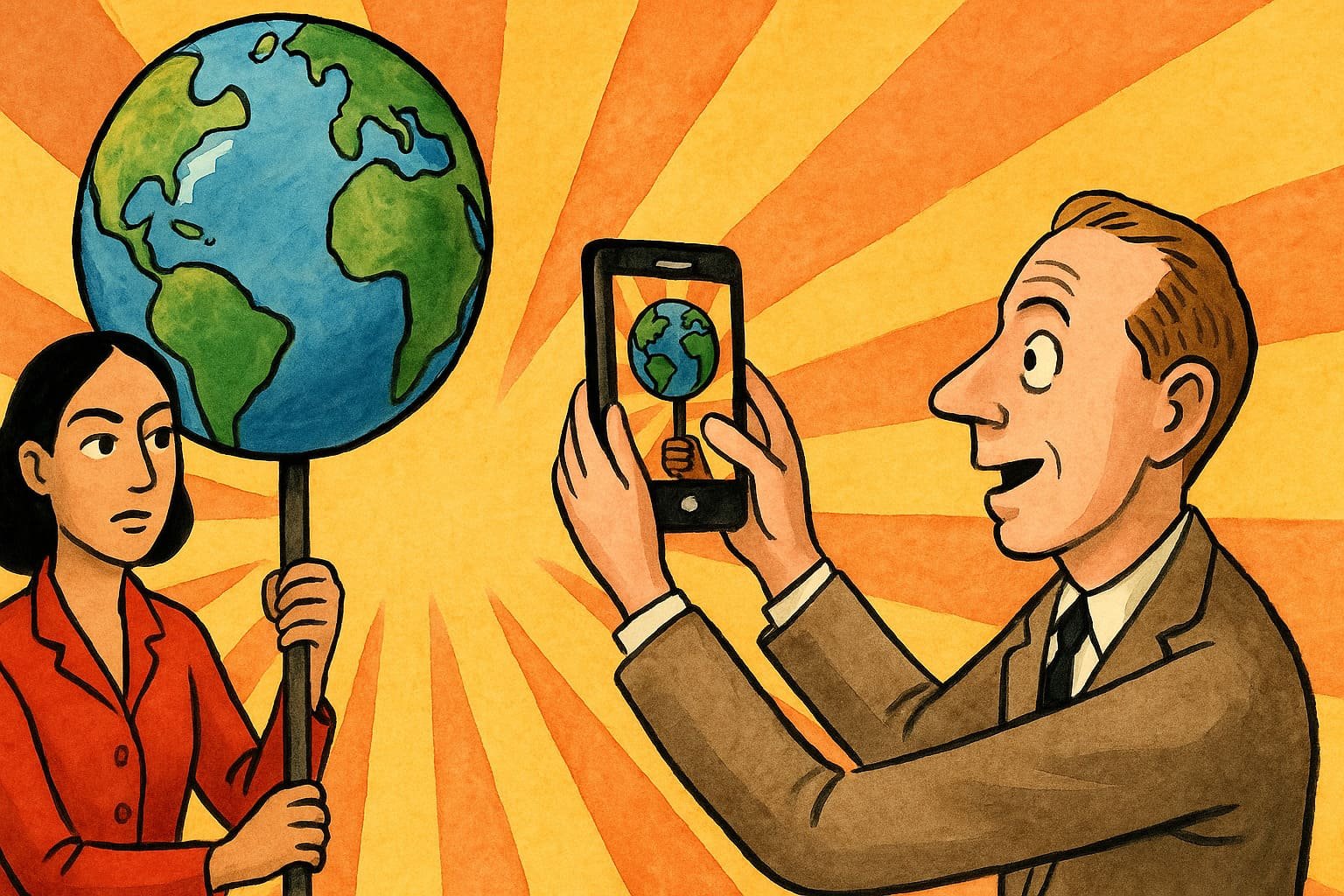
Beneath a cascade of digital confetti, a founder stands before a glowing audience. Spotlights cut through the velvet dark. The city outside flickers, but inside this rented theater, the air crackles with purpose. Shoes tap nervously. Phones record every word. This is not just a product launch. It’s a call to save the world.
Beneath the surface, tension vibrates like a bass drop before the chorus. Eyes hunger for something bigger than profit. Some crave hope. Others chase validation. Most just want to belong to a story that matters. The pitch begins, weaving tales of transformation, justice, and clean oceans. Slides dance with images of smiling children and forests reborn. Each sentence draws the crowd closer, fueling an invisible fire of collective ambition.
Rows of investors lean in, breath held between expectation and skepticism. Old hands remember the buzzwords from last year’s messianic disruption—blockchain for poverty, AI for peace, protein bars for planetary healing. Someone at the back stifles a laugh. Another wipes away a tear. Nobody looks away. The performance is flawless, the narrative irresistible, the promise intoxicating.
A young woman in the second row whispers to her friend: “Do you think they really mean it, or is this just marketing?” Her friend shrugs, eyes locked on the founder’s trembling hands. Outside, the city’s problems remain unsolved. Inside, the illusion is perfect. Everyone wants to believe—if only for a moment—that startups can save the world.
A single phrase hangs in the air: “Purpose-driven.” Once, it meant sacrifice and struggle. Now, it launches IPOs and trends on TikTok. The room waits for revelation. In that pause, the lines between mission and manipulation blur, and nobody seems to notice. That’s the magic trick of modern entrepreneurship: when selling salvation, sincerity is the product, and the story is everything.
Quick Notes
- Purpose Pays, But Truth Hurts: The louder a founder screams about “changing the world,” the more you should check their profit margins and hiring practices. If the story sounds too grand, look for the real incentives behind the curtain.
- Your Mission Is a Marketing Weapon: Having a higher purpose is not a luxury. It’s the sharpest tool in your branding kit. Authenticity isn’t always honest; sometimes it’s rehearsed.
- Hype Heals Nothing (But Sells Everything): From eco-shoes to mental health apps, startup founders craft messianic narratives not because they’re evil, but because those stories work. Every viral cause is a case study in selective storytelling.
- You’re the Target, Not the Hero: Startup stories hijack your longing for meaning. You’re sold a front-row seat in the revolution. But the real heroes are often the ones backstage, mopping up the mess after the confetti settles.
- Saving the World Sells Shares: Investors back big visions, not spreadsheets. When Adam Neumann told WeWork’s cult he was “elevating the world’s consciousness,” he moved billions—until the story snapped. Want to spot the next crash? Follow the narrative, not the numbers.
The Cult of Mission – When Hope Becomes a Commodity
Startup launches no longer just unveil technology. They script redemption. The world’s most successful entrepreneurs discovered that packaging a higher mission is the ultimate growth hack. It’s not enough to build a great product; you have to promise meaning, impact, and transformation—on a global scale.
One can’t help but recall TOMS Shoes, the company that offered not just footwear but also the promise of alleviating poverty with every purchase. Consumers lined up, eager to believe they could change the world by shopping. That “one for one” mantra echoed through Instagram stories and late-night infomercials. For a while, it worked. But the allure of mission-driven buying often faded, replaced by accusations of shallow impact and performative virtue.
You might remember Jessica, the sales manager at a once-obscure health tech firm. Her team’s quarterly results lagged until they reframed their message: they weren’t just selling devices, they were “democratizing access to life-saving care.” Conversions spiked. Her CEO congratulated her on “finding the story that moves people.” No one questioned whether the impact matched the pitch.
Simon Sinek’s golden circle—start with why—became gospel in startup boardrooms. Yet, with every founder parroting the power of purpose, skepticism bloomed. Employees whispered about the gap between company mission statements and how people were treated on Mondays. Customers began to sense when a purpose pitch was pasted on. It became harder to know who was real and who was rehearsed.
Today’s entrepreneurial culture pushes every founder to become a preacher. But when the line between hope and hype blurs, what does it mean for teams who joined to make a difference? When employees start questioning the story, the spell begins to break. True believers become the harshest critics when promises fall flat.
The Startup Savior Complex – From Pitch Decks to Pop Culture
The image of the entrepreneur as savior has gone mainstream. Silicon Valley’s myth-makers have mastered the language of messianic mission. Founders promise more than software; they vow to cure loneliness, eradicate pollution, and bring enlightenment to the masses. The founder’s hoodie morphs into a superhero’s cape.
Take the meteoric rise of Impossible Foods. Its founders didn’t just invent a plant-based burger—they declared war on climate change, promising to save the planet one Whopper at a time. The media feasted on this narrative, and investors followed. Whether the actual impact met the story became secondary. The promise felt good enough to buy.
Meanwhile, pop culture mirrors this obsession. From Tony Stark’s eco-armor to the fictional Ava in “Devs,” stories center on visionaries who can bend reality with willpower and code. The public eats up these messiah figures, craving heroes who offer solutions as much as spectacle. Even the recent boom in superhero franchises reflects the cultural thirst for larger-than-life solutions to complex problems.
In the back offices of countless startups, teams scramble to script their own epic tales. Copywriters inject “save the world” language into every landing page. Interns debate whether to call their feature a “revolution” or an “awakening.” Venture capitalists nod sagely when they hear the word “impact,” secretly wondering if it’ll make for a better exit story.
Then comes the backlash. Ex-employees post anonymous Medium essays. Twitter threads dissect every inflated claim. The bigger the promise, the harsher the fall. The world watches, popcorn in hand, as startups collapse under the weight of their own myth. Still, the cycle repeats. New saviors rise. The audience demands another show.
The Hype Trap – Selling Stories, Forgetting Substance
You’re told every great brand needs a narrative. Marketers insist that without a moving mission, your product is dead on arrival. Purpose is no longer a differentiator. It’s a requirement—like a logo or a privacy policy.
Many founders try to reverse-engineer meaning after the fact. They create noble slogans to wrap around something ordinary. Once, an online stationery startup floundered until its founder, Anil, pivoted the pitch. The brand became about “sparking creativity in children everywhere.” Suddenly, teachers and parents noticed. Orders rolled in. The mission worked, but the gap between story and product remained uncomfortably wide.
Look around, and you’ll find teams haunted by this tension. Engineers develop features they don’t believe in, just to fill the narrative gaps in a quarterly report. Marketers agonize over purpose-driven Instagram campaigns, while customer support fields complaints about broken promises. The disconnect breeds cynicism.
Case after case reveals the fallout. Theranos told a tale of revolutionizing health, while the reality was smoke and mirrors. Fyre Festival promised utopia, delivered chaos, and left everyone questioning how much of what they buy is just theater. Even companies with real impact sometimes get trapped by their own myth, unable to pivot or admit failure without shattering their carefully constructed facade.
This is not an argument against ambition. The problem isn’t dreaming big—it’s forgetting that mission statements don’t build products or fix problems. The hard work happens after the applause. Only then do you see who’s willing to trade story for substance.
The Shadow of Authenticity – Weaponizing Empathy in the Digital Age
Purpose has become a performance art. Every press release, every podcast, every “why us” page is an audition for the audience’s trust. In a digital world, sincerity is currency—and every company wants a bigger slice.
The rise of social impact startups has triggered a gold rush of performative empathy. Brands rush to support trending causes, not always out of conviction, but because silence risks irrelevance. After a single tweet about climate change, one fashion CEO found herself hailed as a visionary. A month later, customers discovered her supply chain still relied on exploitative labor. The backlash was swift and merciless.
Empathy, once a personal virtue, is now a corporate strategy. Executives train to “lead with vulnerability,” hoping to win hearts and minds. Social media amplifies every tearful confession, every pledge to “do better.” But beneath the public declarations, employees whisper about toxic cultures. “We care about you,” proclaims the onboarding video. The next week, half the team is gone.
Not every company fakes it. Some, like Patagonia or Ben & Jerry’s, have roots that run deep. Their actions match their stories. Yet even the most authentic brands face pressure to keep feeding the narrative beast. There’s always another cause to champion, another crisis to monetize. When sincerity becomes a commodity, trust becomes a casualty.
For the new generation entering the workforce, the stakes feel personal. Young professionals want meaning as much as money. They seek out purpose-driven employers, only to discover the difference between “story” and “truth” isn’t always clear. Disillusionment sets in. But the longing for something real remains.
Rewriting the Playbook – Owning Your Narrative, Facing the Fallout
There’s no putting the genie back in the bottle. Purpose sells. Stories persuade. The temptation to weaponize mission will only grow. The best founders know that the story is not the enemy. The real danger is believing your own hype.
Every company faces a choice: chase applause or build something that outlasts the story. History remembers the visionaries who delivered, not just the ones who promised. Consider Yvon Chouinard, who quietly built Patagonia’s legacy not through grandstanding, but by embedding impact into every decision. The brand’s story stuck because it was lived, not scripted.
For most startups, the reckoning comes quietly. Employees question, “Are we really making a difference?” Investors demand proof, not poetry. Loyal customers can smell inauthenticity faster than any brand consultant. Founders who weather the storm are those who adapt, listen, and let their mission evolve beyond the press release.
The new rulebook is harsh. Those who fake it risk exposure. Those who admit mistakes, adapt, and keep building will win lasting trust. A true mission is messy, full of failure and contradiction. It’s not a performance, but a process. The world doesn’t need more saviors. It needs more honest builders.
So, if you’re tempted to sell a purpose you can’t prove, remember: the story might make you rich, but only the truth will make you legendary.
Smoke, Mirrors, and the Price of Belief
Inside a quiet boardroom, after the crowd disperses and the applause fades, the founder sits alone with their story. The windows reflect the city’s distant hum, each light a silent reminder of promises made and debts unpaid. The air tastes of cold coffee and spent adrenaline. On the wall, the mission statement glows in neon, both a badge of honor and a ghost.
Colleagues’ laughter echoes in the halls, replaced by the hush of uncertainty. Words that once soared now weigh heavy, each letter pressed down by the weight of expectation. Across town, a former employee rewrites their resume, erasing every trace of a dream that outgrew its skin. A customer stares at an unboxed product, hoping to feel the spark they saw in a viral ad. Meaning slips through their fingers like sand.
The brand’s story survives online, repeating in hashtags and think pieces. But in the silence of the office, truth lingers: ambition built the stage, but only integrity will fill the seats tomorrow. Every founder learns that purpose can light a fire—or burn everything down.
You carry that torch now. Will you risk the blaze?
