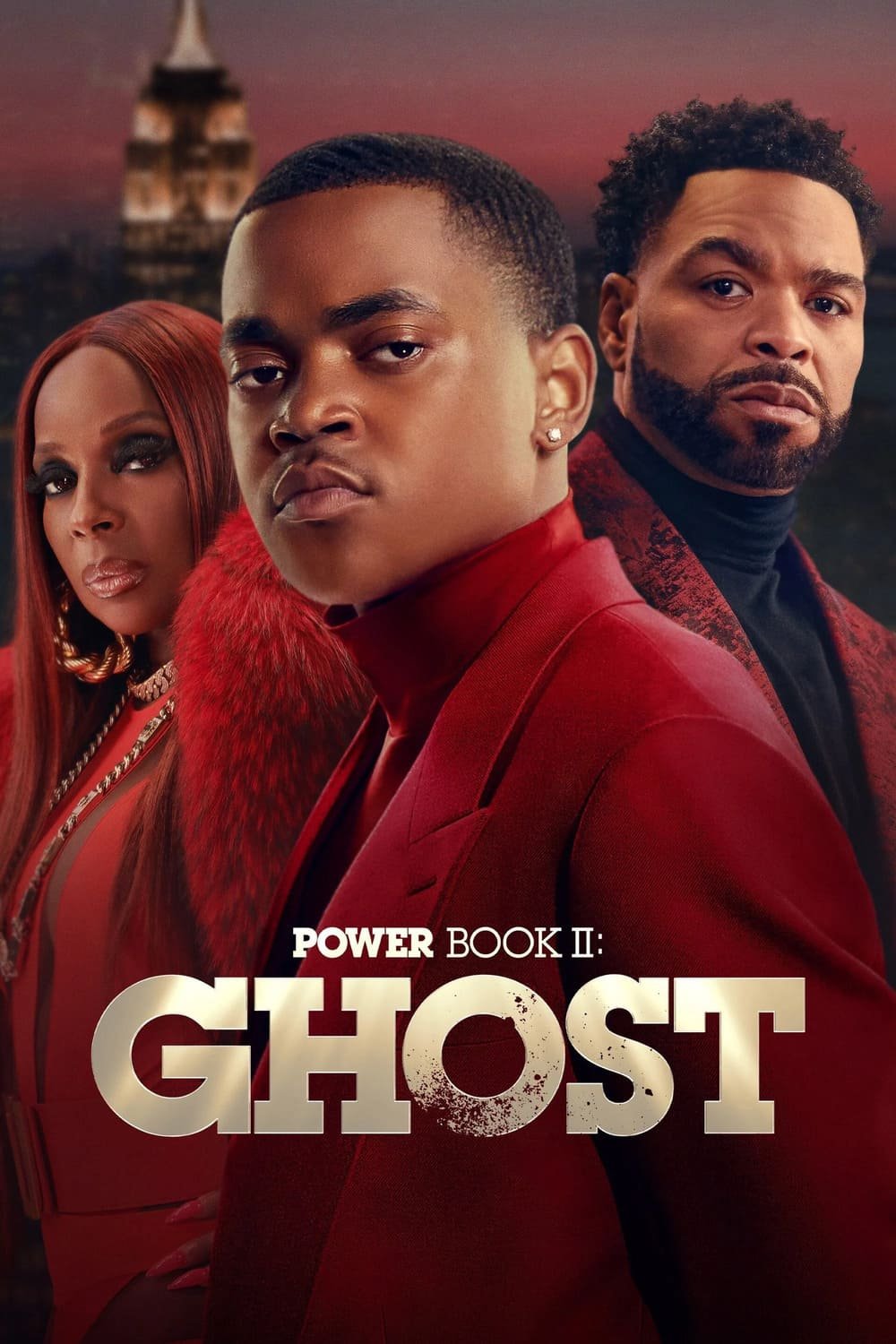
Storm clouds roll over the city as the next generation steps onto the battlefield of legacy, secrets, and the relentless hunger for more. “Power Book II: Ghost” drops you straight into the fire, where Tariq St. Patrick faces the impossible: clean up his father’s tangled mess, keep his mother out of prison, and somehow outplay the ghosts that still haunt every corner of his life. The show explodes with urgency, never pausing long enough for viewers to catch their breath. Every episode throws open the doors to rooms where trust is a luxury, ambition is an addiction, and family always comes at a price.
This spin-off wastes no time proving it is nobody’s sidekick. Ghost may be gone, but the game has evolved, and now Tariq becomes the reluctant antihero, pulling strings with a sharper, more desperate edge. The stakes? Sky-high. The decisions? Messy, painful, and shockingly real. Here, every friend is a potential traitor, every classmate hides a secret, and no one truly escapes their past. As the show unfolds, you’ll see that legacy is a double-edged sword—one moment it opens doors, the next it slams them in your face.
Ruthless power grabs, razor-sharp dialogue, and unpredictable plot twists make “Power Book II: Ghost” a masterclass in contemporary storytelling. The writing never flatters or apologizes. It throws viewers into deep moral waters, where right and wrong shift like shadows across Manhattan. The relationships, especially between Tariq and his enigmatic professor, Monet Tejada, deliver raw emotional power that keeps fans glued to the screen. Every alliance is transactional, every favor comes with strings, and every moment is another step on a tightrope over disaster.
Beneath the crime and intrigue, the show pulses with themes that reach far beyond television. It interrogates what it really means to break generational cycles, navigate systemic injustice, and chase success while dragging family baggage behind you. It’s a bold exploration of how a new era writes its own rules, even while haunted by old ghosts. If you thought “Power” ended with the death of Ghost, think again. His shadow covers every move, every lie, every confession whispered in the dark.
Fans hungry for something grittier, smarter, and more relevant than recycled crime dramas will find themselves hooked instantly. “Power Book II: Ghost” is not content to coast on nostalgia. It builds a universe where today’s choices feel personal and urgent—where you can’t help but ask, “If I were Tariq, what would I sacrifice to survive?” That’s the heart of this show: making every viewer confront the cost of ambition and the impossible burden of inheriting someone else’s sins.
Quick Notes
- The next generation’s crown: Tariq fights to define himself while evading his father’s fate.
- Education meets danger: Ivy League ambition mixes with criminal masterminding.
- Monet Tejada’s rule: A matriarch brings her own ruthless justice to every deal.
- Family, loyalty, betrayal: No relationship is ever safe or simple.
- Legacy’s price tag: Escaping a father’s shadow can be deadlier than living in it.
Inside the Maze: “Power Book II: Ghost” Unspools Its Genius
A new story rises from the ashes as Tariq St. Patrick lands in the privileged halls of Stansfield University. While his classmates focus on studies and social scenes, Tariq’s world balances precariously on the knife edge of criminal survival and academic pressure. Every lecture is a reminder that intelligence alone can’t untangle the spiderweb his father left behind. The Ivy League setting creates an electric contrast, showing how privilege and desperation can share the same campus while living worlds apart.
Monet Tejada steps into the spotlight as a force both maternal and merciless. Her influence wraps around Tariq’s life, challenging his every move and pushing him to make choices that threaten to consume him. The Tejada family brings its own intricate web of loyalties, fears, and double-crosses. With Monet at the helm, their drug operation becomes a chessboard where one wrong move spells disaster. The dynamic between Monet and her children, especially her son Cane, adds layers of complexity, showing how love and brutality often blur in the pursuit of survival.
Tariq’s journey is fueled by desperation and cunning, forcing him to orchestrate deals, cover up mistakes, and manipulate allies just to keep his mother Tasha out of jail. Each episode peels away another layer of his character, revealing an uneasy mix of vulnerability and ruthlessness. Unlike Ghost, who carried the gravitas of a seasoned player, Tariq brings raw urgency, a young man burdened by expectations and haunted by every misstep. The show never lets him rest. Every success is laced with risk, every mistake is a potential death sentence.
Secondary characters—like the calculating lawyer Davis MacLean and the conflicted professor Jabari Reynolds—create tension and depth, each bringing their own motivations and secrets. Davis’s courtroom bravado echoes real-life legal stars who win battles on technicalities while losing the moral war. Professor Reynolds’s obsession with Tariq’s writing blurs the boundary between mentor and adversary, offering a chilling glimpse of how ambition corrodes ethics in both academia and the streets.
Throughout its run, “Power Book II: Ghost” crafts a world where tradition and transformation wrestle for dominance. The show’s visual storytelling, quick pacing, and refusal to sugarcoat violence or consequences invite viewers into an environment that feels both dangerous and authentic. The relentless grind to survive, the cunning required to thrive, and the heartbreak of inevitable losses mirror true stories of families and businesses who fight every day to break free from the past and shape a different future.
Lessons and Insights That Hit Like a Cold Manhattan Night
Ghost’s shadow looms over every scene, proving that legacy is both a gift and a curse. Tariq’s desperate attempts to write his own story highlight how hard it is to break free from cycles set in motion by those who came before. This struggle mirrors the stories of family-run businesses where younger generations are forced to either fix or pay for old mistakes. A well-known real-life example is the Murdoch media empire, where children inherit not just wealth but public scrutiny, pressure, and controversy. The show makes it clear: a fresh start is never clean when old debts remain unpaid.
Trust and betrayal fuel the narrative, teaching viewers that every alliance in life or business comes with hidden costs. When Tariq leans on Monet, he enters into a partnership loaded with risk, just like entrepreneurs who must rely on powerful backers to scale, only to find that independence becomes even harder to achieve. The lesson is sobering—every shortcut to survival comes with a bill you’ll eventually have to pay, often in ways you least expect.
Education becomes a double-edged sword in Tariq’s world. He uses academic achievement to open doors but quickly learns that intelligence alone can’t shield him from danger. The tension between privilege and hustle speaks to real-world struggles faced by first-generation college students who balance family responsibility, cultural expectations, and the temptation to take dangerous shortcuts for success. Just as in the business world, knowledge is powerful only when combined with strategy, support, and the wisdom to walk away when necessary.
Family remains both a sanctuary and a battlefield. The complicated love between Tariq and Tasha, and the volatile bonds within the Tejada clan, underscore the reality that families are often sites of the fiercest loyalty—and the deepest wounds. This mirrors corporate family businesses or tech startups torn apart by succession battles or disagreements over vision. The show’s message is blunt: trust is rare, and sometimes, survival means choosing between blood and self-preservation.
Finally, “Power Book II: Ghost” highlights the relentless adaptability required to survive in today’s world. Tariq’s constant reinvention—whether in academia, on the street, or in the courtroom—offers a sharp lesson in agility. In real life, industries disrupted by technology, such as taxis challenged by ride-share companies, must pivot or perish. Those who adapt, leveraging both heritage and innovation, are the ones who carve out new empires from the ashes of the old.
Why Power Book II: Ghost Redefines Everything You Thought About Legacy
There’s a magnetic pull to “Power Book II: Ghost” that makes it far more than a simple crime drama. It asks the questions that echo in every ambitious heart: Can I escape the shadow of my predecessors? What am I willing to risk to rewrite my destiny? The answers are never easy, and that’s what keeps viewers up at night, hungry for the next twist, the next double-cross, the next chance at redemption.
Tariq’s evolution from a grieving son to a master manipulator is not just character development—it’s a call to anyone who has ever felt trapped by circumstance. His story resonates with young entrepreneurs, students, and leaders everywhere who juggle the demands of family, the lure of opportunity, and the dangers of making the wrong alliances. Watching him fight, adapt, and outthink his enemies is like a masterclass in survival for a generation that’s been forced to hustle harder than any before.
Personal anecdotes from the real world bring this home. Consider Sara Blakely, founder of Spanx, who navigated obstacles and skepticism to build a billion-dollar business. She rewrote her own narrative, ignored doubters, and carved out a legacy unimagined by those before her. Or the collapse and rebirth of the Ford family’s control over their automotive dynasty—a saga of struggle, resilience, and constant reinvention. These stories echo the show’s central question: Will the next generation sink or swim?
The banter, humor, and emotional punch of “Power Book II: Ghost” breathe life into every episode. It manages to find levity in chaos and hope in moments of darkness, a skill mastered only by shows that truly understand the human experience. When the tension builds, witty dialogue or a perfectly timed twist offers release, drawing the audience even deeper into the labyrinth.
After the credits fade, the impact lingers. Viewers are left pondering their own choices, alliances, and the prices they’re willing to pay for survival or success. The show becomes a lens, magnifying the dilemmas we all face and daring us to imagine what we might do if we walked in Tariq’s shoes. That’s why “Power Book II: Ghost” is more than entertainment—it’s a mirror for anyone struggling to write a new story in the shadow of someone else’s legend.
Disclaimer
It’s also critical to remember that whether the TV Show is either a work of fiction or real life depiction it must be emphasized that the actions depicted within are not encouraged in reality and shouldn’t be imitated.
