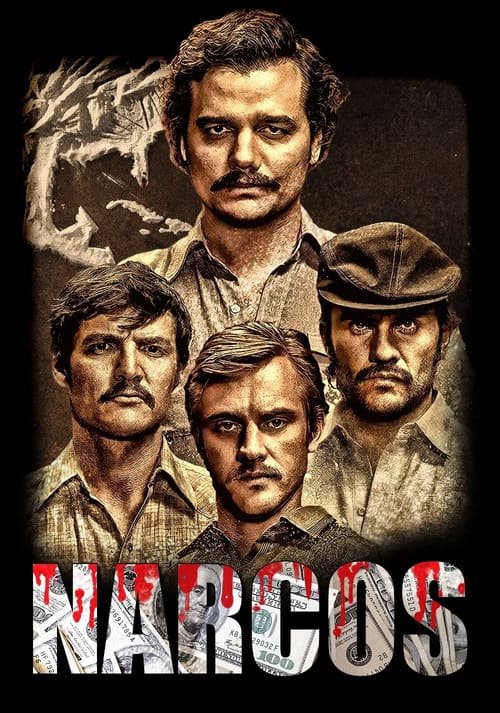
When a TV show claims a place in the cultural zeitgeist, the world listens. Narcos doesn’t just enter the crime drama arena; it slashes the very fabric of the genre, unspooling the saga of Pablo Escobar and the drug-fueled hurricane that engulfed Colombia. Here is a show that swaps glamour for grit, glitz for gunfire, and turns the viewer into a witness, accomplice, and judge in a world where loyalty has a price and truth is a shifting target. Narcos cracks open a world built on ambition and savagery, where the American Dream has a rival: the Colombian Nightmare.
There’s an art to holding an audience hostage from the first scene. Narcos achieves this feat by fusing high-octane action with cold, journalistic storytelling. The show’s narrative prowls between the jungles of Medellín and the halls of Washington, D.C., weaving a web that tightens with every episode. What makes it impossible to look away is not just the bullets or betrayals, but the way every decision triggers a domino effect: families shatter, alliances shift, and the world economy itself trembles.
What separates Narcos from the usual crime saga is its devotion to historical detail and human vulnerability. Here, violence is not faceless; each killing leaves a scar. The creators lace each episode with archival footage and omniscient narration, blurring the boundary between drama and documentary. This fusion invites viewers to question the nature of evil, the cost of power, and whether anyone truly escapes the grip of their own ambition. Every triumph is laced with tragedy, every act of defiance with a ticking clock.
One cannot discuss Narcos without examining the force of personality that is Pablo Escobar. Wagner Moura’s portrayal feels less like acting and more like summoning a spirit. The actor channels a charisma both intoxicating and terrifying, embodying the contradiction of a man who built schools and bombed cities. Each gesture hints at both vulnerability and menace, making the character’s rise and fall feel both inevitable and shocking. The supporting cast, from lawmen to rivals, build a world so immersive that it’s easy to forget you’re watching fiction.
The show’s reach extends far beyond the television screen. Narcos has inspired debate, analysis, even pilgrimage: fans travel to Colombia to trace Escobar’s footsteps, while critics dissect the ethics of turning real pain into entertainment. Its viral popularity has spawned countless think-pieces, internet memes, and spin-offs. Every element—from the haunting theme music to the sharp subtitles—invites viewers to engage, argue, and reflect. In a world hungry for both escapism and meaning, Narcos delivers a narcotic dose of both.

Quick Notes
- Based on Real Events: Narcos draws directly from the rise and fall of Pablo Escobar, the Medellín Cartel, and the real DEA agents who hunted him.
- Bilingual Immersion: Dialogue flows seamlessly between English and Spanish, providing cultural authenticity and a truly global experience.
- Complex Moral Universe: No one wears a white hat; every character navigates a world of blurred ethics and impossible choices.
- Intense Visual Storytelling: Archival news clips and first-person narration heighten the show’s documentary realism.
- Powerful Ensemble Cast: Beyond Escobar, the series features unforgettable performances by Pedro Pascal, Boyd Holbrook, and Paulina Gaitán.
Narcos: The True Cost of Empire—A Wild Story Unleashed
The journey begins in 1970s Colombia, a land of beauty, poverty, and political instability. Into this combustible mix steps Pablo Escobar, a smuggler with the vision and brutality to seize opportunity where others see only risk. His empire grows not in the shadows but under the harsh glare of global attention. Narcos wastes no time in charting Escobar’s meteoric rise, showing how his cunning business acumen turns a small smuggling operation into a billion-dollar global syndicate.
The series chronicles how Escobar leverages fear and generosity in equal measure. He bribes politicians, funds hospitals, and pummels rivals with an arsenal of violence unmatched in the annals of organized crime. The Medellín Cartel’s ascent warps the very fabric of Colombian society, ensnaring journalists, police, politicians, and entire neighborhoods in a cycle of corruption and terror. Narcos never shies away from the human cost; every episode features real families whose lives are torn apart by the crossfire between kingpins and the state.
Opposing Escobar is a cast of equally driven characters, chief among them DEA agents Steve Murphy and Javier Peña. Their mission is as much a quest for redemption as it is for justice. These agents become the eyes and ears of the audience, translating the chaos of Colombia’s narco wars into a personal, relentless hunt. Their victories are hard-won, their losses devastating. The show’s tense pacing, combined with real-life audio clips and urgent narration, ratchets up the suspense with every episode.
As the narrative races toward its inevitable showdown, viewers are forced to reckon with uncomfortable truths. Escobar’s myth grows larger than life, capturing the imagination of the poor and terrorizing the powerful. The show doesn’t let anyone off the hook: politicians profit, lawmen falter, and entire communities oscillate between hope and despair. Narcos paints a world in which every victory breeds new enemies, and every defeat carries a price measured in blood and heartbreak.
What truly elevates Narcos is its insistence on context. By tying every major event to real-world headlines and policy shifts, the series operates as a crash course in the geopolitics of crime. The story of Escobar is never just about one man; it’s the story of globalization, the war on drugs, and the ever-changing relationship between power and the people it claims to protect. Whether you’re a crime aficionado or new to the saga, Narcos delivers a head-spinning, eye-opening lesson that feels as relevant now as it did decades ago.
From the Cocaine Wars to Wall Street—Narcos and the Lessons Hidden in the Blood
Power, when unchecked, devours everything in its path. Narcos reveals that ambition and ruthlessness, while celebrated in boardrooms, can destroy families, societies, and entire nations when left untethered to morality. Escobar’s fortune came at the expense of countless lives—a lesson that echoes across industries and generations. Watching the rise and fall of a cartel is a sharp reminder: shortcuts to the top leave trails of wreckage behind.
The show underscores the seduction and destruction of easy money. Fast wealth, especially in illegal trades, breeds paranoia, betrayal, and a hunger that can never be satisfied. Narcos doesn’t glorify Escobar’s riches; it exposes their toxicity. In modern business, similar dynamics unfold in financial bubbles and corporate scandals: ambition without restraint leads to ruin, no matter the industry.
Another enduring insight lies in the unpredictable nature of loyalty. Allies become adversaries, friends turn into informants, and the boundaries of trust shift constantly. The chaos of the drug wars mirrors the volatile alliances in high-stakes politics and commerce. Real-life case studies, such as the downfall of Enron or the collapse of Lehman Brothers, prove that organizations built on shaky alliances and secret deals eventually crumble, much like Escobar’s own empire.
Justice, as depicted in Narcos, is neither swift nor simple. Legal systems bend under the weight of corruption, bureaucracy, and fear. The series pushes viewers to question the efficacy of the war on drugs, drawing parallels to ongoing debates about policy reform, rehabilitation, and the dangers of treating symptoms rather than root causes. The painful lessons of Colombia’s past reverberate in current debates about criminal justice reform and corporate responsibility.
Ultimately, the deepest lesson is the cost of mythmaking. Escobar became both a villain and a folk hero, his story manipulated by politicians, journalists, and communities alike. Narcos dares viewers to question the legends they inherit—about success, crime, power, and the American Dream. The cautionary tale of Escobar urges us to examine the price of our own aspirations, lest we repeat the cycles of history in new guises.
Empire of Shadows: Why Narcos Leaves You Breathless, Haunted, and Hungry for More
Each season closes with a sense of unfinished business, a haunting question about who really wins when violence becomes a way of life. The show’s magnetic pull lies in its refusal to sugarcoat or sensationalize. Every triumph is laced with loss; every defeat pulses with lessons for the viewer. Narcos pulls no punches: it invites you into the lair of lions, then dares you to come out unchanged.
Real-life echoes give Narcos a pulse that never fades. The impact of the Medellín and Cali cartels, the continuing battle against global trafficking, and the scars left on communities serve as reminders that history is not confined to the past. Similar patterns play out today in the opioid crisis, cryptocurrency scams, and the unchecked rise of new criminal networks. The story of Escobar is never just about Colombia—it’s a global cautionary tale, and every viewer can find their own reflection in its shifting shadows.
The visual storytelling, crisp dialogue, and relentless pace deliver more than just entertainment; they offer a map of human nature. Viewers are drawn into moral dilemmas, forced to consider what they might sacrifice in the pursuit of power or justice. Personal anecdotes from viewers—whether they relate to rebuilding after loss or standing up against corruption—prove that Narcos’ legacy extends far beyond binge-watching. The show inspires conversations in classrooms, boardrooms, and family kitchens.
What makes Narcos unforgettable is its humanity. Beyond the shootouts and strategy, there are moments of quiet longing: a mother’s hope, a son’s betrayal, an agent’s despair. These small details transform the spectacle into something intimate. Emotional twists—moments when a character pauses to mourn, forgive, or simply survive—remind us that every statistic hides a story.
As the credits roll, the urge to hit “next episode” is almost primal. Narcos delivers more than a crime saga; it offers a lesson in history, a masterclass in storytelling, and a mirror held up to our own ambitions and fears. The show dares us to examine the real cost of our choices, both on and off the screen. Few series can claim such a powerful, lingering grip.
Disclaimer
It’s also critical to remember that whether the TV show is either a work of fiction or a real-life depiction, it must be emphasized that the actions depicted within are not encouraged in reality and shouldn’t be imitated.
