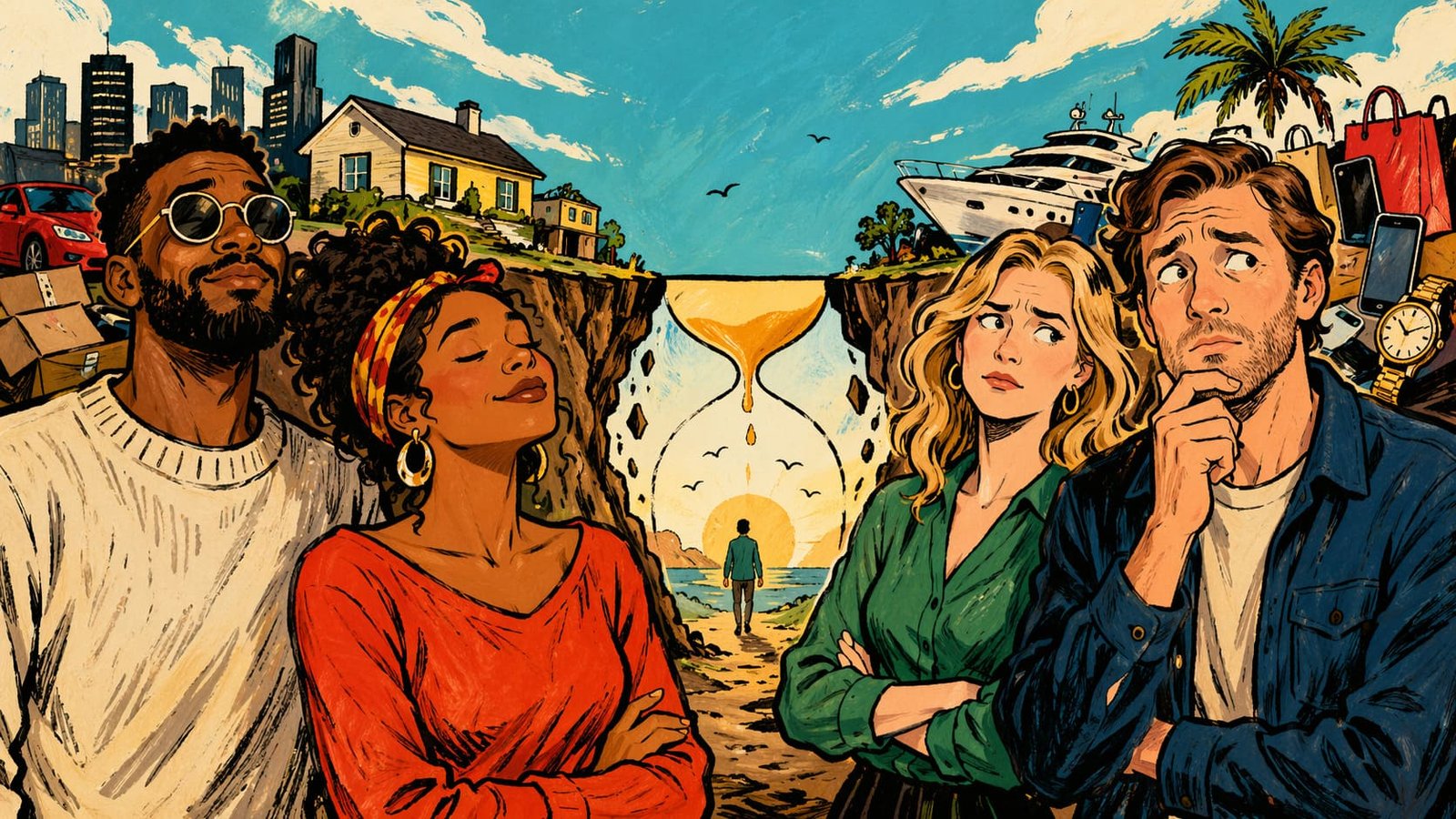
The apartment looks complete, almost curated, yet nothing inside it truly belongs to the person living there. The couch arrives on a subscription, the music streams from a distant server, the car waits outside on a monthly plan that can disappear with a missed payment. It feels light, flexible, modern. It also feels strangely fragile, as if life itself has been placed on loan.
At first, the shift away from ownership felt like progress. Why buy when access is easier, cheaper, and endlessly upgradeable? The logic made sense. Streaming replaced shelves, rentals replaced commitments, and subscriptions replaced permanence. The burden of maintenance vanished. So did the illusion of clutter. Life became portable, adaptable, frictionless in ways previous generations could only imagine.
The appeal runs deeper than convenience. Access culture promises freedom from being tied down. No long-term obligations, no sunk costs, no heavy investments that anchor a person to a single path. It feels like mobility has been democratized. You can move cities, switch services, change lifestyles with a few clicks. Flexibility becomes a kind of currency, one that signals modern intelligence.
Then something subtle begins to shift. The more life is rented, the less it feels stable. Subscriptions stack quietly in the background, each one small enough to ignore, together large enough to define your monthly reality. A product manager named Elise once listed all her recurring payments and paused. She realized she owned very little, yet owed something constantly. Her life felt efficient, but also perpetually conditional.
This is the tension that sits beneath the surface. Freedom through access can quietly become dependence through systems. You are free to use, but not to keep. Free to participate, but not to control. The terms can change at any moment, often without negotiation. A service updates its pricing, a platform alters its rules, and suddenly something that felt stable reveals its temporary nature.
Consider a photographer who built an entire workflow around cloud-based tools. The ecosystem worked seamlessly, files synced, edits flowed, projects scaled with ease. One policy change later, storage costs increased, features shifted, and exporting work became more restrictive. The photographer adapted, but the realization lingered. The tools that enabled creativity also owned the conditions under which it existed.
The emotional cost is harder to measure. Ownership once carried a sense of continuity. A book, a home, even a piece of furniture held stories over time. Access, by contrast, prioritizes the present moment. It delivers what you need now, efficiently, without attachment. That efficiency is powerful, yet it strips away a certain depth. Life becomes a sequence of temporary arrangements rather than a collection of enduring choices.
A startup founder named Karim embraced this model fully. His company operated entirely on rented infrastructure, flexible contracts, and scalable services. Growth came quickly, unburdened by traditional constraints. Then a key provider changed its terms, and the foundation shifted overnight. Karim described the moment as realizing he had built a house on land he did not own. The structure stood, but the ground beneath it felt uncertain.
Still, people continue to choose access over ownership, not out of ignorance but because the trade-offs feel worth it. The ability to adapt, to move, to avoid long-term risk holds real value in a world that changes quickly. Ownership can feel heavy, even restrictive. The challenge lies in recognizing what is being exchanged, not just financially, but emotionally and structurally.
There are quiet acts of resistance. A person buys a physical book instead of streaming another title. A family invests in a home not because it is efficient, but because it anchors them in a place and a story. A creator builds tools they control, even if it slows them down. These choices do not reject modern systems entirely. They reintroduce a sense of permanence within them.
In a softly lit room, a subscription notification appears, a small reminder that access continues only as long as the system allows it. The space feels comfortable, complete, yet something remains unsettled beneath the surface. Everything works, everything functions, everything can be replaced. And in that quiet realization, a question lingers with unsettling clarity, one that reshapes the idea of freedom itself: if nothing you rely on is truly yours, what exactly are you standing on?
