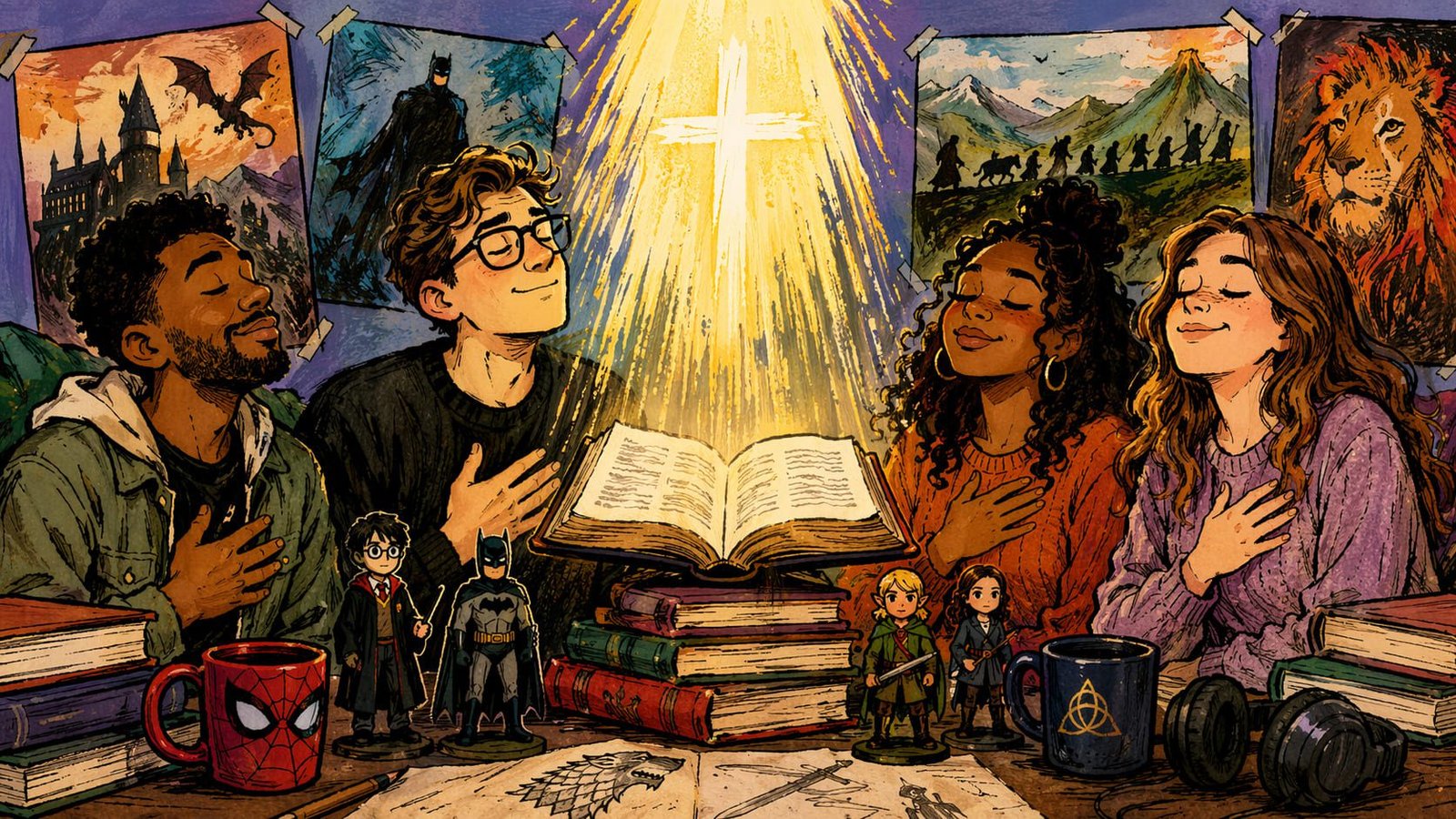
A stadium trembles before a single note is played. Thousands stand, not speaking, just waiting. Screens glow like stained glass, casting soft halos over faces lifted in anticipation. When the figure finally appears, the noise is not just sound, it is surrender. Hands rise. Voices merge. For a moment, identity dissolves into something collective, something larger, something that feels almost sacred without ever naming itself that way.
What used to belong to temples and quiet rituals has migrated into arenas, timelines, and comment sections. Devotion did not disappear. It changed address. Fandom now carries many of the same emotional patterns once reserved for religion. There is belief, there is defense, there is a shared language that outsiders struggle to understand. The difference lies in the object. Instead of gods, there are artists, franchises, founders, teams. Instead of doctrine, there are narratives, lore, and evolving mythologies.
A young analyst named Darius once noticed how his colleagues spoke about a certain tech company. It was not just admiration. It sounded like conviction. Product launches were treated like events of revelation. Criticism felt almost personal. Darius realized something quietly unsettling. The company had become more than a business. It had become a belief system. The brand did not just sell devices, it sold a worldview, one that followers defended with surprising intensity.
Fandom thrives on identity. It offers a ready-made sense of belonging in a world that often feels fragmented. To be part of a fan community is to inherit a story, a set of values, a shared emotional vocabulary. It simplifies complexity. You are either inside or outside. You understand or you do not. This clarity feels comforting, especially in an era where many traditional structures feel uncertain or diluted.
Consider the cultural gravity of global franchises. Stories like those in Star Wars have extended far beyond cinema. They shape language, ethics, even personal philosophies. Fans debate morality using fictional frameworks as if they were real-world principles. The line between entertainment and worldview blurs. What begins as fiction evolves into a lens through which reality is interpreted.
There is also a ritualistic rhythm embedded in fandom. Release dates become sacred calendars. Premieres feel like ceremonies. Online discussions resemble sermons, each participant adding interpretation, defending meaning, refining belief. This rhythm creates continuity. It gives structure to anticipation and resolution, much like traditional rituals once did. The cycle repeats, reinforcing commitment with each iteration.
A content creator named Leila built a following around her deep analysis of a popular series. Her audience did not just watch her videos, they awaited them. Comments sections filled with theories, corrections, emotional reactions. Leila noticed how her role shifted over time. She was no longer just explaining content. She was guiding interpretation. Her voice carried weight. In subtle ways, she had become a kind of authority within that space.
The emotional intensity of fandom can be both empowering and volatile. It creates connection, but it can also foster exclusion. Disagreement is not always treated as dialogue. It can feel like heresy. Fans who question certain narratives may face backlash, not because their points lack merit, but because they challenge a shared identity. The community protects itself, sometimes at the cost of openness.
There is a sports supporter named Mateo who has followed his team since childhood. Victories feel personal. Losses linger longer than they should. One evening, after a particularly difficult defeat, Mateo found himself unusually quiet. A friend asked why it mattered so much. Mateo struggled to answer. The team had become intertwined with his sense of self. Supporting it was not just entertainment. It was a form of continuity, a thread connecting past and present.
Brands have learned to cultivate this depth of loyalty with precision. Limited releases, insider communities, exclusive content. Each tactic strengthens the bond between follower and object of devotion. The goal is not just engagement. It is allegiance. When done well, customers do not just buy. They defend, promote, and evangelize. The relationship shifts from transactional to almost spiritual.
Yet there is a quiet tension beneath this devotion. Fandom promises belonging, but it can also narrow perspective. When identity becomes too tightly linked to a single narrative, it limits the ability to engage with alternative views. The world becomes filtered through a specific lens, one that feels complete but may be incomplete. This is where devotion begins to resemble dogma.
A startup founder named Noor once built a brand around a strong, almost ideological message. Early adopters embraced it passionately. Growth was rapid. Then came a moment when the brand needed to evolve. New markets required flexibility. Noor hesitated. Changing the message risked alienating the core audience. Keeping it rigid risked stagnation. The very loyalty that fueled growth became a constraint.
In a dimly lit room filled with screens, a fan scrolls through updates, likes, and debates, each interaction reinforcing a sense of belonging that feels both intimate and vast. Outside, the world continues with its usual unpredictability. Inside, the narrative feels controlled, understood, shared. The comfort is real, even if its foundation is constructed.
In that quiet glow, where identity blends with allegiance, a question lingers with quiet intensity: when devotion feels this powerful, how does one tell the difference between choosing a story and being chosen by it?
