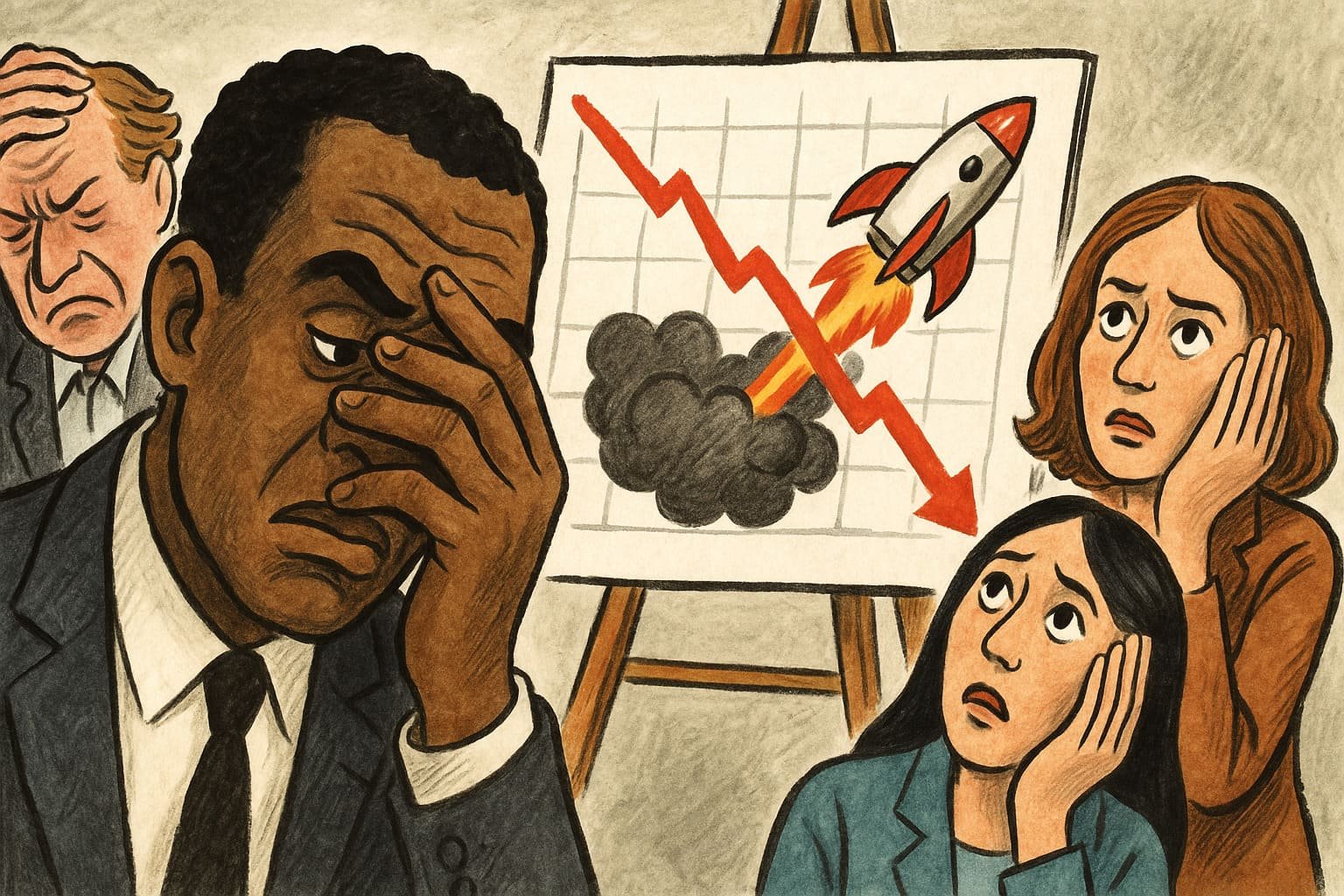
The moment it happens, your stomach drops. There’s that email the customer is leaving, the investor says no, your new product tanks and Twitter lights up with snark. You stare at your laptop, frozen, while your dream starts to crack. Welcome to the private side of entrepreneurship the unfiltered, gut-wrenching world of fail shame. Everyone loves the “fail fast, fail often” mantra until the crash lands on their doorstep. Suddenly, all the TED talks about learning from mistakes feel like cruel jokes, and you’d trade every last growth hack for the power to turn back time.
No amount of Silicon Valley optimism or glossy magazine features can erase the sting when things unravel. Founders who have weathered the storm know: startup failures don’t just sting; they can break your heart, scorch your reputation, and trigger an avalanche of self-doubt. Yet every podcast, every panel, every slick bootcamp preaches failure as a badge of honor. The real world, though, still whispers: “Maybe you just weren’t good enough.” The shame is real, and it’s everywhere even if few admit it aloud.
This isn’t just a pity party or a therapy session in disguise. It’s a wake-up call to anyone who dreams of building something meaningful. Today, we’ll strip away the clichés, examine why failure in entrepreneurship still haunts so deeply, and ask: Is there a better way to cope, learn, and even thrive when the world is watching? Strap in. This ride is about to get real.
Quick Notes
- Startup failure still carries deep emotional wounds, often hidden behind public success stories.
- Cultural pressure to win magnifies shame, making it hard for founders to process and learn from mistakes.
- Toxic positivity and hustle culture can make real, messy failure feel taboo even as people praise “learning from losses.”
- Case studies of founders show that healthy cultures and honest conversations are the only antidotes to fail shame.
- Reframing failure as a part of the entrepreneurial identity not a personal flaw can turn shame into power.
The Anatomy of a Blunder: When Dreams Collide With Reality
Every founder enters the arena with a slingshot full of hope and a heart on fire. What no one tells you is how quickly that passion can morph into regret. The very first misstep losing a critical client, botching a launch, missing payroll cuts deeper than you’d ever expect. For startup founders, blunders feel personal because the business is personal. Your identity fuses with your company, and any crack in the venture feels like a crack in your soul.
Ben Horowitz, the celebrated investor, often tells the story of when his first company almost collapsed after a disastrous pivot. He spent sleepless nights pacing his living room, wracked with guilt and convinced he’d let everyone down. His journey reminds us: even the icons feel shame, and the pain is universal.
Behind every product pivot or shutdown notice is a room full of faces who believed in you teammates, investors, family. It’s this human connection that turns simple mistakes into soul-crushing failures. People who risk everything to build something new find that the biggest sting isn’t just financial; it’s the silent judgment they imagine from everyone watching.
Cultural norms amplify the shame. “Move fast and break things” sounds empowering until you’re the one who broke it all. The myth that every stumble leads straight to unicorn glory piles pressure on those who trip and fall.
Startups are supposed to be playgrounds for experimentation, but the stakes feel existential. Each error feels like proof that you don’t belong in the room. The sting is more than a bruise it’s a branding iron.
The Shame Spiral: Why Society Still Fears Failure
It’s one thing to lose money. It’s another to lose face. In most cultures, success is a public parade while failure skulks in the shadows. Even as “embrace failure” t-shirts fly off the shelves, the fear of humiliation shapes founder behavior behind closed doors.
Many founders live double lives optimistic on LinkedIn, anxious in the dark. Investors ask about “lessons learned,” but founders know the subtext: Are you a winner, or a loser? The job market can be unforgiving. Recruiters don’t always see failure as a badge of courage; sometimes, they just see a red flag.
Pop culture does its part to ramp up the pressure. We celebrate the rare comebacks but rarely ask about the cost. Take Elizabeth Holmes or Adam Neumann once-hyped visionaries who became cautionary tales. Their public falls teach founders that one mistake can make you a meme, not a mentor.
Family pressure adds another layer. Parents and partners may nod through the “fail forward” speech, but the worry in their eyes says it all. Founders like Arlan Hamilton have spoken publicly about the sting of telling loved ones when things fall apart.
Society’s binary view winner or washout makes it hard for entrepreneurs to talk honestly about setbacks. As a result, the shame stays bottled up, festering rather than healing.
Toxic Positivity: How the “Fail Forward” Myth Makes Pain Worse
It’s the most ironic twist in modern business. We celebrate the notion of “failing forward,” yet punish anyone who actually fails. Startup events and innovation summits echo with hollow praise for risk-takers, but when the chips are down, few stick around for the hard part.
Social media fuels the problem. Founders post about failure only after they’ve secured their next win, turning every loss into a redemption arc. Real-time failure rarely makes the feed. You won’t see the anxious nights, tense board meetings, or silent drives home after layoffs.
“Failure porn” has become its own genre TED Talks about rising from the ashes, best-selling memoirs that gloss over the agony. The truth gets lost in the sparkle. Most founders would rather fake a pivot than admit a total collapse.
Hustle culture ratchets up the pressure. The grind never stops, say the gurus, and neither should you. This leaves no space for grief, processing, or simply admitting defeat. The result is founders who keep moving, never healing, and eventually burning out.
By pretending every failure is just a lesson, we miss the real wounds. The answer isn’t more slogans it’s more honesty. True resilience starts with acknowledging the pain, not papering over it.
Human Cost: Founders and Teams on the Edge
Every failure story is a human story first. Teams scatter, friendships fracture, and founders wrestle with guilt that lingers for years. The emotional fallout from startup stumbles often dwarfs the financial loss.
Jessica Livingston of Y Combinator has described watching promising founders leave the ecosystem, haunted by a public flop. Their talent doesn’t vanish, but their confidence does. Many never return to entrepreneurship, not because of money, but because of shame.
Employees take hits too. One anonymous engineer recalls joining a buzzy new venture, only to watch it implode within months. Her résumé didn’t suffer, but her trust in leadership did. She became more skeptical, less willing to risk everything again.
Investors feel it too reputation is everything in the VC world. A string of misfires can turn star backers into pariahs. Even the most seasoned pros admit privately that failure haunts their decisions.
Case studies like Pets.com or Quibi aren’t just punchlines; they’re cautionary tales about the ripple effects of failure. Entire networks of founders, employees, and investors bear scars that rarely show up in the press.
The human cost of fail shame extends far beyond balance sheets. It shapes who tries again, who hides in the shadows, and who never risks dreaming big in the first place.
Rethinking Failure: Turning Shame Into Startup Superpower
If fail shame is a silent epidemic, what’s the antidote? The answer isn’t more fake cheerleading or phony rituals. The answer is a new playbook one that turns failure from a scarlet letter into a mark of courage and growth.
Start by reclaiming the story. Founders like Stewart Butterfield, who pivoted from a failed gaming company to build Slack, have spoken about being radically open about what went wrong. By turning pain into process, they transformed shame into strategy.
Building honest cultures is the next step. At Buffer, the leadership team shares not just wins but mistakes in public retrospectives. This isn’t just PR. It’s a way of normalizing failure as part of the entrepreneurial journey, not a detour from it.
Mentorship matters, too. When veteran founders speak candidly about their biggest losses, it gives newcomers permission to try and fail without losing themselves. The best networks build resilience not by pretending failure doesn’t sting, but by showing that it’s survivable.
Even investors are catching on. Some now back “failed” founders with more conviction, betting that scars build strength. Their portfolios suggest they’re right resilient entrepreneurs learn faster, recover harder, and build deeper.
The only way to beat fail shame is to make it visible, normal, and even in small ways celebrated. Every startup that owns its scars becomes a beacon for the next risk-taker.
Rewrite the Ending From Shame to Signal
Here’s the truth every entrepreneur needs: failure will never stop stinging, but it can stop defining you. Every stumble, every false start, every wrong turn is just another step in the wild, weird dance of building something from nothing. The shame lingers only when we pretend it doesn’t exist.
Startup success stories get all the ink, but the real legends are those who rise again, their armor dented but spirits intact. Imagine a world where we treat entrepreneurial failure not as exile, but as a rite of passage an essential mark of courage and wisdom.
So, the next time you feel the burn of fail shame, don’t hide from it. Lean in. Share your story. Use it as rocket fuel. In the end, the best founders aren’t those who never fall, but those who learn to stand taller every time they do.
Ask yourself: What would you dare to build if you knew failure was not a dead end, but just the start of your next great chapter?
