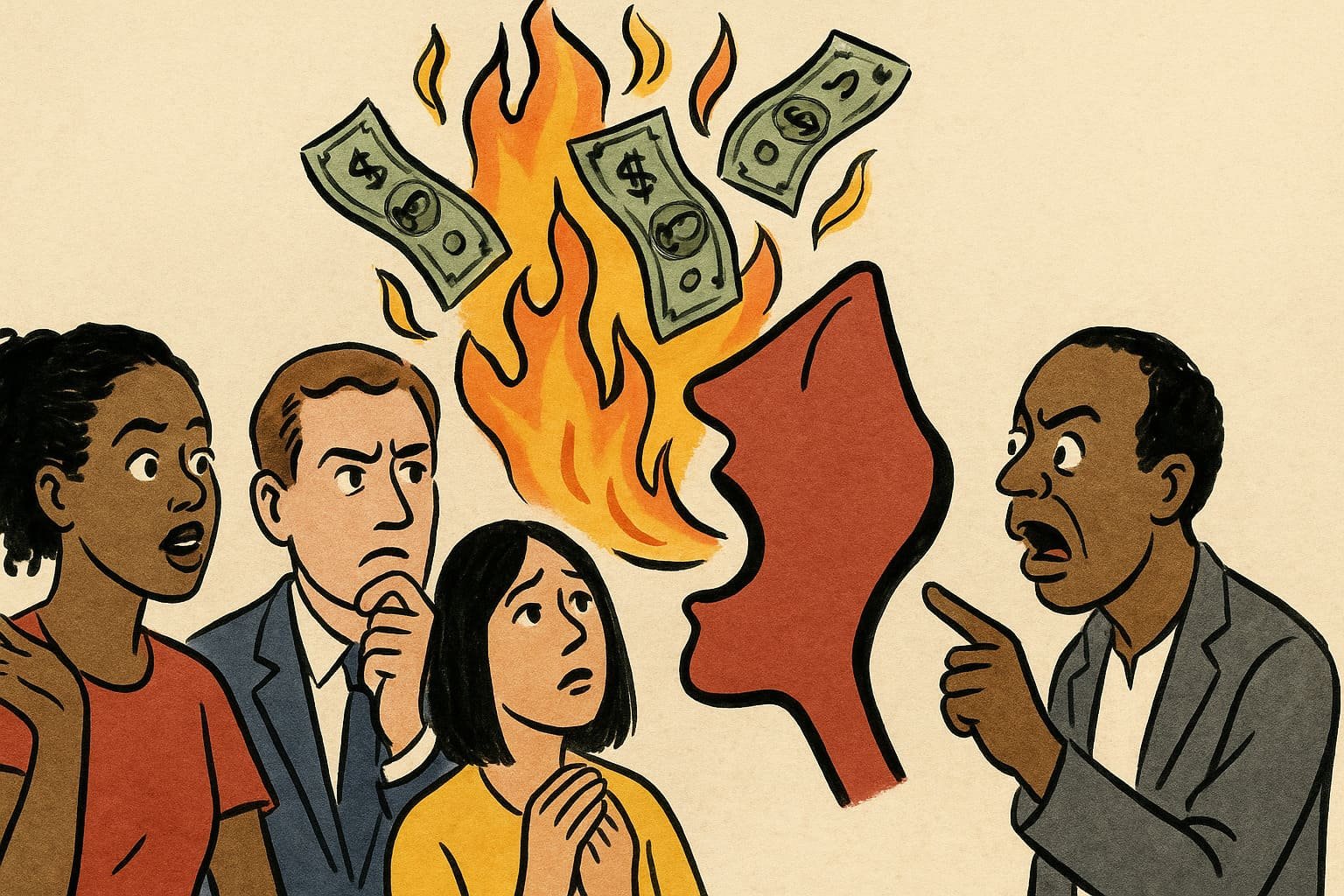
Imagine your brand is on stage, spotlight blaring, audience hushed. You’ve got one shot to say something unforgettable. Do you whisper a safe line or belt out a bold truth? In today’s oversaturated, hyper-politicized, constantly scrolling marketplace, brands with something to say either make millions or become memes. This article is a fiscal autopsy of that tension; how bold branding drives growth or financial ruin depending on what, how, and when you speak. Behind the viral campaigns, canceled influencers, and iconic comebacks lies a deeper truth: silence is expensive, but the wrong noise can bankrupt you.
Quick Notes
- Bold Pays (When Strategic): Brands that speak up with precision, purpose, and timing can create billion-dollar waves that amplify trust, sales, and influence.
- Cancel Culture Costs: Misaligned boldness; when tone-deaf or opportunistic can decimate reputation, stock value, and employee morale.
- The Psychology of Noise: Consumers are wired to remember what stirs them; bold messaging taps directly into memory, loyalty, and even forgiveness.
- Human Brands Win: Audiences crave authenticity; brands that sound like real people, not bots or PR teams, win hearts and wallets.
- The Future is Risky: In the AI age, brands must walk a razor-thin line between resonance and irrelevance. Courage and calculation must coexist.
Loud and Lucrative: Why Brave Brands Bank Billions
In 2017, Nike made global headlines by featuring Colin Kaepernick in its campaign. The backlash was immediate. Boycotts were threatened. Shares dipped briefly. But the long game? A surge in sales, brand loyalty, and cultural capital that most brands only dream about. That wasn’t luck; it was fiscal boldness with intent.
Ben & Jerry’s doesn’t just sell ice cream. It packages activism in pints. From racial justice to climate change, the company voices progressive values and backs them with money. The result? A fiercely loyal customer base that aligns emotionally and economically. Their branding isn’t safe, but it is sound and profitable. Risk, when matched with values, becomes an asset.
Rihanna’s Fenty Beauty didn’t just enter the beauty market. It disrupted it. By boldly marketing to underserved skin tones and launching 40 shades from day one, Fenty turned inclusion into income. It wasn’t diversity for show. It was bold branding that met a real need and translated into explosive financial results.
Even legacy brands like Patagonia thrive on outspoken values. Their anti-consumerist marketing (like “Don’t Buy This Jacket”) is paradoxical genius. By appearing to discourage sales, they built ethical authority and trust. That trust, over time, has compounded into cult loyalty and consistent growth.
Bold brands don’t just market. They lead. And in a world full of noise, clarity is currency. Audiences follow courage when it aligns with clarity, not chaos.
When Bold Becomes Blunder: The Cost of a Bad Voice
Pepsi’s infamous Kendall Jenner ad remains a textbook failure in performative branding. A shallow take on activism, the ad trivialized real protests and insulted viewers. The fallout wasn’t just bad PR; it was a fiscal fiasco. Tone-deaf messaging costs credibility, and once trust is broken, revenue follows.
Gillette’s “The Best Men Can Be” campaign attempted to redefine masculinity. While its intentions seemed noble, the reception was polarized. Some praised it; others vowed to never buy again. Sales initially dipped. The bold voice backfired because it preached rather than invited conversation. The fiscal outcome was a reminder: alienating your base without a net gain is reckless.
H&M faced backlash for a hoodie that read “coolest monkey in the jungle” modeled by a Black child. The response was swift and global. Stores were vandalized. Celebrities pulled partnerships. While the brand apologized, the damage was deep. Poor oversight combined with lazy branding became a multimillion-dollar cautionary tale.
Bud Light’s brief partnership with a transgender influencer ignited cultural warfare. The brand attempted to expand its base but lost core drinkers without gaining new ones. Sales plummeted. The lesson? Authenticity can’t be mimicked. Brands that adopt bold voices purely for clout often end up with empty wallets and canceled contracts.
There’s a fiscal gravity to culture. Missteps don’t just hurt feelings; they sink valuations. In today’s climate, boldness without research is not bravery. It’s bad business.
Memory Hooks: Why Boldness Sticks and Sells
Human brains are built for stories, not spreadsheets. Bold branding hacks that hardwiring. It uses emotion, conflict, and resolution; not data points to stay lodged in memory. When a brand delivers a strong narrative, the brain doesn’t just recall it; it relives it.
Apple’s “Think Different” wasn’t just a slogan. It was a rebellion wrapped in branding. That line encapsulated a philosophy and positioned Apple as a creative insurgent. The result? Lifelong customer loyalty that stretches across generations. Emotional branding becomes fiscal loyalty.
Chick-fil-A, despite political controversy, maintains a die-hard following. Their “Closed on Sundays” stance aligns with values-driven consumers. The messaging; clear, principled, and unwavering creates trust, even among skeptics. Consistency is often more powerful than popularity.
Old Spice reinvented itself with humor and irony. The “Smell Like a Man, Man” campaign was bizarre, loud, and unforgettable. It resurrected a tired brand and tripled relevance with younger buyers. Boldness doesn’t have to be serious. It just has to be sticky.
Great branding meets the moment, the memory, and the market. When done right, bold messaging isn’t risky. It’s repeatable revenue disguised as creativity.
The Rise of Humanized Brands: Talk Like People, Not Corporations
Wendy’s Twitter account isn’t run by a bot. It claps back, makes jokes, and sounds like a cheeky human. This voice turned a mid-tier fast food chain into a digital legend. Humor builds relatability. And relatability converts to dollars.
Duolingo, the language app, leans into Gen Z absurdity with a social strategy that’s more meme than marketing. Its owl mascot has become a pop culture staple. Their irreverence resonates because it feels unscripted. This rawness, paired with product excellence, builds addictive brand engagement.
Liquid Death didn’t rebrand water. It rebranded rebellion. Selling canned water with punk-rock visuals and a metal aesthetic, it turned hydration into an identity. The brand isn’t polite. It’s unapologetically weird. And its bold personality is what made it viral.
Mailchimp used doodles, offbeat humor, and real storytelling to stand out in the email automation world. Instead of dry business language, it used quirk. That tone attracted small business owners who felt overlooked by stiff enterprise competitors. Personality isn’t fluff. It’s profit.
When brands talk like humans, they unlock human responses; empathy, laughter, trust, loyalty. The voice is not a gimmick. It’s a growth lever.
The Razor’s Edge: Future-Proofing Bold Branding
Tomorrow’s brands will live or die by nuance. The AI era means every message will be dissected in milliseconds. Algorithms will flag you. Users will screenshot you. Virality is a double-edged sword. Only brands with integrity, clarity, and coherence will survive the storm.
The rise of synthetic influencers and generative content will drown bland voices. Only brands with visceral uniqueness will pierce the noise. Voice will matter more than visuals. Depth will matter more than design. The bold voice must be rooted in something deeper than trend-chasing.
Gen Z and Gen Alpha don’t just expect alignment; they demand transparency. Brands must now show their receipts; literally and metaphorically. Greenwashing, woke-washing, and faux values are fiscal liabilities. Reputation is now a ledger entry.
Emerging tech like voice clones and AI avatars will tempt brands to scale personality artificially. But automation without emotion is a trap. The best ROI still comes from voices that bleed humanity. Future branding will be part ethics, part entertainment, and wholly personal.
In this attention economy, your voice is your value. Speak with honesty, or prepare for obsolescence. Risk aversion is no longer safe. It’s a silent surrender.
Speak Now or Fade Forever
Every brand has a moment where the mic is handed to them. Some fumble it. Some freeze. The great ones? They roar. Boldness is not a trend. It’s a trigger. It separates yesterday’s safe players from tomorrow’s legends.
Playing it safe doesn’t make headlines. It buries you in the scroll. In a world allergic to mediocrity, a forgettable brand voice is fiscal suicide. The truth? Consumers crave conviction. Even when they disagree, they’d rather hear something real than nothing at all.
The question isn’t “Should your brand be bold?” It’s “Can you afford not to be?” Voice is no longer a garnish. It’s the main course. It determines who gets remembered, who gets shared, and who gets funded.
So ask yourself this: Is your brand a whisper in the crowd or a war cry in the market? The answer doesn’t just shape perception. It determines your profit.
Why scroll… When you can rocket into Adventure?
Ready to ditch the boring side of Life? Blast off with ESYRITE, a Premier Management Journal & Professional Services Haus—where every click is an adventure and every experience is enchanting. The ESYRITE Journal fuels your curiosity to another dimension. Need life upgrades? ESYRITE Services are basically superpowers in disguise. Crave epic sagas? ESYRITE Stories are so wild, your grandkids will meme them. Want star power? ESYRITE Promoted turns your brand cosmic among the stars. Tired of surface-level noise? ESYRITE Insights delivers mind-bending ideas, and galactic-level clarity straight to your inbox. Cruise the galaxy with the ESYRITE Store —a treasure chest for interstellar dreamers. Join now and let curiosity guide your course.
