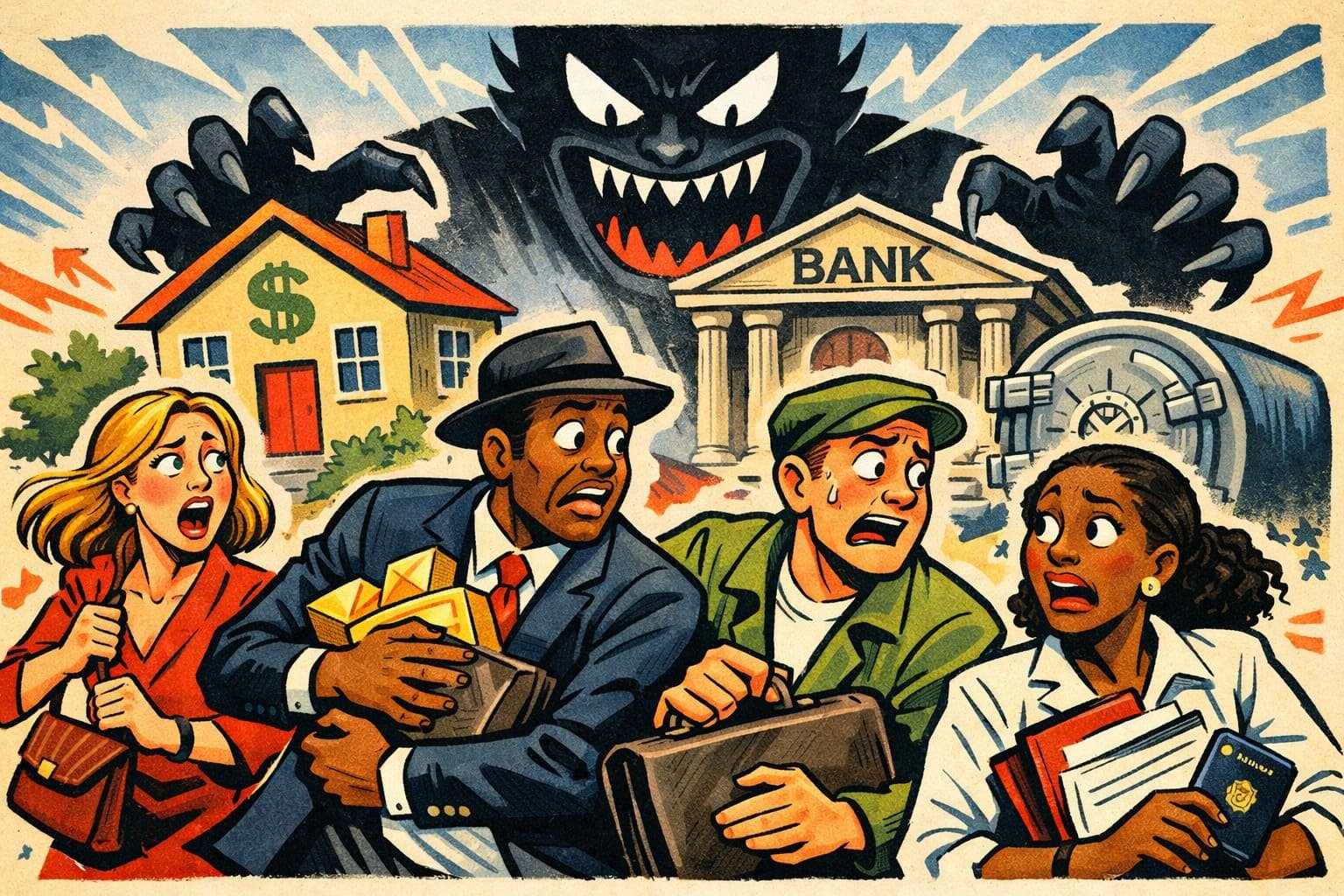
A trading bell echoed across a tense exchange floor while every blinking screen seemed to pulse with the same unspoken question. Where does money hide when certainty disappears? Traders who had chased bold returns only weeks earlier suddenly searched for safety with remarkable urgency, transforming ordinary assets into prized sanctuaries. Fear rarely announces itself through dramatic speeches. It whispers through portfolios, quietly redirecting billions toward places that promise stability rather than excitement.
Financial markets have always treated safe havens as emotional anchors during uncertain times. Government bonds from highly trusted nations, gold, reserve currencies, and other defensive assets often attract investors whenever inflation, geopolitical tensions, banking concerns, or economic slowdowns cloud the outlook. This migration is not driven solely by mathematics. Psychology plays an equally powerful role. Investors willingly sacrifice higher potential returns because preserving capital suddenly feels more valuable than expanding it, especially when tomorrow becomes difficult to predict with confidence.
History offers repeated reminders that confidence can vanish far faster than it is built. During periods of financial turbulence, investors have repeatedly increased allocations toward United States Treasury securities despite lower yields than many alternative investments. Gold has experienced similar surges during episodes of global uncertainty, not because it produces income, but because generations continue viewing it as a store of value. Economist Hyman Minsky argued that stability often breeds complacency. Ironically, complacency frequently creates the conditions that send investors running back toward safety.
Leonie managed a successful family manufacturing business that had steadily expanded during years of economic optimism. Her investment portfolio reflected that confidence, emphasizing growth-oriented assets with little attention paid to defensive holdings. A series of unsettling geopolitical developments prompted sleepless evenings and difficult conversations with her financial adviser. Rather than abandoning long-term investing, she gradually diversified into higher-quality bonds and defensive assets. Relief arrived before stronger returns did, proving that emotional resilience sometimes becomes the most valuable investment outcome.
Corporate treasurers confront similar decisions every day, though headlines rarely notice their cautious calculations. Cash management, foreign exchange exposure, and liquidity planning become increasingly important whenever uncertainty spreads across global markets. Companies with disciplined balance sheets often navigate volatile periods more comfortably because they prepared for disruption before panic emerged. Safe havens therefore extend beyond individual investments. Strong governance, prudent accounting, and conservative financial management become institutional shelters capable of protecting businesses when market sentiment changes without warning.
Footsteps faded through marble corridors long after trading screens dimmed, yet one truth lingered with unusual clarity. Every financial storm eventually passes, but each one reveals what investors truly value when confidence becomes scarce. Wealth is not measured only by returns collected during prosperous years. It is measured by resilience preserved through difficult ones. Before reaching for the next promising opportunity, ask a quieter question that history never stops repeating: what will still be standing after fear finishes choosing its hiding place?
