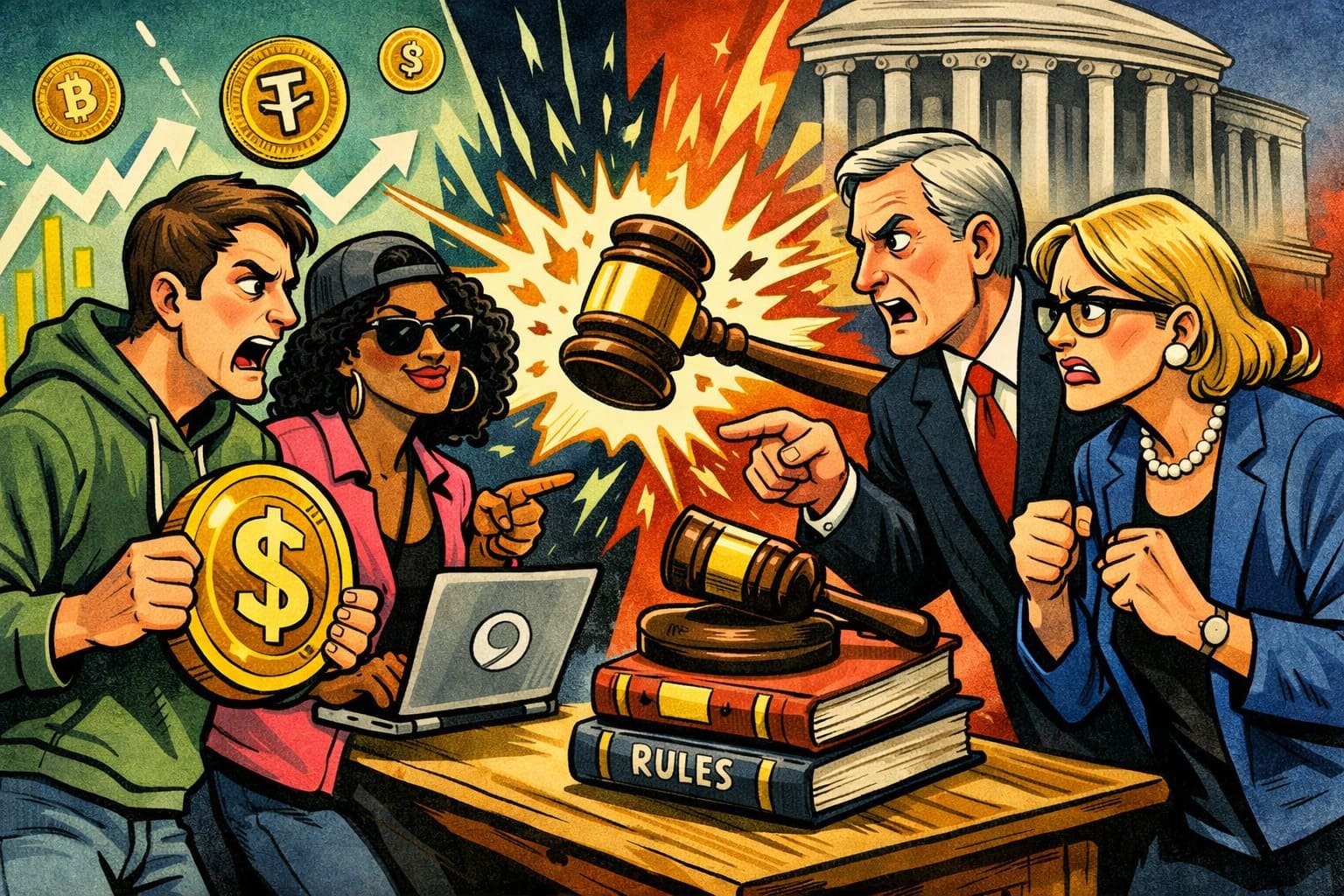
Coins once jingled in pockets. Now value travels silently across glowing screens, crossing continents before a cup of coffee grows cold. That quiet revolution has captivated entrepreneurs, banks, policymakers, and investors alike. Stablecoins promise the speed of digital finance without the price swings associated with many cryptocurrencies. Yet every innovation that begins by challenging financial boundaries eventually encounters an older force that refuses to disappear: regulation.
Stablecoins derive their appeal from a simple promise. Each digital token seeks to maintain a stable value by referencing assets such as government currency or short-term securities, making digital transactions more predictable for businesses and consumers. Companies including Circle and PayPal view stablecoins as practical payment infrastructure rather than speculative investments. Central banks see a different picture. Faster money movement raises legitimate questions surrounding financial stability, consumer protection, anti-money laundering safeguards, and systemic risk.
A payments entrepreneur named Noor built a platform serving freelance designers working across several continents. Traditional international transfers frustrated customers with delays and unpredictable fees, so stablecoin settlements offered a welcome alternative. Business expanded rapidly because payments arrived almost immediately. Then regulators proposed new compliance requirements that demanded additional reporting and stronger customer verification. Growth slowed temporarily, yet the resulting operational discipline strengthened relationships with enterprise clients seeking reliability instead of regulatory uncertainty.
Financial history repeatedly demonstrates that money depends upon trust before technology. Credit cards, online banking, and electronic payments all faced skepticism before evolving into ordinary parts of everyday commerce through clear legal frameworks and institutional oversight. Stablecoins now occupy a similar crossroads. The challenge is balancing innovation with accountability. Bank for International Settlements officials have consistently argued that payment innovation succeeds when public confidence grows alongside private creativity rather than competing against it.
A regional retailer called Horizon Imports quietly adopted stablecoin payments for overseas suppliers after repeated currency settlement delays disrupted inventory planning. Purchasing managers appreciated faster transactions, while finance teams welcomed lower reconciliation costs. Everything worked smoothly until differing regulatory interpretations across jurisdictions complicated routine operations. Executives realized technology had solved one problem while exposing another. Cross-border commerce increasingly depends not only on digital infrastructure but also on consistent legal standards that travel as efficiently as the payments themselves.
Lanterns floating across a river appear effortless until hidden currents begin pulling them toward different shores. Progress rarely moves in a perfectly straight line because every meaningful financial breakthrough must earn legitimacy as well as admiration. Stablecoins may reshape global payments, treasury management, and digital commerce for decades to come. Their lasting success, though, will depend less on technological brilliance than on whether innovation and regulation finally learn to move in the same direction.
