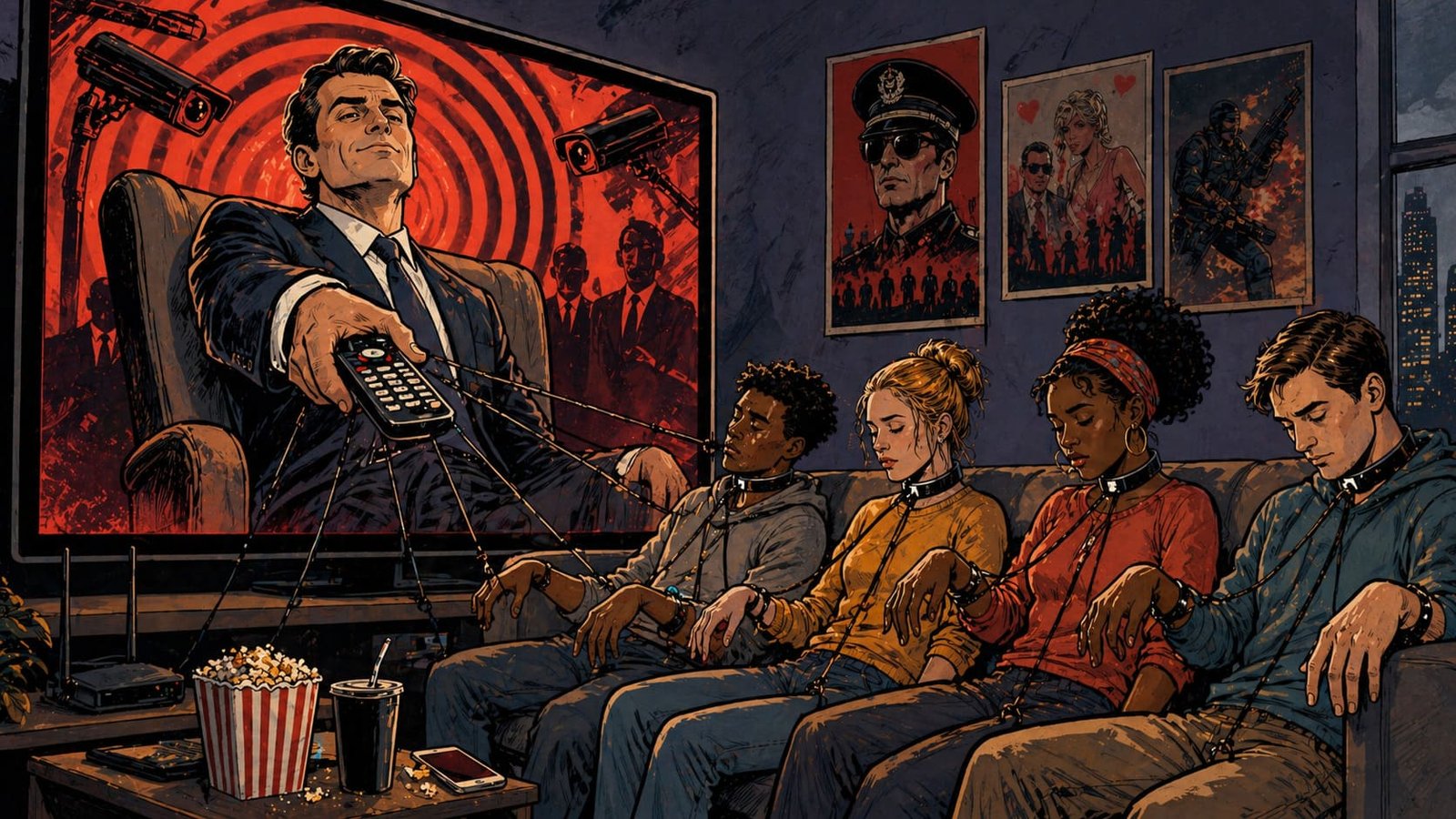
A soft glow spills across a dark room where no one gives orders, yet behavior aligns with uncanny precision. Notifications pulse, feeds refresh, choices narrow without ever feeling forced. The choreography looks voluntary, almost casual. Fingers scroll, eyes follow, attention settles where it is guided. Nothing demands compliance. Everything invites it. And somehow, invitation proves stronger than command.
Control no longer needs to appear as control. It dissolves into convenience, into habit, into the quiet comfort of familiar rhythms. The philosopher Michel Foucault described power as something that operates through systems rather than overt force, shaping behavior by structuring what feels normal. In a world mediated by screens, that structure becomes intimate. It lives in pockets, on desks, beside beds. It does not watch from a distance. It sits within reach.
The shift begins in small routines that feel harmless. A product designer named Kasper once noticed how his mornings started before his feet touched the floor. The first gesture was not stretching or thinking. It was checking. Messages, updates, alerts. Each one carried a subtle instruction about what mattered, what required attention, what could wait. Over time, Kasper realized that his priorities were being set before he consciously chose them. The sequence felt natural. It was anything but neutral.
Inside organizations, this dynamic becomes more deliberate. A growth lead named Mireille described it during a strategy session where the air carried the faint hum of projectors and the sharp scent of whiteboard markers. She explained how interface design shapes behavior through micro-decisions. Buttons are placed to guide action, notifications timed to trigger response, content arranged to sustain engagement. None of these elements force a user. Together, they create a path that feels easy to follow and strangely difficult to leave.
This is where the tension deepens. Autonomy remains intact on the surface. People can choose what to click, what to watch, what to ignore. Yet those choices are framed within systems designed to anticipate and influence them. The technologist Tristan Harris has spoken about how digital platforms compete for attention by shaping user behavior. The competition is not just for time. It is for patterns, for habits, for the subtle routines that define daily life.
A small startup in Seoul once experimented with reducing notifications to improve user well-being. The founder, Jae-min, believed that less interruption would lead to deeper engagement. The initial feedback was positive. Users reported feeling calmer, more focused. Yet retention metrics declined. Without constant prompts, fewer people returned. Jae-min faced a difficult realization. The system had trained users to rely on external cues. Removing those cues felt like removing guidance, even when the underlying experience remained valuable.
Pop culture reinforces this pattern in ways that feel almost invisible. Characters in films and series interact with screens as extensions of themselves, responding instantly, moving seamlessly between digital and physical spaces. These portrayals normalize constant connectivity, making it feel not just acceptable but expected. The absence of connection begins to feel like a gap rather than a choice.
The deeper consequence is not simply distraction. It is the gradual shaping of behavior into predictable loops. A teacher named Alina once noticed how her students responded to pauses in class. Moments of silence, once filled with reflection, now triggered a subtle restlessness. Hands reached for devices almost instinctively, as if stillness itself required correction. The habit was not enforced. It had been learned, reinforced through countless interactions with systems that reward constant engagement.
There is a quiet moment when this pattern becomes visible, often accompanied by a sense of unease. It feels like noticing that actions taken freely have been gently guided all along. The realization does not strip away choice. It complicates it. It introduces a question about where intention ends and influence begins.
Somewhere in a dim room where the only light comes from a screen, a person pauses mid-scroll. The content continues, endless, inviting, carefully arranged. The room remains silent except for the faint hum of the device. In that pause, the rhythm breaks. The next action is no longer automatic. It becomes deliberate, even if only for a moment.
As the glow persists, steady and patient, a question lingers, quiet but insistent: if submission can be taught without commands, through comfort and repetition alone, what does it mean to truly choose, and how often does that choice actually happen?
