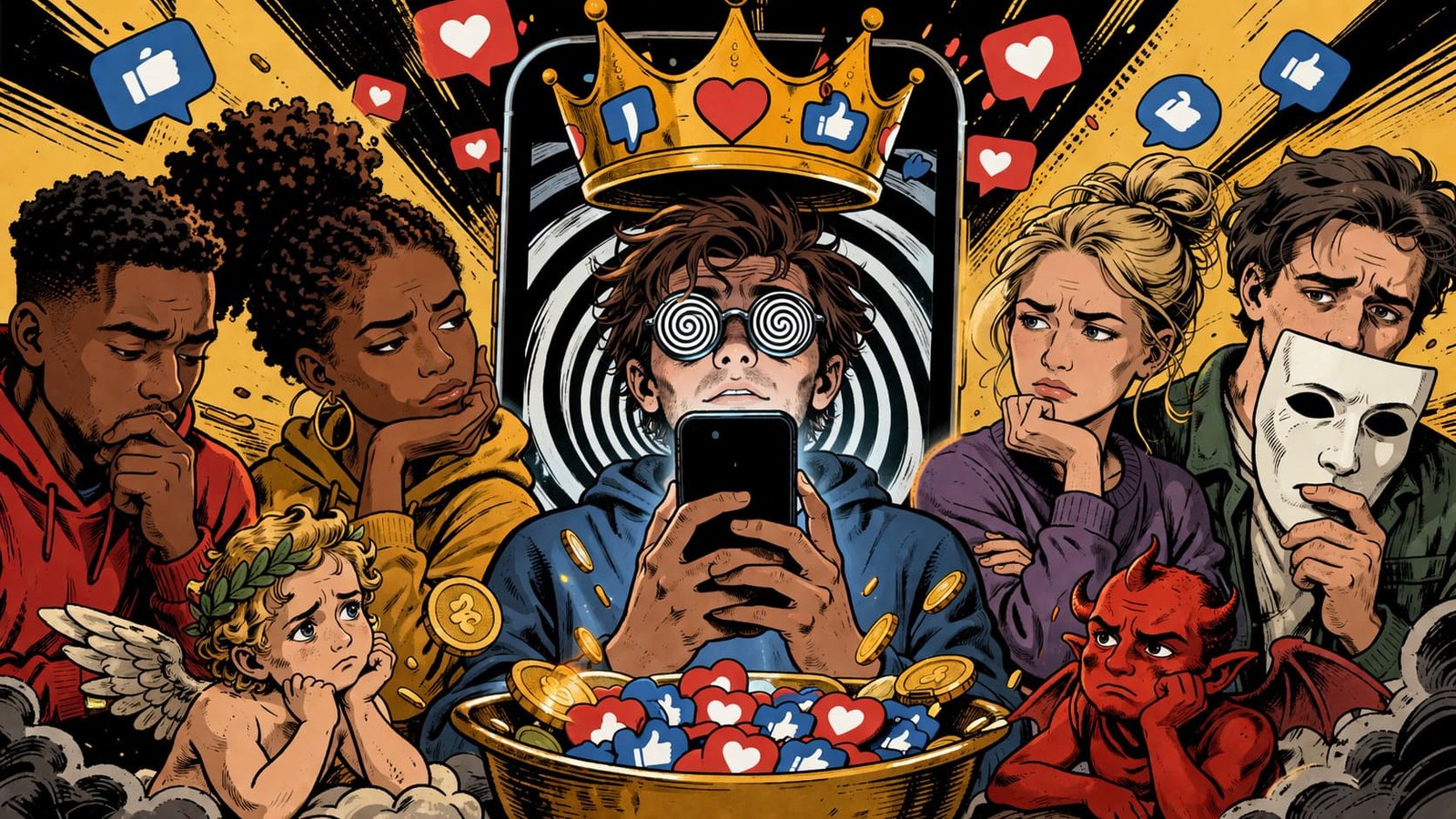
A phone vibrates on a bedside table, its screen lighting up with a storm of notifications. Somewhere in the blur, a clip of a public meltdown gathers speed, shared and reshared until it becomes impossible to ignore. No one pauses to ask why it spreads. The reaction is immediate, almost reflexive. Shock travels faster than thought. Outrage moves quicker than understanding. The clip becomes a moment, then a trend, then a strange kind of currency. It feels chaotic, yet there is a pattern beneath it, steady and precise.
Virality has its own logic. It does not reward balance or careful reasoning. It rewards intensity. The louder the reaction, the further it travels. A quiet truth struggles to compete with a dramatic spectacle. This is not a flaw in the system. It is the system working as designed. Platforms amplify what keeps people watching, clicking, reacting. Emotion becomes the fuel. The stronger it burns, the faster the spread.
A restaurant owner named Hassan learned this in a way that still feels surreal. A heated argument with a customer, captured on a phone and posted without context, spread across social media within hours. The clip framed him as aggressive, unreasonable. Business slowed. Regular customers hesitated. Days later, a longer video surfaced, showing a different side of the story. It barely traveled. The initial moment had already defined the narrative. Hassan realized something unsettling. Correction does not spread as easily as chaos.
The pattern repeats across industries. News cycles increasingly favor stories that provoke strong reactions. A controversial statement, a shocking incident, a dramatic conflict will often dominate attention, even when more nuanced stories carry greater importance. This creates a feedback loop. Content creators, journalists, even brands begin to anticipate what will travel. They lean into it, sometimes unconsciously, shaping their output to fit the logic of virality.
A content strategist named Elena once described this as “emotional optimization.” She worked with a media company that tracked which headlines performed best. Articles framed with urgency, outrage, or fear consistently outperformed those that offered balanced analysis. Over time, the editorial tone shifted. Not because the team lacked integrity, but because the data pointed in one direction. Attention had its own preferences, and they were not always aligned with depth.
Pop culture reflects this shift in subtle ways. Reality television, for example, thrives on heightened conflict and exaggerated personalities. Shows that once focused on storytelling now lean into spectacle, knowing that moments of chaos are more likely to trend. The same dynamic plays out on platforms like TikTok, where extreme reactions, bold stunts, and unexpected twists capture attention more effectively than steady, thoughtful content. It creates an environment where calm feels invisible.
There is also a psychological toll. A young creator named Brian built an audience by sharing humorous, lighthearted videos. One day, he posted a clip reacting angrily to a trending topic. It spread rapidly, bringing in a surge of followers. Encouraged by the response, he leaned into that tone. His content grew sharper, more confrontational. The audience expanded, but so did the pressure to maintain that intensity. Brian later admitted that the persona felt exhausting, yet stepping away from it risked losing relevance.
The business implications are difficult to ignore. Brands now operate in an environment where attention can be both an asset and a liability. A single viral moment can elevate a company overnight or damage its reputation just as quickly. Crisis management has become as important as marketing. Companies monitor social media not just for feedback, but for potential flashpoints that could escalate without warning. The pace leaves little room for reflection.
What makes this dynamic particularly complex is how normalized it has become. The constant stream of dramatic content feels familiar, even expected. It shapes perception, influencing what people consider important, urgent, or worth discussing. Over time, the threshold for what counts as attention-worthy rises. Subtlety struggles to compete. Nuance feels slow. The world appears louder, sharper, more reactive than it might actually be.
A university student named Amina once described scrolling through her feed as “living inside a constant headline.” Every post felt urgent, every moment amplified. It created a sense of intensity that was difficult to step away from. When she tried to focus on quieter, more reflective content, it felt almost out of place. The environment had trained her expectations, shaping not just what she consumed, but how she experienced it.
In a digital landscape driven by speed, virality continues to reward what stands out, not necessarily what sustains. The system does not pause to consider long-term impact. It moves forward, amplifying whatever captures attention in the moment. That momentum is difficult to resist, even for those who recognize its effects.
And somewhere within that relentless flow, a question begins to take shape. If attention consistently rewards the loudest, the most chaotic, the most extreme, what happens to the quieter voices that carry depth, context, and care? The answer does not arrive immediately. It lingers, shaped by every share, every reaction, every moment that turns intensity into influence.
The screen dims, the notifications slow, but the pattern remains, quietly guiding what rises and what fades. In that pattern, a realization settles in, steady and difficult to ignore. When chaos becomes the fastest path to visibility, conscience begins to feel like a disadvantage.
You watch, you react, you share, and in that instant, you help decide whether madness continues to rise or finally meets resistance.
