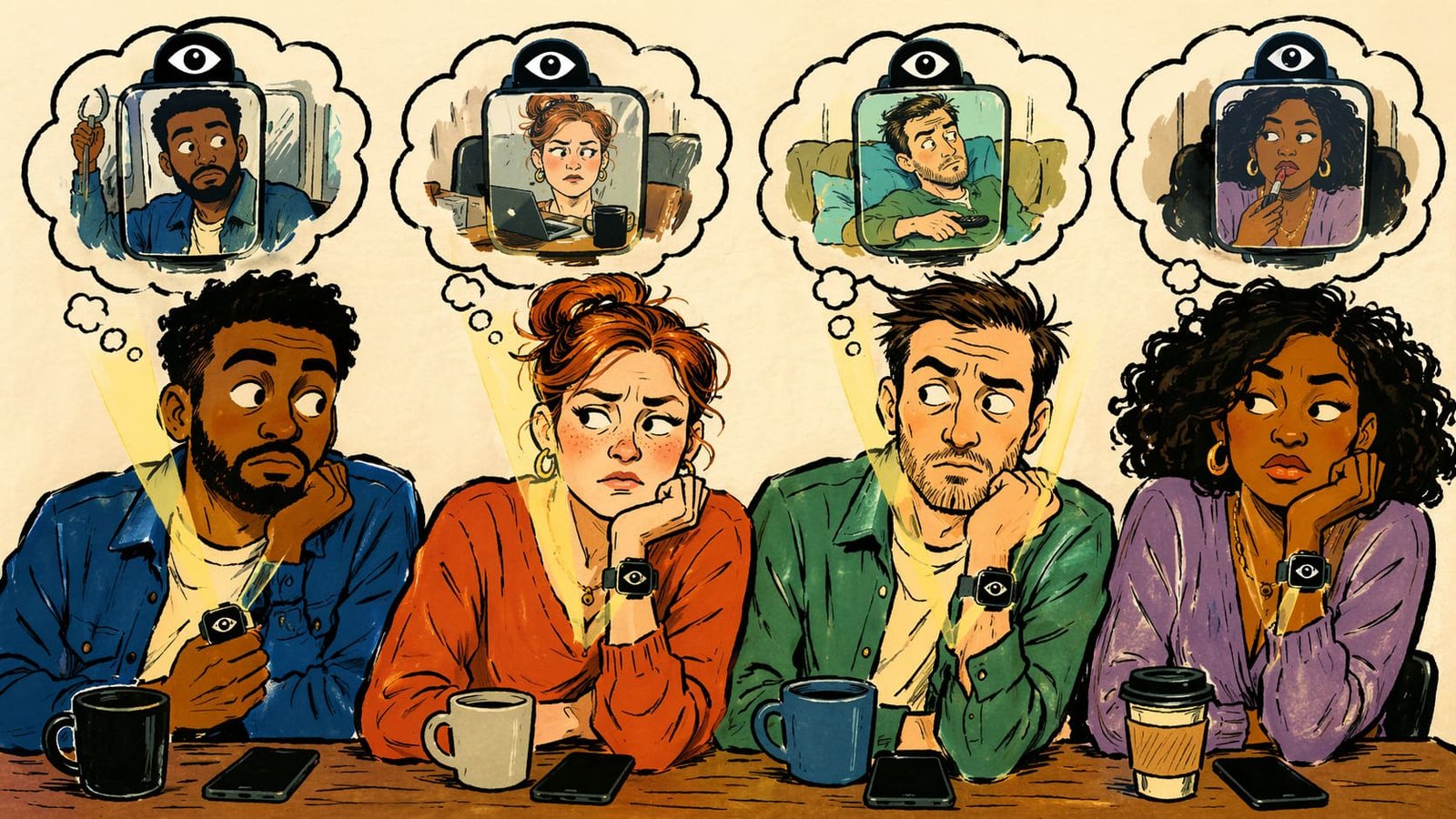
A dim room hums with quiet electricity. A face glows in the reflection of a screen that does not blink, does not judge, does not forget. Notifications rise and fall like soft breathing. The device rests in the palm, warm, obedient, intimate in a way no object should ever become. Somewhere between convenience and confession, something invisible has shifted. The screen is no longer a tool. It has become a witness. And witnesses, even silent ones, collect stories.
There is a peculiar calm that settles in when a device anticipates a need before it is spoken. A playlist begins without a request. A product appears just as curiosity flickers. A message surfaces from someone long forgotten. It feels like magic at first, then efficiency, then something harder to name. That shift is the real story. The screen does not simply respond anymore. It predicts. It arranges. It nudges. Quietly, patiently, it begins to shape.
The illusion of control lingers because interaction still feels voluntary. A tap here, a scroll there, a casual search that seems harmless. Yet each gesture leaves a trace, like footprints on wet sand. Over time, those traces form patterns. Patterns turn into profiles. Profiles become decisions made in advance. The modern user walks into a curated world believing it was chosen freely, not realizing the choices were gently narrowed long before the moment arrived.
Consider Daniel, a product manager who once prided himself on decisive thinking. Late nights blurred into algorithm-fed recommendations, from news to food to relationships. One evening, he paused mid-scroll and noticed something strange. Every option felt familiar, almost too familiar. It was as if the world had shrunk to fit his past preferences. He had not expanded his taste. His taste had been reinforced until it became a cage. That realization did not arrive with panic. It arrived with a quiet discomfort, the kind that lingers.
The deeper tension sits between ease and awareness. Convenience offers relief. It saves time, reduces friction, simplifies decisions. Yet that same convenience dulls curiosity. When the next step is always predicted, exploration begins to feel unnecessary. The screen becomes a map that redraws itself constantly, but only within the boundaries it already understands. It does not challenge. It optimizes. And optimization, when left unchecked, has a habit of flattening the unexpected.
There is also a strange intimacy in how these devices observe. Not with intention, but with accumulation. A late-night search about anxiety. A pause on a particular image. A repeated return to a certain kind of story. None of it feels significant in isolation. Together, it forms a portrait more honest than most conversations. The screen does not care about appearances. It records behavior. And behavior, stripped of performance, reveals a truth people often avoid confronting directly.
A small startup founder named Lila once spoke about this during a product meeting that drifted into something more philosophical. Her team had built a recommendation engine that performed beautifully. Engagement rose. Retention improved. Investors were pleased. Yet she admitted something that unsettled the room. The system was not helping users discover themselves. It was helping them repeat themselves. The product had become a mirror that reflected habits back with greater precision, not a window that invited new perspectives. Growth had come at the cost of expansion.
This is where the cultural shift becomes harder to ignore. The relationship with technology has moved from use to dependence, from dependence to subtle alignment. The screen does not force behavior. It aligns with it so closely that deviation feels inconvenient. Over time, convenience wins. The human instinct to wander, to question, to stumble into the unfamiliar begins to fade. Not because it was rejected, but because it was quietly outpaced by something smoother.
The unsettling part is not surveillance in the dramatic sense. It is familiarity. The device knows when attention drifts. It senses patterns in silence. It predicts without asking. There is no villain in this story, no dramatic takeover. Just a steady accumulation of insight that sits in the background, shaping decisions with a gentle hand. That subtlety is what makes it powerful. And difficult to resist.
Some argue that awareness is enough. That once people recognize the pattern, they can reclaim control. That belief carries a comforting simplicity. Yet awareness alone does not dismantle systems built on habit. Habits are stubborn. They are reinforced by reward, by ease, by repetition. Breaking them requires friction. And friction feels like loss in a world trained to value speed above all else.
A designer named Karim once removed every recommendation feature from his personal devices for a month. No suggested videos. No auto-filled searches. No curated feeds. The first few days felt disorienting. Choices expanded. Time slowed. There was a noticeable gap where convenience once lived. By the end of the experiment, something else had returned. A sense of agency, fragile but real. He described it not as liberation, but as reintroduction. As if he had met his own curiosity again after a long absence.
The story of the smart screen is not about technology alone. It is about the quiet negotiation between human desire and engineered ease. It is about how easily the line between assistance and influence blurs. And it is about how rarely that line is examined once the benefits become familiar.
In a quiet office long after the city has settled, a single screen remains lit. It reflects a face that looks back with a mixture of focus and fatigue. Data flows invisibly beneath the surface, shaping what will appear next, what will feel relevant, what will seem necessary. The room is silent, but the exchange is constant. A life, translated into signals, refined into predictions, returned as choices that feel personal.
The question does not arrive loudly. It does not interrupt or demand attention. It lingers, almost politely, at the edge of awareness. When every option begins to feel familiar, when every path feels pre-arranged, when discovery becomes rare rather than routine, something essential has shifted.
In that stillness, one thought remains, waiting to be faced without distraction or deflection: if the screen has learned everything about you, when was the last time you surprised it?
