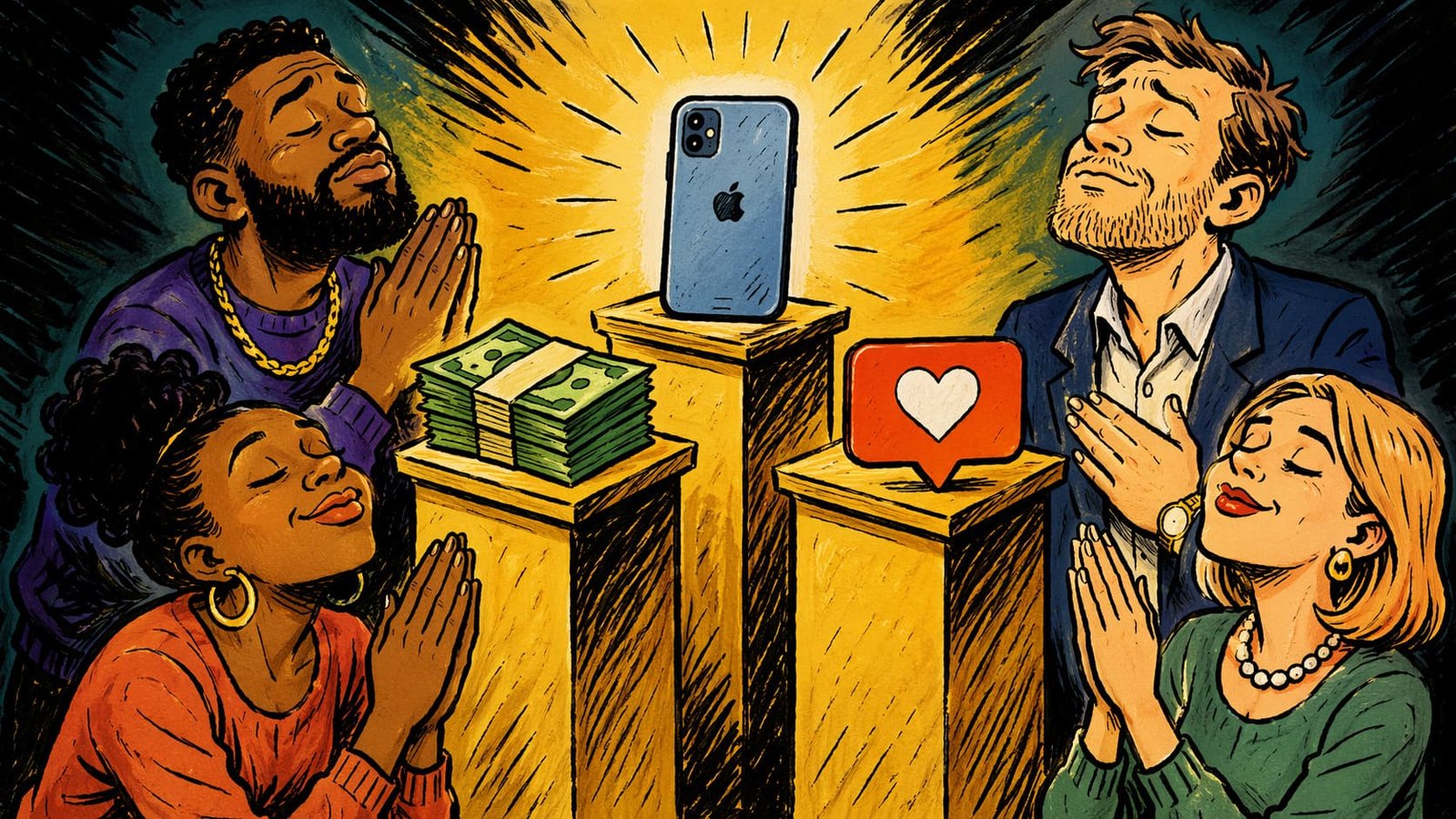
A quiet boardroom hums with muted ambition. No one raises their voice, yet decisions ripple outward with force. On the wall hangs a logo, simple, polished, almost forgettable. Still, every eye returns to it, as if it carries authority beyond design. Nobody questions it. Nobody explains it. The symbol does not argue. It does not need to. It has already settled into belief. In that room, strategy bends not just to numbers or logic, but to something older, quieter, and far more powerful.
Symbols rarely announce themselves as rulers. They slip into culture through repetition, through familiarity, through a kind of aesthetic trust. A flag, a brand mark, a uniform, even a gesture can begin as decoration and end as doctrine. The transformation feels natural. It feels earned. Over time, the symbol gathers meaning the way a city gathers stories, layer by layer, until questioning it feels like questioning the ground itself. That is when it stops representing belief and starts commanding it.
You can see this shift in small, almost forgettable decisions. A product manager named Elise once insisted her team follow a competitor’s design style because it “looked premium.” The choice had little to do with functionality. It was about what the symbol of that design represented. Clean lines signaled intelligence. Minimalism suggested discipline. Customers responded, not because the product changed, but because the symbol aligned with what they already trusted. The team did not just adopt a style. They adopted a belief system embedded within it.
Corporate culture thrives on this dynamic. Logos become shorthand for values. A single icon can evoke innovation, reliability, rebellion, or luxury without a word being spoken. Consider how certain companies have turned their symbols into identities that people wear, defend, even argue about. The symbol becomes a proxy for belonging. It answers a quiet question people carry: what does it mean to be part of something that matters?
A founder named Mateo once learned this the hard way. His startup built a strong product, well-engineered and thoughtfully designed. Yet it struggled to gain traction. During a rebrand, the team shifted their visual identity toward something sharper, more assertive. The change felt cosmetic at first. Then something unexpected happened. Investors leaned in. Customers paid attention. The product had not changed. The symbol had. And with it, the perception of credibility. Mateo realized that belief often arrives before proof.
This is not limited to business. Social movements, political campaigns, and cultural trends all rely on symbols to compress complex ideas into something portable. A phrase becomes a rallying cry. A color becomes a signal. A gesture becomes a declaration. These symbols travel faster than arguments. They require less effort to understand. They create immediate alignment. In doing so, they bypass the slower, messier work of reasoning.
Anthropologists have long noted that symbols function as anchors for collective meaning. They stabilize identity in a world that constantly shifts. Yet that stability comes with a trade-off. Once a symbol is accepted, it resists scrutiny. It becomes sacred in subtle ways. Challenging it can feel like betrayal, even when the challenge is rational. This is where control begins to take shape, not through force, but through reverence.
A small story from a fashion house illustrates this tension. Nadia, a young designer, proposed a collection that broke away from the brand’s iconic aesthetic. The designs were innovative, forward-thinking, and technically brilliant. The leadership hesitated. They feared that abandoning the established symbol would confuse loyal customers. The collection was scaled back. Months later, a competitor embraced a similar direction and gained attention for its boldness. Nadia’s idea had not failed. It had collided with the gravity of a symbol that refused to move.
Symbols do not just guide external perception. They shape internal behavior. Employees align with company values not only because they believe them, but because they are constantly reminded of them through visual and cultural cues. The same applies to individuals. People adopt symbols that reflect how they want to be seen, then begin to act in ways that reinforce that image. The symbol becomes a script, quietly directing behavior.
There is a strange intimacy in this process. A person wearing a certain brand, repeating a certain phrase, or aligning with a certain icon is not just signaling to others. They are reinforcing something within themselves. Over time, the repetition solidifies into identity. The symbol stops being external. It becomes personal. That is when its influence deepens, moving from surface-level association to something more embedded.
A strategist named Victor once described this during a late-night discussion about consumer behavior. He argued that people do not buy products. They buy coherence. A symbol offers a way to feel consistent, to align actions with a broader narrative. The more coherent the symbol feels, the more powerful it becomes. It reduces complexity. It answers questions before they are fully formed. In a world overloaded with choices, that clarity feels like relief.
Yet this clarity can also narrow perception. When a symbol becomes too dominant, it can limit the range of possibilities people consider. It can define what feels acceptable, what feels aspirational, what feels out of bounds. This is where the quiet command of symbols becomes visible. Not in what they say, but in what they exclude. The absence they create is as powerful as the presence they maintain.
Somewhere in a design studio, a new symbol is being sketched. It looks simple, almost insignificant. A few lines, a shape, a color. It will be tested, refined, launched. At first, it will feel like decoration. Then it will begin to gather meaning. People will recognize it, trust it, defend it. Over time, it will shape decisions in ways no one fully anticipates. It will become part of the invisible architecture of belief.
As it settles into culture, one question remains, sharper than it first appears: are you choosing the symbols you follow, or are they quietly choosing the limits of what you believe?
