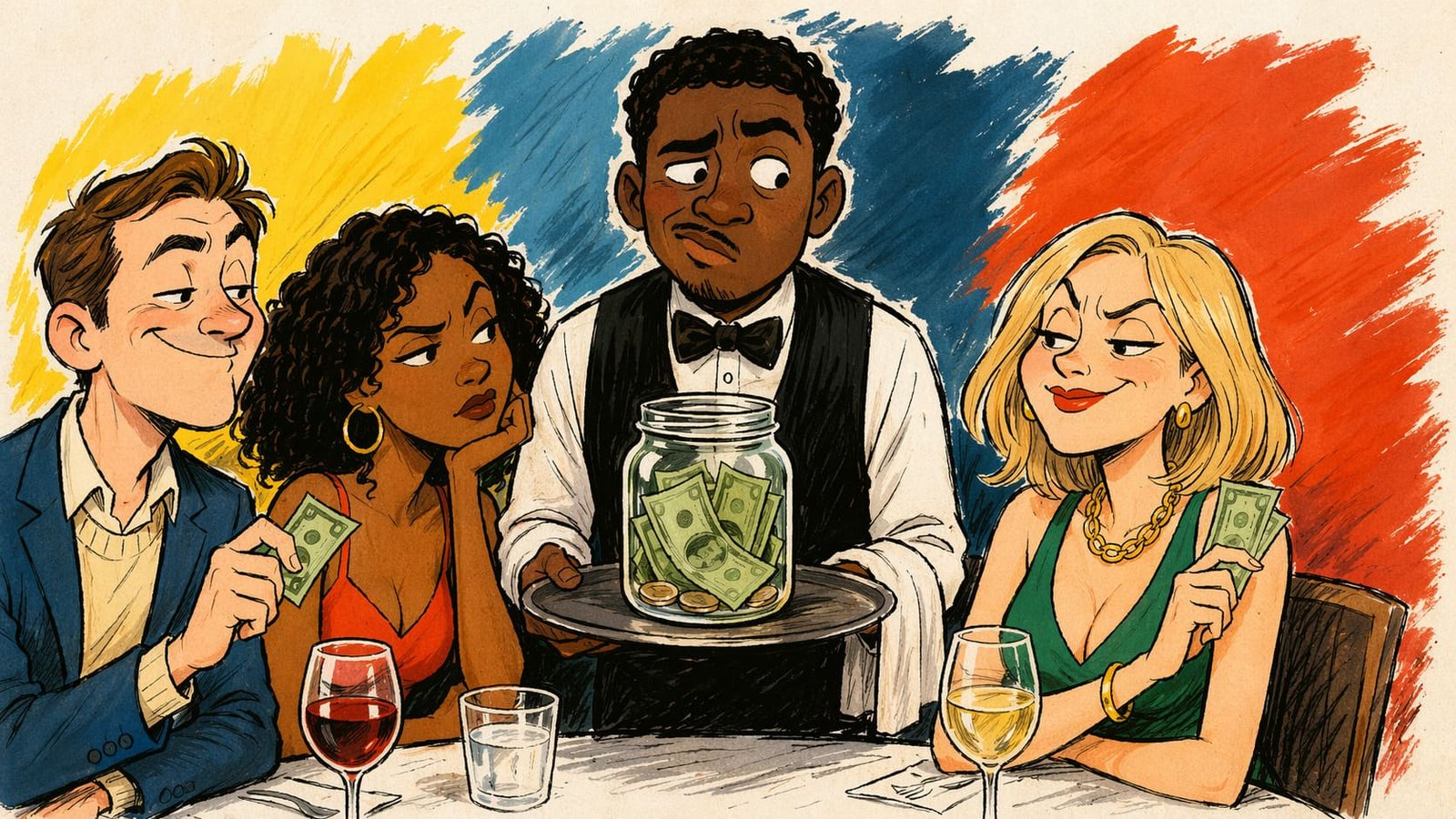
The transaction should have ended already. Coffee poured, card tapped, receipt printed. Yet something lingers in the air, thin but unmistakable. A small screen swivels around, glowing with options that feel less like suggestions and more like expectations. The numbers sit there, patient, waiting for a decision that suddenly feels heavier than the purchase itself. The barista smiles, not forcing anything, not saying a word, yet the moment stretches just long enough to feel observed.
Tipping did not begin this way. It arrived as a gesture, a quiet acknowledgment that service had gone beyond what was required. Over time, that gesture hardened into something else. It became a signal, then a norm, then a subtle obligation wrapped in politeness. No one officially declared it mandatory, yet declining it now carries a social weight that feels difficult to ignore. The system evolved not through policy, but through expectation.
Ethan, a junior architect in Seattle, noticed the shift during what should have been a routine lunch. He ordered a sandwich, paid quickly, and was met with a tipping screen before his food had even been prepared. The percentages started high, leaving little room for hesitation. For a brief second, he considered selecting none, then glanced up and caught the cashier’s eyes. The choice dissolved instantly. Later, sitting alone with his meal, he laughed quietly, though it did not feel like humor. “I didn’t tip for service,” he said, unwrapping the sandwich slowly. “I tipped to avoid feeling like the kind of person who doesn’t.”
That feeling sits at the center of the system. Tipping is no longer only about rewarding effort. It is about managing perception, both in the eyes of others and within oneself. The act becomes less about generosity and more about identity. People tip to align with who they believe they should be, not always with what they experienced. The difference is subtle, but it shapes behavior in ways that feel almost automatic.
Businesses have learned to navigate this dynamic with precision. Digital payment systems present tipping options before the interaction has fully unfolded. The design is clean, frictionless, efficient. A product designer in Austin, Priya, once explained the reasoning behind these interfaces during a quiet workshop. “We guide decisions,” she said, tracing a finger across a mockup screen. Then she paused, as if considering whether to continue. “Sometimes guidance feels like pressure,” she added, almost as an afterthought. The room understood the implication without needing further explanation.
The economic structure behind tipping complicates the conversation further. In many service industries, base wages remain low, with the expectation that tips will fill the gap. Responsibility shifts quietly from employer to customer. A waiter in Chicago, Luis, described it during a late-night shift when the restaurant had finally emptied. He leaned against the counter, exhaustion visible in the way he moved. “People think tips are extra,” he said, wiping a glass with slow precision. “For me, they’re the difference between this job working or not.” His words carried a clarity that policy debates often soften.
Pop culture has not ignored this tension. Scenes like the tipping debate in Reservoir Dogs exposed how quickly opinions diverge when the practice is questioned. What seemed like a small act revealed deeper beliefs about fairness, labor, and responsibility. That conversation continues quietly in everyday life, less dramatic but no less charged, playing out across millions of interactions that rarely receive attention.
A café owner in Cape Town, Nandi, decided to remove tipping entirely from her business model. She raised prices slightly, ensuring her staff received stable wages regardless of customer behavior. The transition was not smooth. Some customers resisted, uncomfortable with losing the ability to signal appreciation directly. Others welcomed the clarity. Over time, something unexpected happened. The atmosphere shifted. Conversations became more relaxed, interactions less performative. “People started looking at each other differently,” Nandi said, arranging cups behind the counter with practiced ease. “There was less calculation in the room.”
The emotional layer of tipping remains the most complex. It asks individuals to participate in a system that feels both necessary and flawed. Declining to tip can feel like a statement, even when it is simply a personal boundary. Over-tipping can feel like compensation, not just for service, but for discomfort. Each decision becomes a small negotiation between values and expectations, played out in seconds but carried longer.
A rideshare driver in New York, Karim, once shared how tipping shaped his perception of passengers. A generous tip could transform a routine ride into a memorable one, while the absence of it lingered more than he expected. “It’s not about the money alone,” he admitted, adjusting his mirror before pulling away from the curb. “It’s about what it says.” That unspoken message, whatever it may be, becomes part of the exchange, even if neither side fully understands it.
The system persists because it works just well enough. It allows businesses to manage costs, workers to earn beyond base wages, and customers to feel a sense of agency. The discomfort rarely reaches a breaking point. Instead, it settles into routine, becoming part of the background of everyday life, accepted even when it feels unresolved.
The scene shifts to a quiet café near closing time. A customer stands at the counter, receipt in hand, the tipping screen still glowing softly. The room is nearly empty, the silence more noticeable now. The choice feels small, almost insignificant, yet it carries a weight that is difficult to name. Behind the counter, the worker waits with practiced neutrality, neither expecting nor dismissing what comes next.
And in that brief pause, something becomes clear. The system does not rely on force. It relies on feeling. On the subtle pressure of being seen, of wanting to do the right thing, of avoiding the discomfort of appearing otherwise. Shame, in its quietest form, becomes a kind of currency, exchanged without ever being named.
So the question lingers, steady and unresolved: when generosity is shaped more by expectation than intention, what exactly is being given, and how much of it was ever freely yours to begin with?
