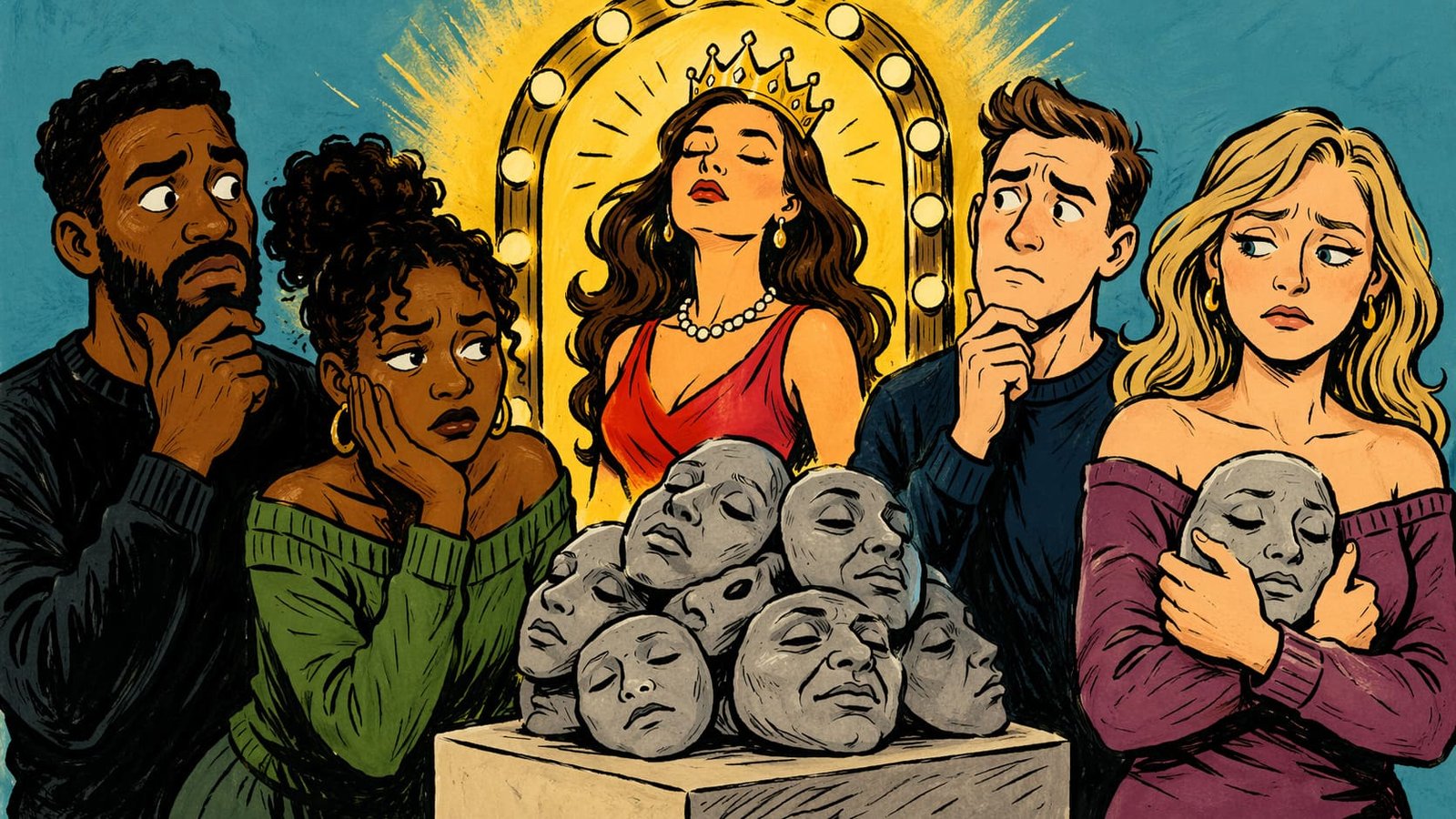
The image looks flawless at first glance. Skin appears smooth, colors balanced, proportions precise enough to feel intentional. Nothing distracts, nothing disrupts. It holds attention the way polished surfaces always do. Yet something about it feels distant, almost untouchable, as if the very perfection that draws the eye also keeps it from connecting.
The pursuit of beauty has always carried tension. It promises elevation, refinement, a way of shaping the world into something more pleasing. In earlier eras, imperfection lived alongside that pursuit, sometimes even defined it. A crack in a painting, a rough edge in a sculpture, a voice slightly off-key could still move people deeply. Beauty felt alive because it allowed room for irregularity.
The modern version has little patience for that kind of variance. Technology has made correction effortless. Filters smooth faces, algorithms adjust lighting, design systems enforce consistency across every surface. The result is a world that looks increasingly cohesive, almost curated by an invisible hand. It is visually appealing, yet it begins to feel standardized, as if difference itself has been quietly edited out.
A creative director named Mina once described a campaign review where every image met technical perfection. Lighting was balanced, composition aligned, color grading immaculate. The team approved everything quickly. Later, she admitted none of it stayed with her. The work had no friction, no tension, nothing that asked for attention beyond the first glance. It was beautiful, and entirely forgettable.
This is where the shift becomes more than aesthetic. When beauty is defined by uniform standards, it begins to act like a form of control. It tells people what is acceptable, what is desirable, what is worth being seen. The more precise those standards become, the narrower the range of what feels valid. Difference is not rejected openly. It is simply excluded through design.
Social platforms amplify this effect with quiet efficiency. Content that aligns with dominant visual norms travels further, faster, more predictably. Faces that fit certain proportions gain visibility. Spaces that match certain aesthetics attract attention. Over time, these patterns create feedback loops. People adapt, consciously or not, shaping themselves to fit what the system rewards.
A young photographer named Elias once shifted his style to match trending aesthetics. His work began to gain traction, more likes, more shares, more opportunities. Yet he noticed something unsettling. The images that performed best were the ones that felt least like his own. He had learned to produce beauty that aligned with the system, not with his instincts.
The deeper cost lies in how this reshapes perception. When everything is polished, imperfection starts to feel like failure rather than character. A room that is lived in begins to look messy instead of meaningful. A face that shows age or fatigue appears out of place in a world that prefers smoothness. The standard does not need to be enforced directly. It becomes internalized.
There is also a loss of emotional range. Imperfection carries stories, context, a sense of time and experience. When those elements are removed, what remains is surface without depth. It may look appealing, but it does not resonate in the same way. Beauty becomes something to consume rather than something to feel.
Some creators resist this quietly. A filmmaker leaves in a moment that feels slightly uneven because it carries truth. A designer embraces asymmetry because it introduces tension. A writer chooses language that is not perfectly polished because it feels more human. These decisions often go unnoticed at scale, yet they preserve something essential, a sense that beauty can still surprise.
In a gallery filled with immaculate images, one piece stands slightly apart, its edges less refined, its composition less predictable. It does not demand attention, yet it holds it longer. There is something in its imperfection that feels closer, more real, more human. And in that quiet contrast, a question emerges with unsettling clarity, one that lingers long after the room empties: when beauty becomes something to obey, what happens to the parts of you that refuse to be perfected?
