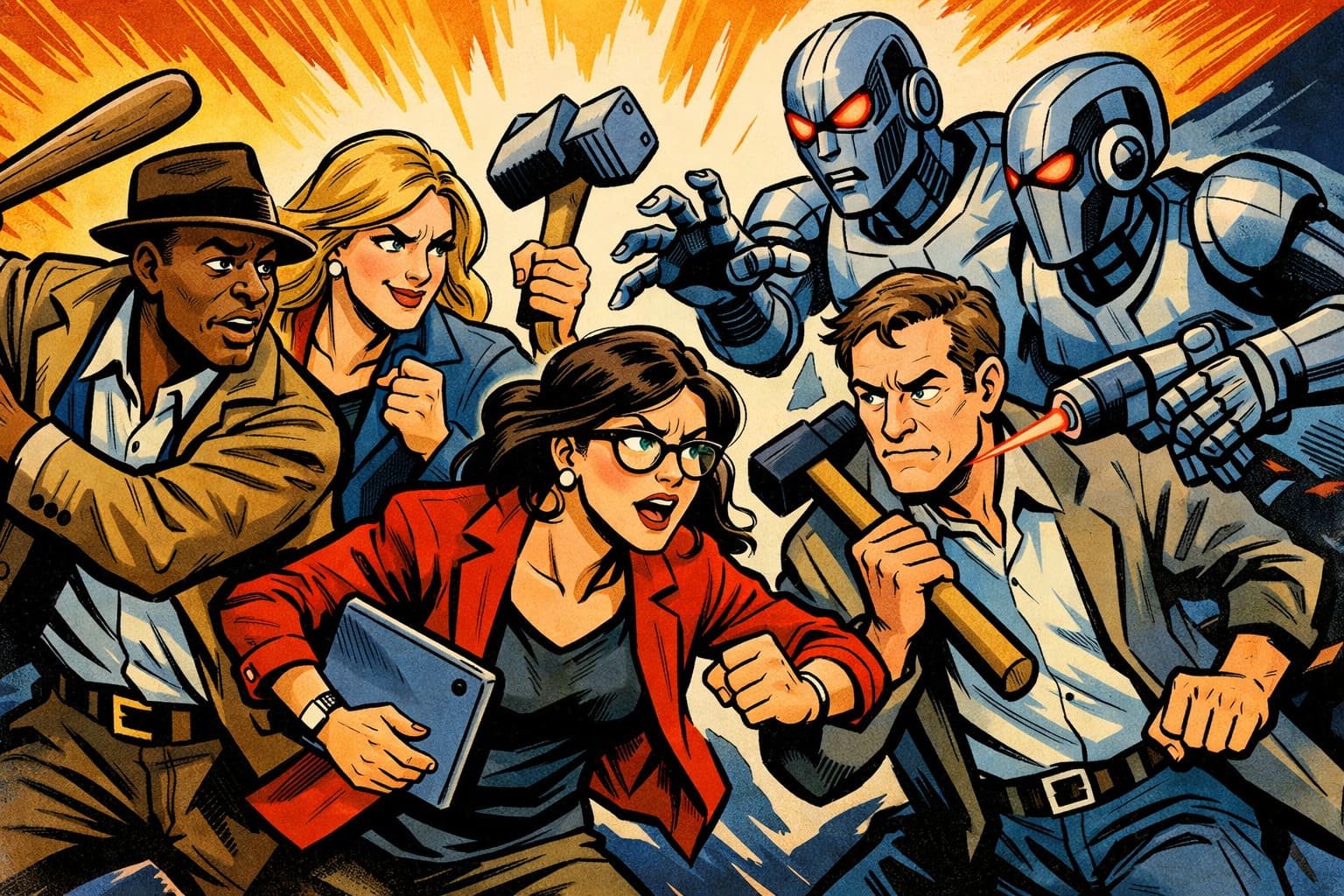
The room was unnervingly quiet. A glowing screen answered complex business questions in seconds while executives exchanged amused glances. Someone joked that consultants had just become obsolete. Laughter rippled around the table, but it faded quickly. The software produced elegant answers, polished charts, and persuasive summaries. Then the chief executive asked a simple question. “Would you trust this with your company’s future?” Silence returned. It was a different kind of silence this time. The machine had delivered information. The room was still waiting for judgment.
Artificial intelligence has changed consulting faster than almost anyone predicted. Research that once occupied entire project teams now appears almost instantly. Financial models refresh themselves. Competitive analysis unfolds in moments. Some professionals see only disruption. Others see liberation. Technology is steadily removing repetitive work, allowing consultants to spend more time where genuine value has always existed. Human complexity refuses to fit neatly inside algorithms. Organizations succeed because people choose to trust, cooperate, negotiate, and adapt. Those qualities remain stubbornly resistant to automation.
The greatest misunderstanding surrounding artificial intelligence is the belief that information automatically becomes wisdom. It never has. AI can identify patterns across enormous amounts of data, but it cannot walk into a tense boardroom and sense the hesitation behind a polite smile. It cannot recognize when a founder’s silence reveals fear instead of confidence. It cannot rebuild damaged relationships after a failed merger. Those moments demand empathy, intuition, and lived experience. Consulting has always been as much about emotional intelligence as intellectual ability.
Consultant Aisha discovered this during a digital transformation project for a national retail chain. Her team used advanced artificial intelligence tools to identify declining customer loyalty with remarkable accuracy. The technology recommended operational changes supported by flawless analysis. Store managers quietly resisted every proposal. Aisha spent several days visiting branches, speaking with frontline employees, and observing customer interactions. The problem was not pricing or logistics. Staff members felt disconnected after repeated restructuring. Once leadership restored trust and involvement, customer satisfaction improved. AI found the symptom. Human understanding uncovered the cause.
Leading advisory firms have embraced this new reality. PwC continues investing heavily in artificial intelligence while emphasizing that successful consulting combines technological capability with ethics, leadership, and professional judgment. The message is becoming remarkably clear across the industry. Artificial intelligence works best as a partner rather than a replacement. Consultants who master both technology and human behavior will consistently outperform those relying exclusively on either one.
Popular culture has explored similar questions for years. Films such as Her and Ex Machina challenge audiences to consider where intelligence ends and humanity begins. Consulting now faces a comparable crossroads. Clients increasingly expect rapid analysis powered by advanced technology. They still seek reassurance from people capable of understanding ambition, uncertainty, conflict, and hope. Algorithms calculate probabilities. Humans carry responsibility when those probabilities shape real lives.
The consultants thriving in this new era are not competing against artificial intelligence. They are learning alongside it. They ask better questions because routine answers arrive faster. They spend more time mentoring leadership teams, resolving conflict, crafting vision, and strengthening organizational culture. Those responsibilities grow more valuable as automation accelerates. Every technological breakthrough raises the importance of uniquely human capabilities. The profession is evolving from information delivery toward wisdom, interpretation, and trusted partnership.
Late one evening, another consultant will close a laptop after artificial intelligence has completed hours of analysis in minutes. The screen will go dark, but the real work will only be beginning. Decisions will still require courage. Leadership will still require trust. Change will still require people willing to believe in one another before believing in any machine. Artificial intelligence may reshape consulting forever, but the future will belong to those who remember that technology serves humanity best when humanity refuses to surrender what makes it irreplaceably human.
