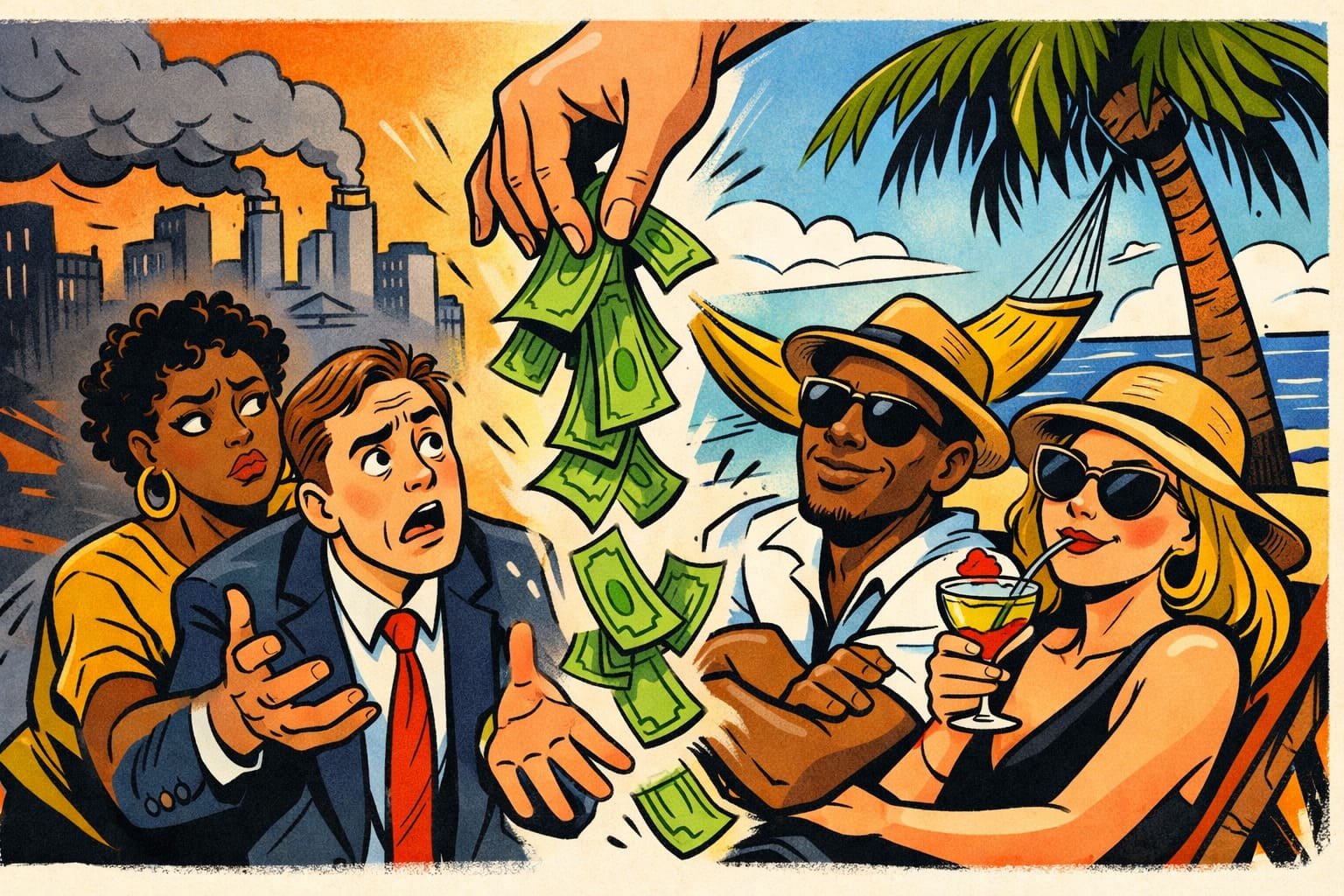
Cash transfers have become one of the great policy seductions of the modern state. They are simple to explain, quick to deliver, and politically legible in a way that complicated service reform rarely is. Money reaches households. Hardship softens. A government can point to relief with something close to immediate proof. In an age of volatile prices, fragile work, and recurring shocks, that simplicity feels like mercy. It also feels like control. When citizens are anxious, cash can calm the room faster than promises about productivity, structural reform, or the medium term path of national competitiveness.
The rise of cash transfers reflects a genuine intellectual shift. For years, economists and development practitioners argued that poor households often know their own needs better than distant administrators do. Give people money and they can prioritize food, transport, rent, school, medicine, or debt. That insight helped move policy away from paternalistic systems that assumed the poor needed instructions more than resources. In many settings, transfers have improved welfare, protected consumption, and reduced extreme distress. The appeal is not sentimental. It is practical. Cash respects agency and can be delivered at lower friction than large bureaucratic programs designed around suspicion.
Brazil’s social transfer architecture, especially through Bolsa Família and related programs, showed how targeted cash can become a major pillar of anti poverty policy while also shaping politics. It helped families smooth daily life and kept social protection visible. It also demonstrated something more uncomfortable. Once cash enters the bloodstream of democratic expectation, it becomes difficult to shrink, redesign, or depoliticize. What begins as a focused support tool can evolve into a permanent symbol of state care, national identity, and electoral competition. That evolution is not automatically bad. It simply means transfers stop being technocratic instruments and become part of the emotional constitution.
India’s expansion of digital transfer capacity offered another important lesson. When identity systems, banking access, and payment rails improve, governments can move money with impressive speed and lower leakage. That is a major administrative gain. Yet efficient transfer is not the same as wise transfer. A state can now send money faster than it can think through long term incentives. The convenience of delivery can tempt leaders to use transfers as default policy for every pressure point. Inflation rises, send cash. Jobs weaken, send cash. Prices spike, send cash. Elections approach, send cash. Administrative capability can accidentally make fiscal temptation more agile.
Pandemic era support deepened this logic across the world. Emergency transfers stabilized households and prevented deeper collapse. They also changed political imagination. Citizens saw that governments could move money at scale when they chose to. The old excuses about administrative impossibility lost credibility. That was one of the most important social revelations of the period. It expanded the realm of what seemed possible. Yet emergency policy can leave a tricky legacy. Temporary relief becomes a benchmark. Future hardship then meets a changed expectation. Citizens remember the moment the state acted decisively and start asking why normal insecurity still receives lectures instead of support.
The fiscal question is not whether transfers work. Many do. The fiscal question is what transfers are for. Are they a bridge through shock, a long term anti poverty instrument, a substitute for weak labor markets, a compensation tool for reform pain, or a political sedative when deeper change is too hard? These purposes are not identical. Treating them as interchangeable leads to drift. A transfer that is excellent for cushioning a drought or recession may be poor as a permanent response to joblessness rooted in low productivity and weak investment. Budgets chase calm when they mistake relief for resolution.
Kenya’s experience with targeted cash support and wider debates around social protection reflects this tension well. Transfers can protect vulnerable households and are often far more humane than slow bureaucracy or fragmented aid. Yet they sit inside a broader economy where jobs, prices, public services, and tax burdens still determine whether households actually feel secure. Money helps. It does not eliminate the need for growth, reliable healthcare, decent schools, affordable food systems, and productive opportunity. A country that relies too heavily on transfers without strengthening those foundations may preserve peace for a season while quietly financing frustration underneath it.
There is also a subtle political economy problem. Cash transfers are visible, personal, and emotionally resonant. Public investment is slower, more abstract, and less likely to be credited cleanly. That means politicians may prefer handing out money to fixing the systems that make households vulnerable in the first place. Building transport, reforming land use, improving logistics, making health systems work, and raising learning quality are harder, slower, and less theatrical. Transfers therefore risk becoming the comfort food of weak states. They soothe quickly and nourish poorly if they start replacing the meal rather than supplementing it.
A warehouse worker whose hours were cut during a downturn understands the value of direct cash with fierce clarity. The transfer pays for transport, food, and a small gap in rent. It buys time, not luxury. That matters. Yet if the next year brings the same insecurity, the same stagnant wages, and the same expensive essentials, the transfer begins to feel less like protection and more like a state issued apology. Households do not only need money in the moment. They need a believable path toward less precarity. Relief without route can become a very expensive form of managed disappointment.
Smarter transfer policy is precise and honest. Protect children, the elderly poor, people with disabilities, and households hit by severe shock. Use transfers to ease reform pain when fuel subsidies are removed or when crisis disrupts normal income. Build strong delivery systems and keep rules legible. Then pair transfers with the less glamorous work of economic strengthening: labor demand, local enterprise, public service quality, infrastructure, and price stability. Cash is best when it acts as cushioning around a broader strategy. It becomes dangerous when it turns into the strategy itself because governments have lost confidence in their ability to do harder things.
The contrarian point is that transfer expansion can signal both compassion and institutional weakness at once. A humane society should absolutely prevent avoidable misery. Yet a state that keeps widening cash support while basic systems decay may simply be paying people to endure dysfunction. That is not justice. It is budgeted coping. Citizens sense the difference. They welcome the money and still feel the hollowness underneath. The treasury gets temporary calm. The society keeps the underlying wound. A country can become more generous on paper while growing more brittle in lived experience. That paradox deserves far more attention than it usually gets.
In the hush that follows a payment notification, there is a brief human easing, a bag of groceries secured, a fare covered, a school need met, a panic postponed. That moment matters. It should not be mocked. Yet no society can transfer its way out of every structural failure without eventually confronting the bill, the dependency, and the loneliness of a politics that offers cash where it once promised a future. Relief is real. So is the danger of mistaking sedated tension for solved hardship. The next question is the one that lingers after the money lands: what has actually changed besides the week?
