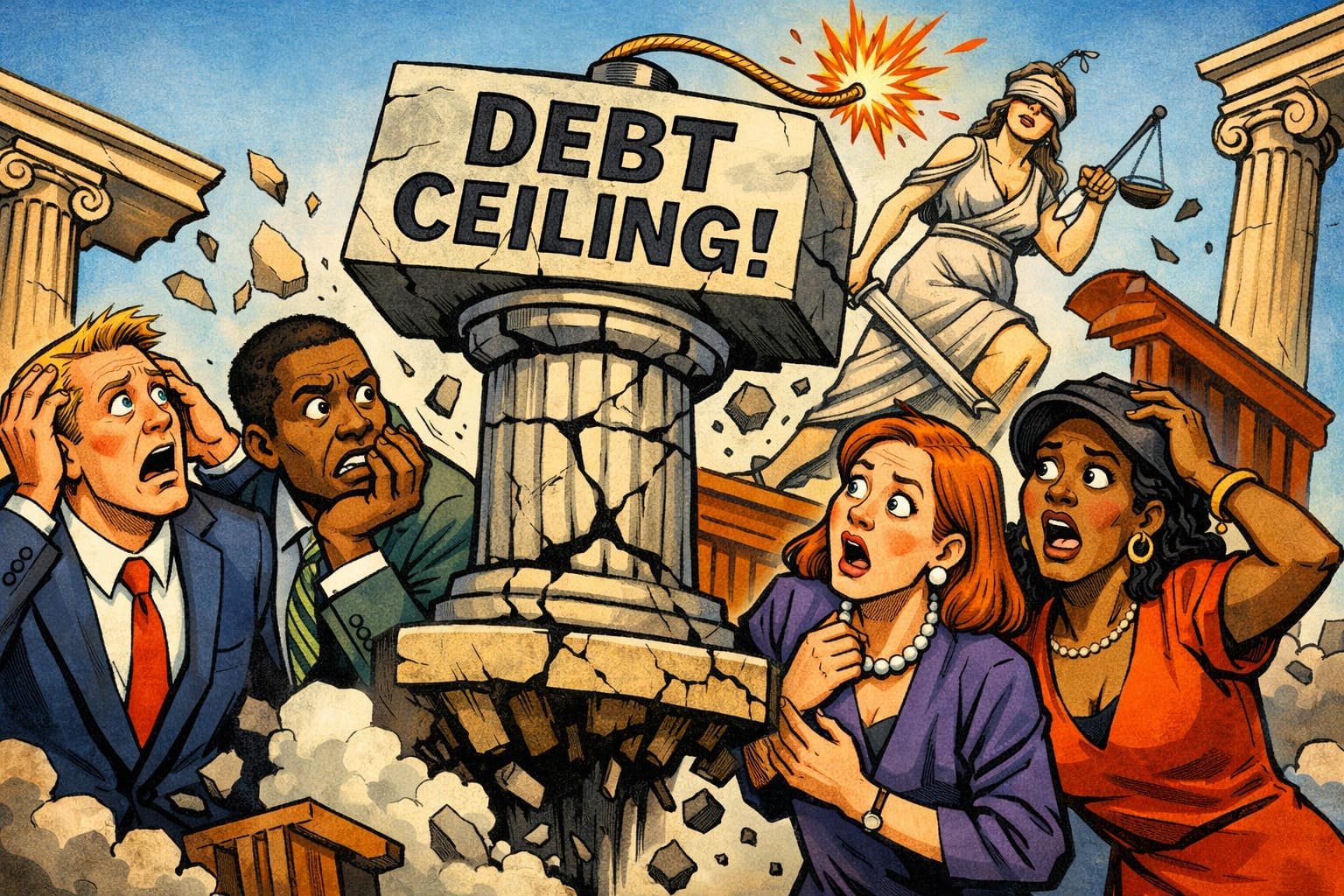
Few fiscal rituals are as theatrical and as economically absurd as the debt ceiling. It arrives with the mood of a final showdown, stern speeches, countdown graphics, market nerves, patriotic language, and lawmakers acting as though the nation’s credit is a hostage worth parading across the stage every so often for dramatic effect. Yet behind the thunder lies a simple and awkward fact. The debt ceiling does not decide whether a government has chosen to spend or tax. Those decisions were already made elsewhere. The ceiling instead creates a second crisis around bills already incurred.
That is why the whole spectacle feels like symbolism with live wires hanging out of it. Supporters present it as fiscal discipline. Critics see it as governance cosplay with catastrophic downside. Both sides understand the emotional power of the ritual. It lets politicians perform seriousness about debt without doing the less glamorous work of long-term budget reform. But institutions like the CBO, CRFB, and GAO have all stressed the core reality: the debt ceiling is a legal borrowing limit, and failing to raise or suspend it after obligations have been enacted creates unnecessary default risk.
The symbol survives because it flatters several instincts at once. It flatters lawmakers who want leverage. It flatters voters who want some visible line against endless debt. It flatters media logic because deadlines and cliff edges are easy to package. What it does not flatter is institutional coherence. A state that approves spending and taxation through one process, then threatens not to finance the resulting gap through another, is not practicing elegant constitutional restraint. It is sawing at the branch while still sitting on it.
The fiscal irony is almost too obvious to be taken seriously. If a country truly wants debt control, it should tackle the drivers, taxes, entitlements, spending growth, interest burdens, and budget process discipline. The debt ceiling does none of that directly. It is a trigger without a steering wheel. It can frighten markets, delay payments, damage credibility, and raise borrowing costs, all without solving the structural problems it claims to dramatize. It is the public policy equivalent of threatening to smash the thermostat because the heating bill is too high.
A small business owner in Ohio once described debt ceiling episodes with perfect working-class precision. “It feels like the people with the company credit card are arguing about whether to pay for the shipment after the truck already unloaded.” That is exactly the point. Suppliers do not care that the board has discovered symbolic restraint after ordering the goods. Creditors care about payment. Employees care about continuity. Markets care about competence. The debt ceiling turns basic state reliability into a bargaining chip and then acts offended when the rest of the world notices.
The damage is not only in actual default, which would be devastating enough. The damage is in near misses, in the repeated willingness to flirt with dysfunction, in the normalization of public credit as a prop. A great deal of economic trust depends on the boring expectation that the state pays what it owes when it owes it. Undermine that expectation often enough and the cost eventually broadens beyond treasury operations. Risk premiums shift. Confidence frays. A little more suspicion enters the bloodstream of the financial system.
The defenders of the ceiling sometimes argue that drama is the only way to force serious fiscal debate. That sounds tough-minded until one remembers how often the drama ends with temporary patches, extraordinary measures, and no lasting agreement on the debt drivers themselves. The country gets the panic without the cure. It is like staging an intervention every season without ever dealing with the addiction. At that point the ritual is not discipline. It is dependency, a political system needing periodic brinkmanship to simulate honesty it cannot sustain through normal budgeting.
There is also a constitutional oddness to the whole affair. Legislators vote for appropriations and tax laws, then later posture as though borrowing to honor those choices were a separate act of moral corruption. The sequence allows grandstanding without ownership. One chamber can enjoy the politics of spending. Another can enjoy the politics of refusal. The public, meanwhile, gets the impression that fiscal management is a series of disconnected events rather than one chain of responsibility. That fragmentation is bad economics and worse civic education.
A cleaner system would connect decisions more directly. If lawmakers want smaller deficits, let them vote for smaller deficits in the actual budget choices that produce them. If they want debt reduction, build mechanisms around targets, medium-term plans, automatic triggers, or more credible fiscal institutions. Threatening the full faith and credit of the state after the fact is not brave. It is a symbolic gesture aimed at future behavior by jeopardizing current obligation. That is a very strange definition of prudence.
The danger rises because the theater has become familiar. Familiarity is soothing, which is exactly the problem. Each prior episode that avoids disaster can teach politicians the wrong lesson, that the edge is safe because the fall did not happen last time. But systems under stress do not promise infinite rehearsals. Markets can misread patience as fragility. Institutions can absorb repeated strain until suddenly they do not. A symbol that courts disaster long enough may eventually stop performing and start producing.
The official literature on the issue has become increasingly blunt. The debt ceiling does not meaningfully control future debt on its own, while repeated standoffs create avoidable economic risk.
In the end, debt ceiling theater persists because symbolism is easier than reform and suspense is easier to televise than budgeting. Yet the nation being asked to admire the drama is the same nation standing nearest the explosives. That is the cruel joke at the center of the ritual. A symbol designed to signal seriousness ends up advertising dysfunction, and all because politics prefers the thrill of the cliff to the dignity of building a safer road farther back from the edge.
