A low, golden light slips through a studio window, casting wild shadows on a wall cluttered with paper scraps and sharpie doodles. Music thumps softly in the background as a designer paces in socked feet, searching for a way out of a stubborn creative rut. In this quiet space, the air tastes of coffee and unfinished plans. It is not a talent deficit that blocks new ideas, but a need to move, shake loose the routine, and trick the mind into seeing sideways. Creative exercises, far from child’s play, are the unsung engine behind breakthroughs.
The myth that great ideas appear in lightning bolts keeps too many creators frozen. Professionals know better: the well runs dry for everyone. The secret weapon? Exercises designed to jar loose unexpected thoughts. At IDEO, designers famously swap projects mid-sketch, forcing fresh perspectives. At Pixar, writers play “what if?” with the wildest scenarios, stretching even the most tired brains into new shapes. The results are rarely what you expect, which is exactly the point.
You have felt this magic in your own hands. Pick up a pen, draw with your eyes closed, or design something with just three colors—suddenly, the safe paths vanish. You start making mistakes on purpose, laughing at ugly drafts, trusting that somewhere inside the chaos, a new direction will emerge. These games, both silly and serious, train your mind to look for possibilities rather than problems.
Teams stuck in cycles of sameness turn to creative prompts to reboot. A fintech group in Berlin starts every Friday with “bad idea hour,” celebrating the silliest solutions to real problems. An art collective in Seoul holds midnight drawing contests, awarding prizes for the most off-the-wall submission. In both cases, breakthroughs follow not because the exercises are genius, but because they dismantle the fear of failure.
If you think exercises waste time, consider the opposite: ruts cost more. Whole projects stall when teams wait for the “perfect” idea to arrive. In creative industries, time lost to blank-page anxiety is time stolen from innovation. The world’s best design leaders—like Debbie Millman, who runs weekly wordplay workshops, or Massimo Vignelli, who swore by limited toolkits—make practice a habit, not a panic button.
A powerful exercise is one you cannot control. Force yourself to work fast—ten ideas in ten minutes. Try the “mashup” method, blending two unrelated products into one (imagine a chair that also brews coffee, or a website that smells like rain). The absurdity releases pressure, often leading to practical new concepts. Real breakthroughs hide in places logic refuses to search.
Collaboration amplifies the effect. Throw three people into a room with one problem and three ridiculous constraints: no rectangles, only the color orange, solve it in silence. What starts as chaos becomes play, and in play, the ego lets go. The design team at Neon Pulse, a gaming startup, credits their most successful UI with a challenge: redesign the user menu blindfolded. Most attempts were nonsense, but one odd arrangement ended up feeling so intuitive it became their signature.
You are not alone if you groan at the idea of exercises. Yet the discomfort is a clue: your brain prefers routine because it is safe. Push through, and watch as the familiar terrain dissolves. After ten silly sketches, the eleventh usually surprises you. In this moment, you realize why professionals set aside time for these games—they know the best solutions hide where certainty cannot find them.
Sometimes the simplest prompts work best. Design with your non-dominant hand. Write a fake review for your project from the future. Cut your favorite work in half and rebuild it backwards. These techniques are not about the result, but about disrupting stale logic, about learning to love risk and imperfection.
Ideas that begin as exercises often grow into something bigger. Famous products, like the Moleskine Smart Notebook or the IKEA “One Chair, Many Ways” campaign, began as throwaway prompts in brainstorm sessions. The act of creating with no pressure to impress often leads to the most original outcomes.
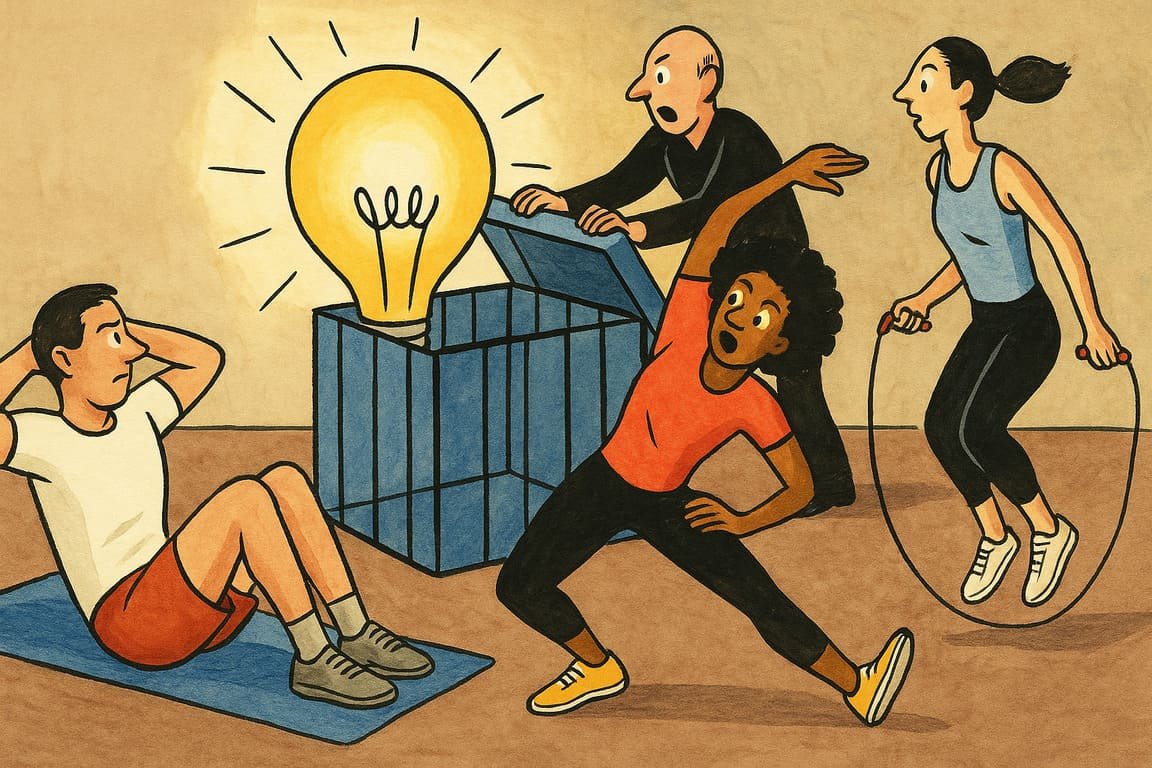
The mind is a muscle: ignore it, and it stiffens. Stretch it daily, and new moves become possible. If creative muscles are neglected, they shrink. Exercises keep them alive. Whether you are a junior just starting out or a creative director with decades behind you, these rituals offer more than just ideas. They bring back the thrill of discovery, and with it, the confidence to chase something new.
In the hushed studio, dawn slips across the floor, tracing the aftermath of a wild creative night—sheets covered in wild scrawls, coffee mugs abandoned mid-thought, and one bold idea taped to the wall. The space feels charged, every object humming with untapped potential. The lesson settles in the air: when you step outside comfort and dare to play, the whole world expands.
Someone, maybe you, will find their next breakthrough hiding inside a game, a dare, a mistake. Beyond the edge of routine, doorways to new worlds wait—unlocked only by those willing to laugh at their first attempts. So, are you brave enough to play, or will you stay locked in the safe circle, forever wondering what could have happened if you let go?
