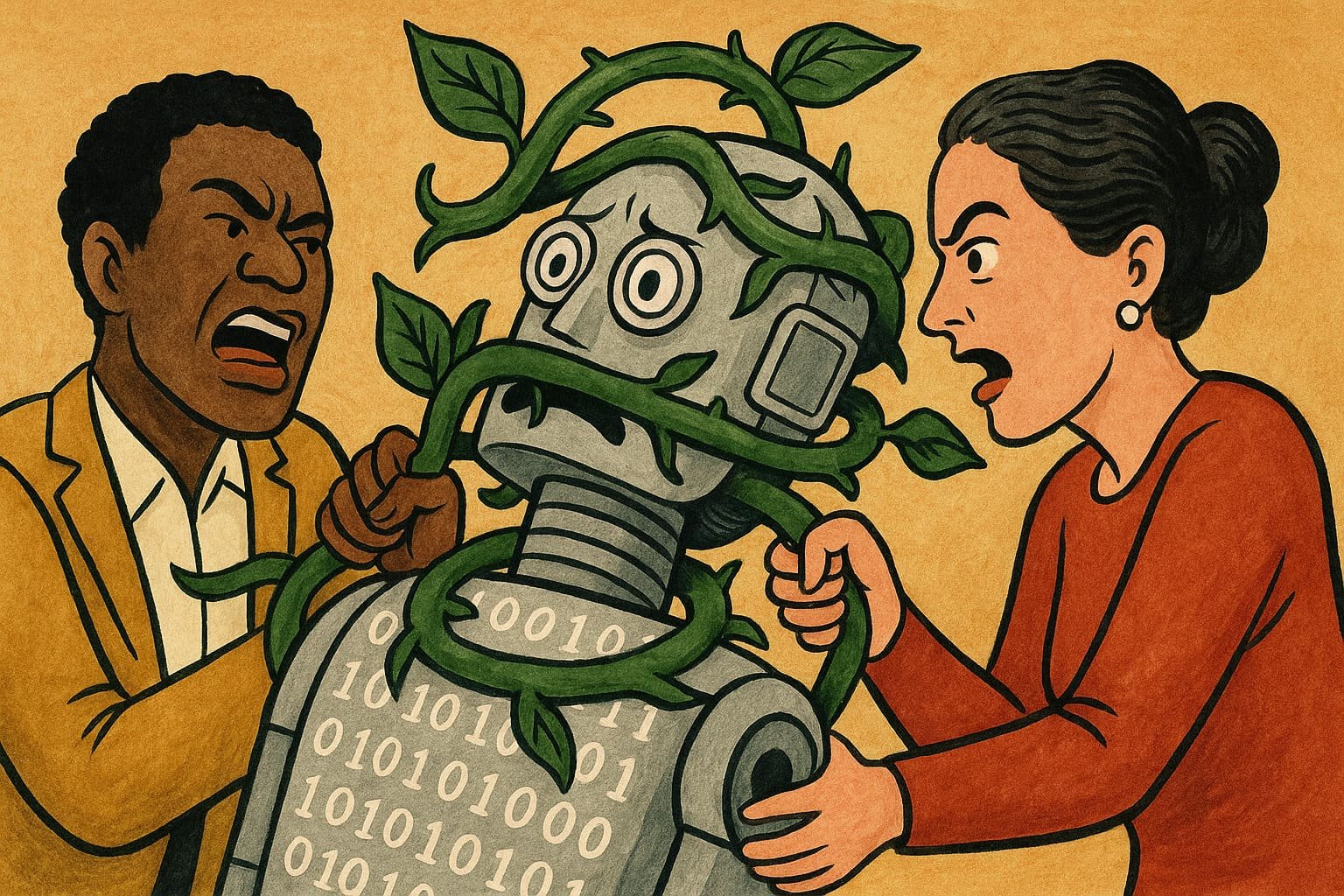
Faint applause echoed across a conference hall as executives celebrated another breakthrough in artificial intelligence, yet one unanswered question lingered like smoke after fireworks. Every demonstration looked flawless until ordinary people entered the picture. Confidence shifted almost instantly. Hidden inside elegant code lived countless invisible assumptions gathered from history, culture, and human behavior, proving that artificial intelligence rarely invents prejudice on its own but often magnifies patterns that society quietly left behind.
Bias in artificial intelligence is frequently misunderstood as a software defect waiting for a technical patch. Reality is less comforting because intelligent systems learn from data created by imperfect institutions and imperfect people. Historical hiring records, lending decisions, healthcare outcomes, and consumer behavior all become lessons that machines faithfully repeat. When flawed experiences become digital memory, algorithms transform yesterday’s blind spots into tomorrow’s automated decisions unless organizations deliberately interrupt that cycle before deployment.
Amina founded a financial technology startup determined to expand lending opportunities for overlooked entrepreneurs. Early testing looked promising until independent reviewers noticed applicants from certain neighborhoods consistently received lower approval scores despite similar business performance. Engineers searched tirelessly for programming mistakes and found none. Training data reflected decades of unequal lending practices rather than objective financial potential. The breakthrough arrived only after rebuilding evaluation models around broader indicators that rewarded business resilience instead of historical privilege.
Academic researchers and technology companies increasingly recognize that responsible artificial intelligence requires multidisciplinary collaboration instead of engineering alone. IBM has invested heavily in AI governance frameworks, while organizations such as Mozilla advocate greater transparency surrounding automated decision systems. These efforts reflect an important realization. Fairness cannot be added after software launches because ethical quality emerges from careful design choices, continuous auditing, diverse development teams, and willingness to challenge assumptions that initially appear completely reasonable.
Popular films often portray dangerous artificial intelligence as a machine suddenly developing sinister intentions. Everyday experience tells a quieter story with far greater relevance. Harm usually appears through ordinary optimization performed without sufficient context or oversight. A recommendation engine favoring familiar content may gradually narrow perspectives. A translation model may unintentionally reinforce stereotypes. None of these outcomes require malicious intent. Small distortions repeated millions of times quietly reshape opportunities, perceptions, and public trust across entire societies.
Dim server lights continued blinking long after crowded offices emptied, patiently processing instructions without understanding fairness, dignity, or compassion. Machines inherit remarkable computational ability, yet moral responsibility never transfers alongside processing power. Every intelligent system ultimately reflects choices made long before code reached production, revealing more about human priorities than technological capability. Every line of code becomes part of tomorrow’s social architecture, so what values deserve permanent residence inside the systems still waiting to be written?
