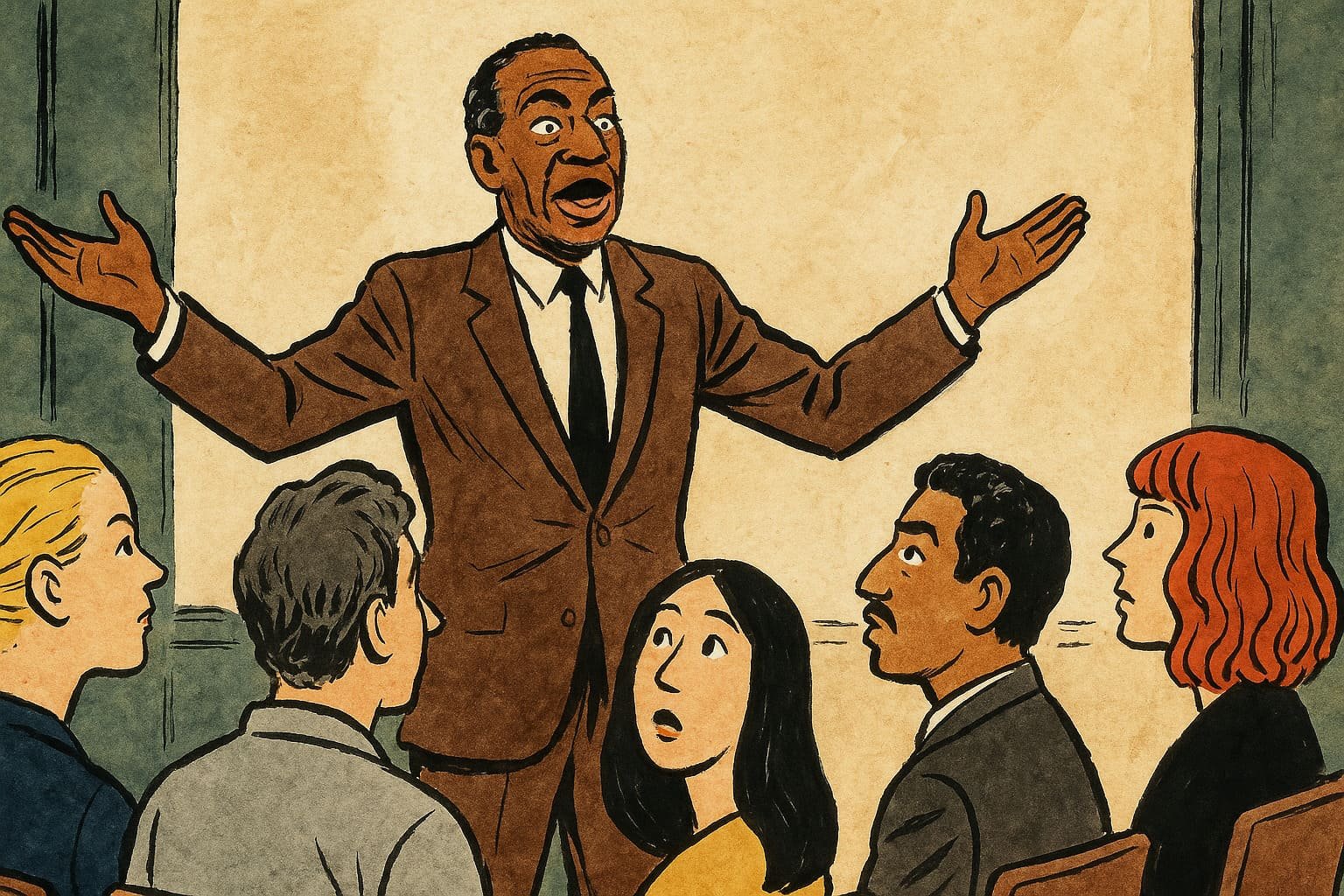
You walk into a room full of strangers, tension tight as violin strings. Eyes dart up, scanning for signals—authority, confidence, maybe even charm. Then you speak. Suddenly, the temperature shifts, the energy recalibrates, and the room formerly a collection of individuals leans in. This isn’t magic. It’s mastery. Speaking like a pro isn’t about having the deepest voice or the fanciest words; it’s about energy, clarity, and control. It’s knowing how to carry your message like a melody people never forget.
Most people confuse communication with simply talking. But true communication is persuasion. It’s an art form that, when refined, can win promotions, close deals, start revolutions, and even mend broken relationships. And here’s the kicker: every great communicator was once terrible at it. The only difference? They chose to learn the game. This article is your roadmap not to sounding smart, but to becoming unforgettable. Because the real flex isn’t being heard; it’s being remembered.
Quick Notes
- Presence Over Perfection: Communication power lies more in how you show up than what you say. Great communicators project presence, not just polish.
- The Voice Is a Weapon: Your vocal tone, pace, and pause matter more than your vocabulary. Voice modulation turns ordinary talk into captivating command.
- Structure Sells: Professionals don’t ramble. They organize thoughts like architecture; clean, compelling, and easy to follow.
- Stories Stick: Data informs, but stories transform. The best speakers use narrative as their delivery vehicle to make abstract ideas land.
- Feedback Fuels Growth: Communication is not static. Ongoing refinement based on reflection and feedback turns decent talkers into commanding speakers.
The Invisible Suit: Owning the Room Before You Say a Word
Commanding attention begins before you speak. Your posture, energy, and facial expressions tell a story long before your voice does. Entering a room like you belong there even if your hands are shaking taps into a primal human instinct to follow leaders. Think of Michelle Obama’s entrance or Denzel Washington’s deliberate stillness. They don’t just walk in; they arrive. And people feel it.
Confidence isn’t a feeling; it’s a decision. When you’re nervous, your body reveals it faster than your mouth. That’s why breathing techniques, firm but open body language, and grounding rituals matter. They’re not about ego; they’re about presence. Showing up like you matter reminds others that you do.
The psychology behind presence is simple. People follow energy, not volume. Walk in with quiet self-assurance, and the energy naturally gravitates toward you. It’s not about being loud. It’s about being centered. A leader who whispers can shake a room more than someone who yells.
Former Starbucks CEO Howard Schultz once said he spent months rehearsing how to simply greet his global teams. Why? Because those first seconds determined how much weight his words would carry later. Charisma is engineered, not inherited. Own the room before it owns you.
Mini-case: At a tech conference in Berlin, founder Ada Cheng took the stage with a five-second pause before uttering a word. That pause? It unsettled, then captured the room giving her the attention edge before her opening line even dropped. That’s presence by design.
Your Voice Is an Instrument: Learn to Play It Like Hendrix
Great communication isn’t about sounding perfect; it’s about sounding intentional. The most powerful tool in your toolkit isn’t your vocabulary; it’s your vocal variety. Tone, pitch, and pause are the true directors of attention. Most people speak in a monotone that flattens their message. But a skilled speaker? They sing their sentences.
Steve Jobs was famous for his dramatic pauses. He’d say something seemingly simple, then… wait. That wait forced the listener to lean in. The silence amplified the message. When used right, a pause can scream louder than a shout.
Vocal tone signals emotion. If you speak flatly about something you’re excited about, no one believes you. But elevate your pitch just slightly or drop your voice to a whisper for suspense, and people are hooked. Human brains are wired to respond to emotion, not information.
Practice matters. TED speakers rehearse vocal modulation dozens of times—not to memorize words, but to shape emotional impact. Just like a singer warms up before a performance, professional speakers do vocal drills. They know the delivery can make or break the message.
Mini-case: Brené Brown’s viral TEDx talk wasn’t just a hit because of content. Her controlled vulnerability; quivers, pauses, and emotional emphasis made her feel relatable, raw, and powerful. She didn’t just speak. She sang her truth.
Don’t Speak: Design Your Message Like Architecture
Talking is easy. Designing what you say is where the real power lives. Every sentence you speak should have a job; to inform, persuade, or move. The problem is, most people just ramble. Professionals architect their words with intention.
Start with structure. Use the classic rule of three: state the point, explain it, then offer an example. This is how the human brain processes information best; triads feel complete and digestible. Ever notice how jokes, arguments, and speeches often follow this pattern? That’s not by chance.
Clarity wins over complexity. A clear message gets quoted. A convoluted one gets ignored. When your message is clean, it cuts through noise. Speaking with clarity isn’t dumbing things down; it’s leveling them up for understanding.
Real pros use signposts. “Here’s what matters,” “Let me give you a story,” or “The takeaway is this”; these phrases act like GPS markers in your message. They orient listeners, guide attention, and keep engagement high. The secret isn’t saying more. It’s saying what matters in a way people remember.
Mini-case: Oprah Winfrey’s Golden Globes speech followed a deliberate architecture. She opened with a story, transitioned into a message of justice, and ended with a call to hope. Three moves. One unforgettable impression. That’s architectural speechwriting.
Wrap Your Truth in Story: Because Facts Alone Don’t Fly
Humans don’t remember bullet points. They remember how you made them feel. The fastest way to unlock hearts and minds is through storytelling. Stories bypass logic and go straight to belief. If you want your ideas to stick, tell a story that bleeds.
Most people assume data will do the heavy lifting. But data without narrative is like a meal with no seasoning. It may be nutritious, but no one craves it. When you wrap insight in story, it travels faster and lands deeper. That’s how change happens.
The best communicators use micro-stories. Just two or three lines about a person, moment, or shift. These mini-narratives break up your talk, pull attention back, and humanize your message. Think of them as espresso shots of connection.
Story also protects your message from resistance. Instead of arguing a point, share an experience. People argue with facts, but they empathize with feelings. It softens defensiveness and invites dialogue.
Mini-case: When Simon Sinek explained “Start With Why,” he didn’t lead with charts. He told the story of the Wright brothers; why they flew when others with more money and talent failed. That single story anchored his thesis for millions.
Feedback: The Real Pro Talks After the Applause Ends
Speaking is not a destination. It’s a skill under constant renovation. The elite communicators are obsessive about feedback not praise, but friction. They chase critique because that’s where growth lives.
Most people fear feedback because it threatens ego. But professionals view it as fuel. Each comment is a mirror, showing blind spots, filler phrases, awkward transitions, and missed emotional cues. Getting better starts with getting real.
The smartest speakers record themselves. They watch their tics, count their pauses, track audience response. It’s awkward but it’s gold. You can’t improve what you don’t study. And you can’t master what you won’t confront.
Feedback loops are critical. Build a small circle of trusted listeners who will tell you the truth. Ask for one thing you did well and one thing you could sharpen. Then track it over time. Progress isn’t magic; it’s measurement.
Mini-case: Barack Obama reportedly rewatched every debate and press briefing early in his career, studying not just what he said, but how he looked and sounded saying it. That’s how he evolved from stiff academic to global orator. That’s how pros are made.
You Don’t Need to Be Loud: You Need to Be Legendary
Every room you walk into is an opportunity to imprint your message on minds and hearts. Not through dominance, but through presence. Not with grandstanding, but with groundedness. Talking like a pro is not performance; it’s precision. And precision, repeated over time, becomes power.
Don’t aim to be the smartest voice in the room. Aim to be the clearest, the most human, the most felt. When your words land with emotional weight and structural elegance, you don’t just speak; you lead. And that’s what moves the world.
So here’s your challenge: What’s the one message you need to deliver this week that could change everything if said right? Write it. Shape it. Speak it. Then watch what happens when you step into the room like it’s already yours. Because it is.
Partnered. Provocative. Worth Your Scroll.
This is a Promoted Post by ESYRITE—yes, it’s paid, but never filtered. Our voice stays raw, real, and razor-sharp. We team up with bold ideas, game-changers, and stories that spark something real. If it’s here, it earned its place—no fluff, just impact. We don’t just promote—we provoke. Stay sharp. Dive deeper.
