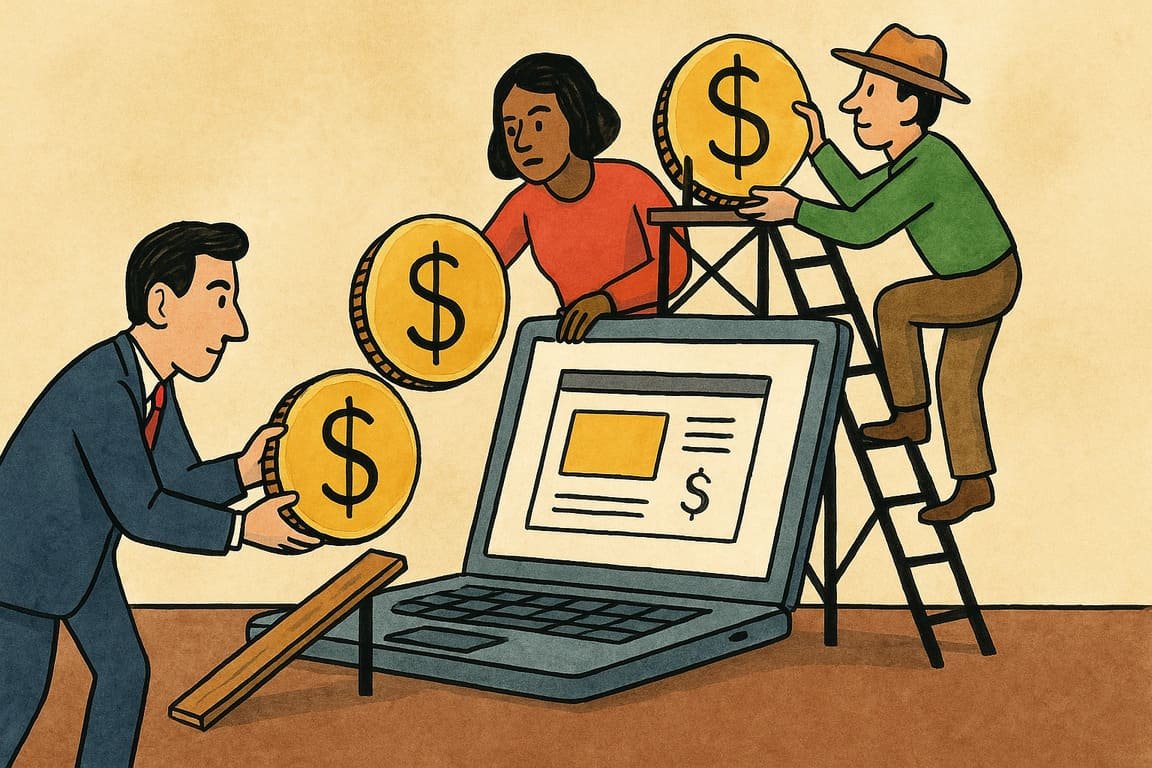
Picture a velvet-curtained auction hall at midnight, thrumming with the nervous energy of a startup founder who just mortgaged their dreams for the “perfect” website. Monitors glow with temptation. Gavel in hand, an auctioneer in gold sneakers, eyes glittering with mischief, opens the bidding not for a Picasso, but for a digital home page so overpriced and dysfunctional it might as well hang in the Museum of Modern Regrets. Every paddle raised is a prayer. Some pray for validation. Others pray for a miracle.
A CEO from downtown Nairobi whispers to her advisor, “What if it breaks the moment we launch?” She’s thinking of the competitor whose $300 site outsold the industry’s darlings. Across the room, a bearded tech lead sips cold coffee, remembering the night his team went bankrupt chasing bells, whistles, and an animated mascot that crashed on mobile. In the flickering light, each bidder is haunted by the same fear: money does not guarantee digital triumph. Yet the myth persists. Spend more, win more. Bleed cash, buy greatness.
As the curtain falls, a rogue developer from Mumbai slips out, smirking. He’s built sites on a shoestring and outperformed Silicon Valley with nothing but wit and WordPress. The crowd doesn’t notice him vanish into the rain, phone buzzing with new deals from brands burned by the big-budget myth. One voice, the founder of Grit Media, still echoes in the hallway: “Every budget tells a story—most tell a tragedy.” The camera pans out. The digital world isn’t a level playing field. It’s a psychological thriller—one wrong budget and you’re the punchline, not the hero.
Quick Notes
- Tiny Budgets Win Big When Focused on Value, Not Vanity: Money is a tool, not a trophy. Sites that solve real problems and engage users crush bloated budgets and flashy effects every time.
- People Over Pixels: Hiring a designer who cares about your story will outperform any pricey agency obsessed with awards. Human connection beats code every time.
- Iterate, Don’t Detonate: Launch ugly, test often, and reinvest profits into smarter upgrades. The world’s best sites started simple and grew with their audience—not by burning through capital on day one.
- Watch Out for the ‘Guru Trap’: The loudest voice is rarely the wisest. One solo developer in a small café can build you a stronger foundation than an army of consultants in glass towers.
- Future-Proof with Flexibility: The tech that wins tomorrow might not even exist today. Bet on adaptable tools and people who can learn, not the biggest up-front package deal.
The Myth of the Digital Fortune—Why Big Budgets Break More Than They Build
Somewhere in a neon-lit boardroom, a rookie founder signs a check for a “full stack experience” promised by a beaming agency in Tokyo. It looks impressive in the pitch deck: 3D parallax, live chat, AR pop-ups, the works. The contract reads like a love letter to technology, but the fine print is a minefield of unnecessary features and invisible upcharges. Within three months, the startup’s runway has evaporated. Their site takes thirty seconds to load on a smartphone. Customers bounce before the homepage even appears.
Every year, businesses repeat this scene. The tragedy isn’t the money lost; it’s the belief that only massive investments buy credibility online. Yet, history loves contrarians. When Little Lemon, a one-woman bakery in Cape Town, built a website with borrowed templates and home-shot photos, she outperformed gourmet chains with glossy digital showrooms. Her secret: simplicity, speed, and a checkout that made hungry people feel heard.
If you trace the rise of viral microbrands, their playbook is almost laughable: solve a real problem, design with empathy, obsess over clarity. Customers care more about getting what they want—fast and frictionless—than dazzling graphics or animated backgrounds. The story of Stardust Tees, an indie T-shirt shop that reached cult status, began with a single-page website built on free software. Their founder, Max, tells the story: “Our first sale came from a tweet. Our second came because we fixed a typo.” Real wins aren’t tied to budget size; they come from relentless focus on serving people.
There’s a persistent industry joke that every dollar spent on useless website features is a dollar that could have funded marketing, product improvements, or payroll. In tech circles, everyone knows at least one seven-figure website launch that resulted in zero business impact. It’s a lesson in hubris: complexity confuses, excess repels. True website power is built through relentless prioritization and a willingness to ignore digital peer pressure.
The Human Algorithm—Hiring for Heart, Not Just Hype
Imagine walking into a bustling Parisian café. At the back table, a freelance web designer listens as a small business owner describes her vision. There’s no jargon, no hard sell, just sketches on napkins and laughter over strong espresso. This is where digital magic begins—not in high-rise conference rooms, but in spaces where story, trust, and personal touch drive every decision.
For every multinational agency boasting about awards, there are hundreds of solo creators quietly crafting websites that feel alive, warm, and unmistakably human. Amy, founder of Willow Wellness, swears by her designer Anna: “She didn’t just build us a site. She listened to our story, made us feel seen, and translated our purpose into pixels.” Sites like these convert visitors into loyal customers, not because of high-tech gimmicks, but because every detail feels intentional.
Too often, decision-makers fall for the allure of scale. They choose big teams and complex hierarchies, believing that more hands equal better results. The reality is grittier. Teams that win move quickly, adapt, and pour their personality into every project. The story of Indie Gamer News, built by two best friends in a dorm room, proves the point. Their traffic outpaced legacy media because readers felt the passion behind every article, every review, every click.
A common trap: mistaking credentials for care. Resumes and portfolios tell only half the story. It’s the after-hours emails, the willingness to fix bugs at midnight, and the personal investment that separates a partner from a contractor. Remember that time Sasha, a marketing manager in Berlin, switched agencies after her developer answered customer support tickets during a server meltdown? She doubled her sales and built lifelong trust.
Hiring for heart means investing in people who believe in your vision, not just your checkbook. It means valuing curiosity, humility, and grit over glossy presentations. This is the “human algorithm” of digital success: real people, real empathy, real results.
The Agile Paradox—Ugly Sites That Print Money
Fast-forward to a tiny co-working loft in Lagos, where two cousins launch an ecommerce site selling handmade shoes. Their logo is uneven, their fonts a little wild, but the order form works flawlessly. Within weeks, they’ve cleared out their stock. The secret? They launched with flaws on purpose, watching every customer click, fixing issues in real-time, and letting real-world feedback drive every update.
Across the Atlantic, a Fortune 500 giant unveils a million-dollar redesign that promptly tanks conversions. Months spent in closed-door meetings, PowerPoint battles, and endless A/B testing couldn’t predict what a single tweet from a dissatisfied customer did: their shopping cart was confusing. Real users found more value in a clunky but reliable competitor.
The myth that only “beautiful” sites win is shattered daily by businesses brave enough to launch early, iterate often, and treat feedback like gold. The playbook is simple: launch ugly, gather data, fix, improve, repeat. Old-school perfectionism drains budgets and kills momentum. In contrast, agile teams grow fast, pivot hard, and thrive in uncertainty.
Take the story of Reverb Drip, a coffee startup that survived a brutal year by shipping weekly changes based on customer requests. When a review complained about slow checkout, the founders fixed it in under an hour. That single move doubled their orders. It’s a lesson in humility: users rarely care about pixel-perfect design. They want to solve their problems, quickly and painlessly.
Agile isn’t a buzzword; it’s survival. The ugly truth? Most legendary websites started rough, scrappy, and delightfully imperfect. Every update was a bet on user feedback, not personal ego. In the race for digital dominance, those who adapt survive—and sometimes, the scrappiest underdogs end up leading the pack.
Beware the Guru Trap—When Expert Voices Cost You Everything
In a sleek podcast studio, a marketing “guru” tells a breathless audience how a $50,000 rebrand changed his life. The crowd nods, scribbling notes, convinced that bigger investments guarantee success. Later that night, an unknown blogger tweets, “My website cost $50 and just broke a million visits.” The room explodes with likes. The internet loves irony.
The “guru trap” is an industry hazard: believing that fame, fortune, or loud social followings translate into real results. Hidden behind every viral quote is a graveyard of failed projects, wasted budgets, and egos too big to pivot. Smart money isn’t seduced by spectacle. It chases real performance, track records, and genuine testimonials from customers who remember your brand, not your ad spend.
Look at the rise of community-driven brands like Rainy Day Reads, a bookshop that built a devoted following by responding to every email, comment, and review personally. Their “website budget” went mostly to customer support, not web design. The return on investment? A fanbase that buys, shares, and evangelizes without being asked. Their founder, Leo, shares: “People just want to know you’re listening. That’s what keeps them coming back.”
There’s a hard lesson here. Money can’t buy authenticity or wisdom. Those who chase celebrity experts often wind up with websites that are beautiful but lifeless, optimized for awards instead of customers. The best strategies often come from the quiet strivers, the unheralded engineers, the people in the trenches who live and breathe the product.
Real expertise doesn’t shout; it whispers. The quiet voices who say “try this, not that” based on lived experience are worth more than any paid endorsement. Seek out those stories, not headlines. Build with those who have skin in the game, not just a stake in your budget.
Flexibility Eats Fixed Plans for Breakfast
A rainstorm pounds the windows of a New York design lab. Inside, a team debates which CMS to use. Some argue for legacy platforms with decades of “stability.” Others push for no-code tools, ready to adapt at lightning speed. The argument boils down to one question: will your website survive the next wave of tech evolution?
The smart money bets on flexibility. The digital graveyard is full of beautiful, expensive websites that died when their platforms went obsolete or couldn’t pivot fast enough. Just ask any founder who built their first site in Flash. Every innovation is a risk. Today’s “must-have” feature is tomorrow’s punchline.
The best websites are built for change. They use modular design, open APIs, and tools that evolve with user needs. When COVID-19 hit, a small gym in Sydney turned their website into a live-stream platform overnight, saving the business and even growing their audience. Their founder, Petra, remembers: “We had to change fast, so we chose tech that let us move.” It wasn’t the prettiest platform, but it worked. Flexibility made all the difference.
Future-proofing isn’t just about tech. It’s about mindset. The willingness to break what works and build again, faster and smarter, is the true hallmark of digital resilience. This playbook is lived by businesses that view every challenge as an invitation to adapt, not an excuse to stall.
Don’t tie your future to rigid plans or shiny packages. Invest in tools, people, and partners who thrive on change. The next big thing might be a single click away—will your site be ready, or will you be stuck on the loading screen?
The Haunting Glow of a Budget Well Spent
On a foggy rooftop at dawn, a young founder stands alone, watching her city wake up in flickers of blue and gold. Behind her, the server room hums with the heartbeat of a website built from midnight hustle and patient choices. No champagne, no fireworks. Just a quiet sense that every dollar saved, every shortcut skipped, every late-night fix brought her team one step closer to meaning. It isn’t the budget that made this site a legend. It’s the messy, glorious, relentless journey.
Below, rivals race to outspend and outshine. Up here, the real work begins: listening, adapting, building with heart. In this silent hour, you can almost hear the future whisper its secret: smart money isn’t loud or flashy. It’s careful, hungry, and just a little rebellious. It’s the magic in the margins, the power in restraint.
Success is not measured in zeroes or lines of code. It’s found in the courage to build for people, not for pride, and to risk being underestimated in a world obsessed with the superficial. Every website budget is a leap of faith. Spend wisely, and your story might just outlive the hype.
You hold the blueprint in your hands: Will you follow the crowd, or will you dare to build a legacy that money alone could never buy?
