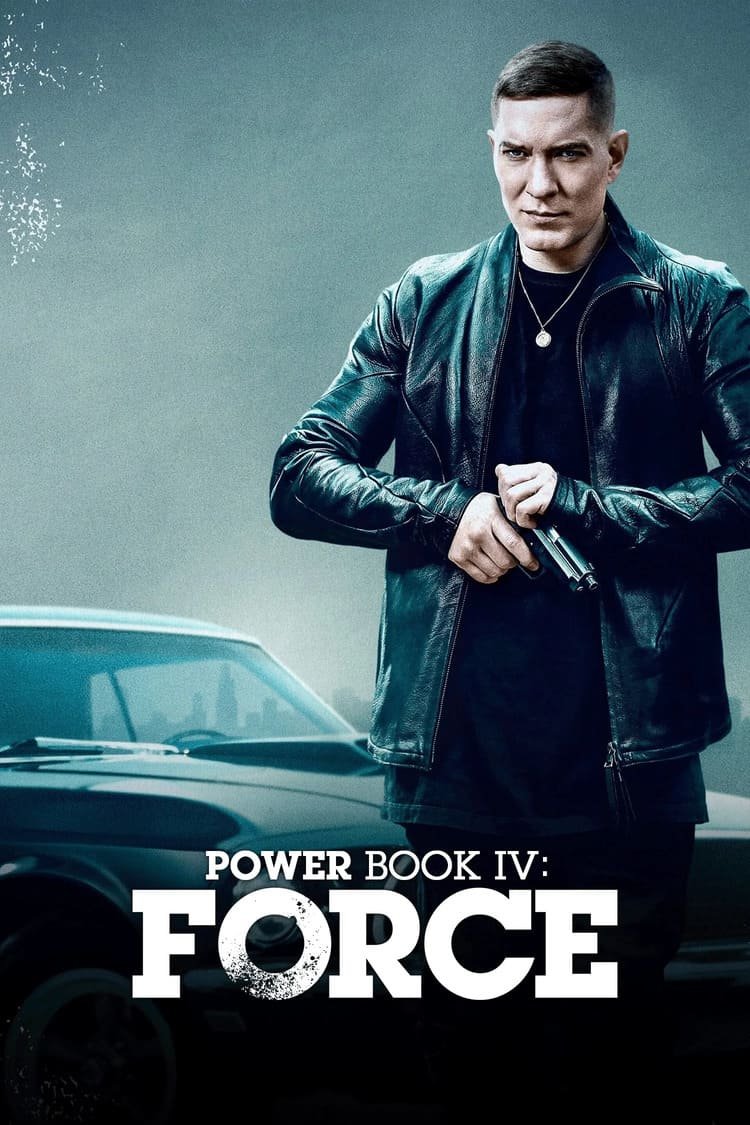
From the instant Tommy Egan’s white Mustang screeches into Chicago, Power Book IV: Force unleashes a shot of pure adrenaline, the kind that leaves even the most skeptical viewer on edge. Every corner brims with tension, ambition, and unexpected alliances, drawing you deeper into a world where survival depends not only on muscle but on a mind razor-sharp and ruthless. Tommy, a character so vivid he almost bursts through the screen, is both a wrecking ball and a craftsman—demolishing old structures to rebuild a kingdom on his own terms. That mix of chaos and calculation is what makes the show unmissable.
Power Book IV: Force isn’t just a spin-off cashing in on its predecessor’s fame. It’s a creature with a soul of its own, layered with Chicago’s cultural grit, haunted by family ghosts, and powered by a relentless hunger for more. Within a few episodes, Tommy’s lone-wolf persona collides with the city’s fractious underworld, where every handshake can turn into a trap. Every character pulses with urgency, each episode crackles with danger and wit, and the stakes spiral higher with every deal gone sideways.
From the outside, it might look like just another crime saga, but Force is more than violence and vengeance. It’s a chess match where every player has something to prove, something to hide, and everything to lose. Relationships feel authentic—messy, complicated, and bristling with unresolved tension. The writers don’t just serve up action, they weave a narrative tapestry brimming with betrayal, hope, humor, and tragedy.
Watching Tommy navigate a city that doesn’t want him, with enemies on every block and trust in short supply, feels like stepping into a powder keg. The dialogue pops, the atmosphere simmers, and the direction is punchy—leaning into Chicago’s raw personality and making every street corner feel alive with possibility and peril. It’s a world that’s at once foreign and familiar: money, power, and loyalty at war with conscience and the ghosts of the past.
The real triumph is how Force manages to deliver both spectacle and substance. Each episode leaves you gasping, wondering what fresh hell or clever twist is lurking around the next bend. It’s not just Tommy’s show—everyone has a secret, a plan, a wound they can’t heal. That is what makes Power Book IV: Force addictive: it holds up a mirror to our own wild ambitions and dares us to dream bigger, riskier, and with more heart.

Quick Notes
- Tommy Egan explodes onto the Chicago scene, carving out a fresh criminal empire that’s as unpredictable as he is.
- The show’s gritty realism and sharp dialogue make Chicago’s underworld feel visceral, authentic, and brimming with tension.
- Every supporting character, from Claudia Flynn to Diamond Sampson, brings depth and unpredictable alliances to Tommy’s journey.
- Family, loyalty, and betrayal are constant themes, raising the emotional stakes far above your average crime thriller.
- The series seamlessly blends humor, action, and emotional storytelling, keeping viewers hooked from the first minute to the last.
How Power Book IV: Force Reinvents the Crime Drama
Tommy Egan’s arrival in Chicago is less a gentle entrance and more a thunderclap. Fleeing the shattered remnants of his old life in New York, Tommy seeks to start over but quickly finds that in the world of Power, there’s no such thing as a clean slate. The Windy City is less forgiving than he imagined. Every interaction—whether with the Irish mob, the Serbian syndicate, or street-level hustlers—turns into a test of will, nerve, and cunning. The city’s criminal landscape is a labyrinth, and Tommy must draw upon every lesson learned from his past to survive and thrive.
A big part of Force’s appeal is how it builds new worlds without discarding the DNA of Power. Chicago is painted with broad, cinematic strokes—its neighborhoods, back alleys, and high-rise boardrooms all humming with secrets. Tommy tries to stay one step ahead of every rival, but he’s constantly drawn into fresh dangers and surprising alliances. Characters like Claudia Flynn, who hides a cold ambition beneath elegance, and Diamond Sampson, the ex-con boxing his way back into the game, add flavor and depth that keep the narrative spinning in unexpected directions.
The power struggle is relentless. Each episode peels back new layers, revealing that every alliance is temporary and every deal has a price. Tommy’s greatest challenge is figuring out who, if anyone, he can trust. The web of relationships is as tangled as Chicago’s highways: family ties can be a noose, friendship a loaded gun. Tommy’s connection to Liliana, a face from the past, offers both comfort and danger, reminding him—and the audience—that history is never really dead.
What sets Force apart is its willingness to humanize even the most ruthless players. Claudia’s drive for respect in her patriarchal crime family, Diamond’s battle with his own demons, and Tommy’s desperate need for belonging make them more than pawns in a crime game. Viewers can’t help but root for and against everyone, sometimes in the same scene. The show’s writers play with audience sympathies, often flipping the script on what’s right, wrong, or simply necessary to survive.
By the time the season barrels toward its conclusion, allegiances have shifted, fortunes have changed hands, and Tommy finds himself at the center of storms both external and internal. The plot is never predictable—every victory is laced with loss, every smile hides a blade, and every risk could be the last. It’s a world where rules exist only until someone bold enough rewrites them.
Key Lessons and Insights to Learn from Power Book IV: Force
Success often demands reinvention, not just endurance. Tommy’s journey is a blueprint for anyone forced to start over, whether by choice or by circumstance. After burning every bridge in New York, he proves that survival is less about luck and more about the courage to take calculated risks in unfamiliar territory. In business, leadership, or life, refusing to be defined by your past is the first step to building something remarkable.
Navigating high-stakes environments means forging alliances with unlikely partners. Throughout the series, Tommy must decide who deserves a second chance and who will stab him in the back. In today’s volatile professional landscape, effective leaders know that collaboration—even with rivals—can be the key to unlocking new opportunities. Every handshake in Force doubles as a reminder: trust is earned in inches but lost in a heartbeat.
Every empire rises and falls on the strength of its relationships. The show paints a vivid picture of how loyalty, family, and betrayal are intertwined. Tommy’s experiences echo lessons from real-life business dynasties: success without trust is short-lived, and personal relationships are often the foundation or the undoing of an entire enterprise. Case in point, consider the fall of once-great companies like Kodak, where fractured leadership and failure to adapt led to collapse—a fate mirrored in Tommy’s own struggle to control his fate.
Ambition without self-awareness can be catastrophic. Many characters in Force fall prey to the classic pitfall of believing they are untouchable, only to find themselves cornered by their own blind spots. This resonates with stories from the startup world, where founders who ignore warning signs—like Adam Neumann at WeWork—end up unraveling fortunes and reputations. Tommy’s journey is a study in balancing confidence with humility, grit with reflection.
Finally, there is a deeper message about the true cost of chasing power. The toll of violence, betrayal, and relentless hustle never stays hidden. Force makes it clear: behind every big win is a string of sacrifices and losses that linger long after the credits roll. This lesson rings true in all walks of life, where real achievement often comes at a higher cost than anyone expects, and the bravest admit what they’ve lost along the way.
The New King of Chicago or a Man Out of Time?
As the credits fade on each episode, viewers are left with more than adrenaline. There’s a haunting sense of what it means to fight for a seat at the table, to demand respect in a city that chews up outsiders and spits out the weak. Tommy’s journey is less about dominance and more about survival, about the price of refusing to blend in or back down. He’s a character you root for and fear for, a man whose quest for purpose never loses urgency.
The show’s real genius lies in its unvarnished portrayal of Chicago. Every frame pulses with energy—alleyways glowing under neon lights, skyline looming like a fortress, every neighborhood carrying its own pulse. The city itself becomes a character, challenging Tommy and his rivals to adapt or perish. This gritty urban poetry gives Force an identity all its own, setting it apart from the dozens of bland crime procedurals on streaming platforms.
Watching Tommy build alliances with the likes of Claudia and Diamond feels like watching a real-world entrepreneur cobble together an unlikely board of directors. There’s humor tucked into every deal, and heartbreak lurking behind every laugh. The narrative spins and shimmers, pulling you in until you’re invested in every twist, every turn, every impossible choice.
Personal stakes are never just about money or territory. Family secrets, personal grudges, and the struggle to belong give the show a pulse that’s emotional as much as physical. Tommy’s desire to create something lasting, even as everything around him threatens to unravel, offers a powerful metaphor for anyone battling impossible odds—be it in business, relationships, or the fight to define your own legacy.
For all its wild shootouts and plot twists, Force never loses sight of the human costs. The show delivers on spectacle, but it lands its hardest punches in moments of vulnerability: when trust is broken, when ambition collides with reality, when the past refuses to stay buried. That’s what makes Power Book IV: Force more than a guilty pleasure—it’s a modern parable about risk, ambition, and the endless war between loyalty and survival.
Disclaimer
It’s also critical to remember that whether the TV show is either a work of fiction or a real-life depiction, it must be emphasized that the actions depicted within are not encouraged in reality and shouldn’t be imitated.
