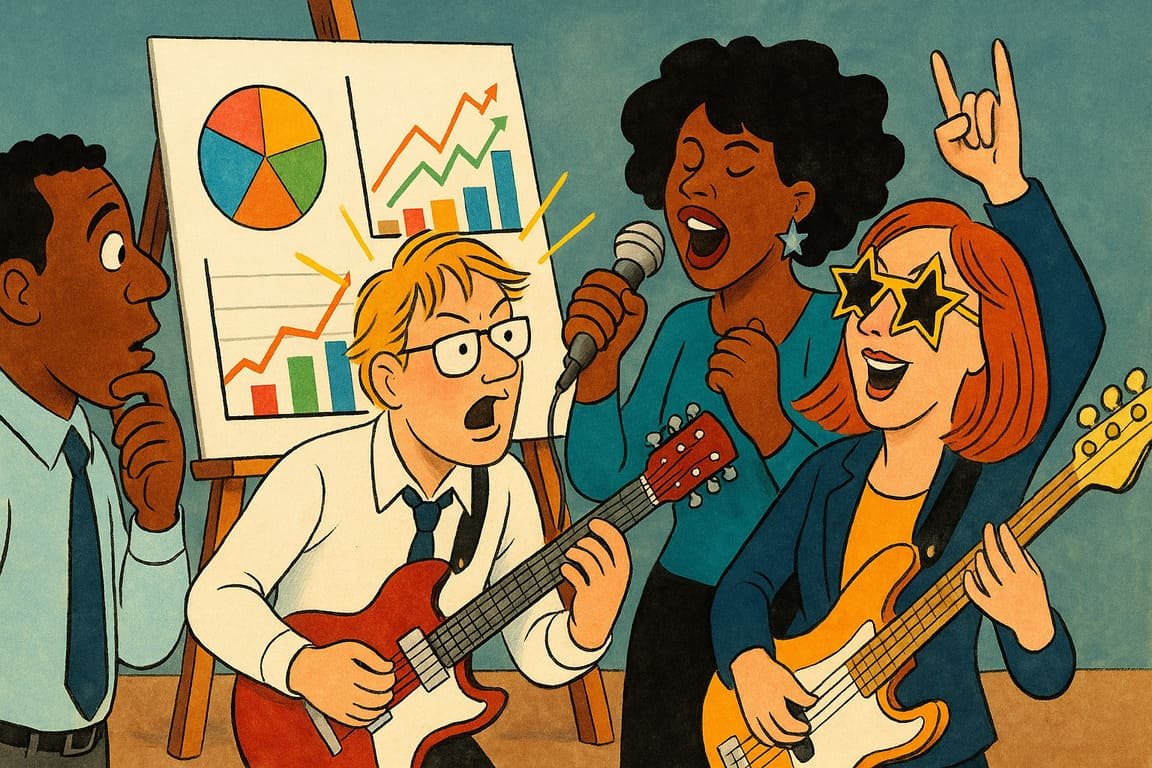
Late at night, fluorescent lights flicker in a design office where a team stares at an empty whiteboard. The city’s hush sits on the glass, broken only by the tap of markers and nervous laughter. Some designers are still hunting for the spark that will electrify the project. Others, tired but curious, have surrendered to experimentation, sketching wild ideas between sips of cold coffee. In this invisible battle, creativity is not a privilege but a survival skill. Teams win or lose on their ability to unlock their own genius, and every office becomes an unlikely laboratory for graphic mind tricks.
These tricks aren’t just party tricks or motivational posters. They’re the subtle, sometimes rebellious hacks that creative leaders use to break patterns and spark brilliance. Managers like Leila Hassan know it’s never enough to toss around “think outside the box.” She once transformed her team’s mood by blasting soundtracks from cult sci-fi films and challenging each designer to sketch an alien logo. That small act shifted the office energy. By the end of the day, they had three campaign directions—and an inside joke that bonded them for months.
To become a creative rockstar at work, you need more than talent. You need rituals that cut through the noise and unlock new ways of seeing. You might start a meeting by asking everyone to draw their idea of “failure” in sixty seconds. Watch as laughter breaks tension and ideas tumble onto the table. These moments aren’t accidental. They’re engineered escapes from creative paralysis.
Offices everywhere have their secret playbooks. In a digital agency in Warsaw, the creative director makes everyone swap roles for a day. Writers design. Illustrators craft taglines. That chaos rewires the team, humbling egos and revealing hidden skills. One junior copywriter stunned the group with a storyboard so sharp it became the backbone of a client’s viral campaign. Everyone went home feeling a little braver—and a little less boxed in.
Mind tricks come alive when leaders trust their people to improvise. During one famous pitch session, UX lead Omar Singh gave each teammate a single word and told them to build a concept around it—without speaking. That forced everyone out of autopilot. Body language and scribbles replaced corporate speak. The client, expecting a dry presentation, ended up doubling their order, convinced they’d discovered a team with real magic.
At the heart of every trick is permission to be human. When employees are encouraged to make mistakes, creativity flourishes. Marisol Vega, now head of design at GigaSpark, likes to tell the story of how her first logo pitch flopped spectacularly. Instead of hiding, she asked the client what made them cringe. That honest feedback turned into a breakthrough, inspiring a minimalist rebrand that won an industry award. The real mind trick was making failure a stepping stone, not a dead end.
Creativity thrives in sensory spaces. That’s why many studios fill rooms with color samples, textured objects, even toys. Giving the brain a new playground can nudge it past tired routines. During the design of the “Mojo” wellness app, the founders encouraged their team to walk barefoot on grass during brainstorms. One engineer claimed she had her best idea while staring at a cloud through the window, doodling with her toes in the dirt.
The best creative leaders celebrate the weird, the awkward, and the unfinished. At Kinetic, a branding agency in Tokyo, the CEO begins every team meeting by sharing one embarrassing early project. “If we’re not laughing at ourselves, we’re not growing,” he insists. That culture of self-mockery breaks down fear and fuels wilder experiments. The office wall is lined with failed logo sketches and bad puns—proof that risk is the only route to reward.
Even in corporate settings, graphic mind tricks can tip the balance between routine and revelation. A global bank invited employees to create “data monsters” out of shredded reports, transforming compliance training into a competitive art show. Suddenly, compliance officers and analysts were bonding over glue sticks and giggles. Creativity had quietly bridged the gap between departments.
Real rockstars in design aren’t lone geniuses—they’re everyday employees who dare to remix the rules. When sales teams get involved in branding sessions, new metaphors bubble up. When receptionists doodle campaign ideas, the room lightens. Every business is just one brave brainstorm away from turning its people into creative powerhouses.
Stories of transformation abound. After one brutal project nearly broke morale at Pixel Syndicate, a Friday ritual was born: one team member had to present the “worst idea of the week.” The twist? The team found at least one redeeming angle in every disaster. Laughter replaced shame, and soon, even wild failures fed a culture of momentum.
No magic wand can turn an office full of clock-watchers into creative rockstars overnight. Yet a culture built on small, consistent mind tricks—daily doodles, music swaps, role reversals, or fearless failures—can do what bonuses never could. People start to care. They start to risk. They begin to surprise themselves.
Long after the whiteboards are wiped clean and the lights flicker off, the echo of one wild idea lingers in the air. In that silence, employees-turned-rockstars know something has shifted inside them. Tomorrow, the world will demand answers from designers and dreamers alike. The question will never be “Are you creative?” but “How far are you willing to push your mind?”
Only you can decide whether the next big idea will be trapped in routine, or set free by your own rebellion.
