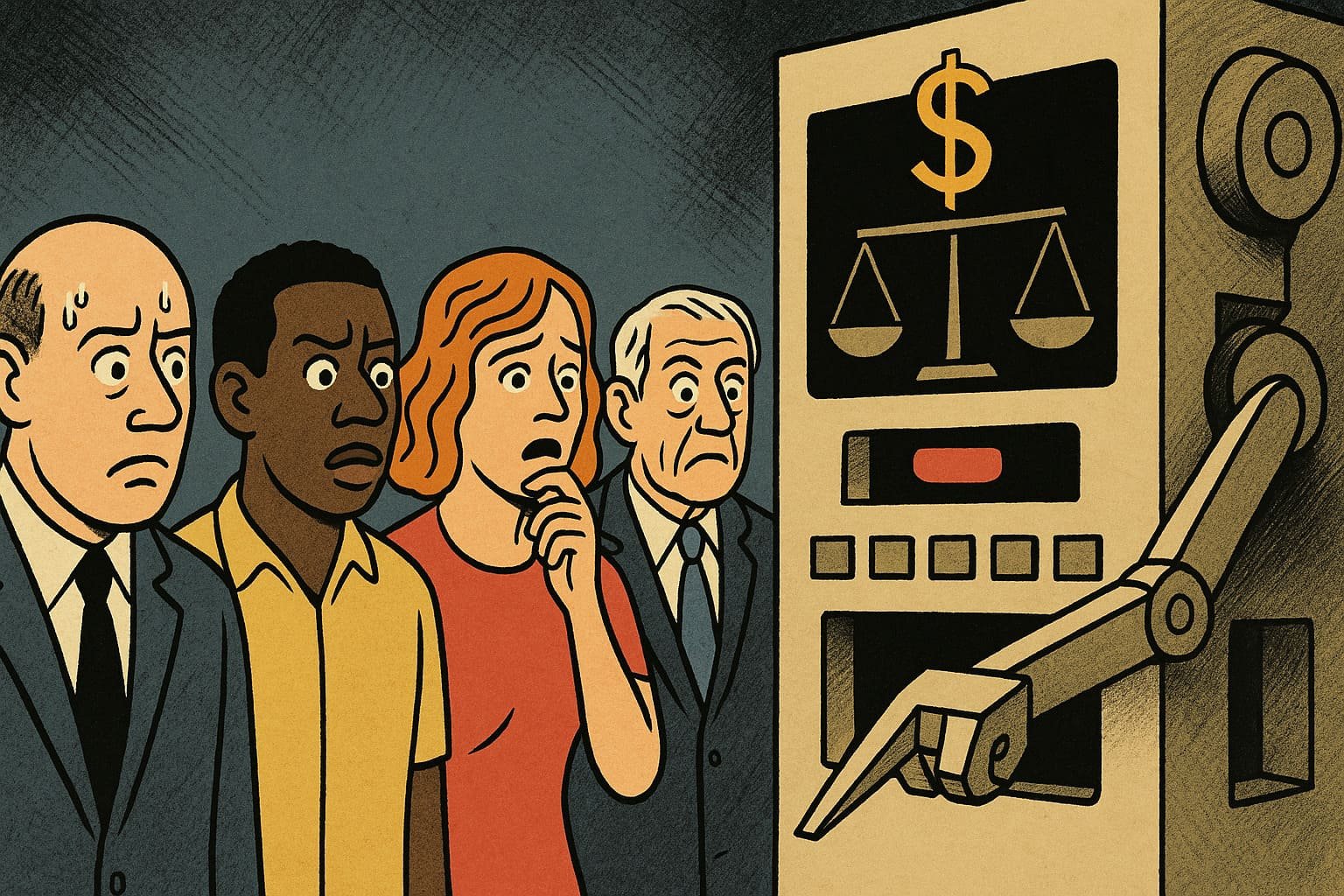
Steel doors sealed a quiet testing chamber while rows of monitors replayed impossible choices that no courtroom had ever rehearsed. Every answer looked reasonable until another life entered the equation. Faces disappeared into statistics with alarming speed. Somewhere between mathematics and morality, machines began reflecting humanity’s values back with uncomfortable honesty, exposing not flawless intelligence but centuries of disagreement about fairness, responsibility, and the difficult price attached to every decision society quietly accepts.
Autonomous systems now recommend prison sentences, screen job applicants, approve financial loans, prioritize medical care, and assist emergency responders. None of these tools invent morality from nothing. They inherit patterns from historical data, institutional practices, and human choices. That is why ethical questions surrounding artificial intelligence are less about machines replacing conscience than about people discovering hidden assumptions embedded inside everyday decisions. Algorithms reveal values already present, often making uncomfortable truths impossible to ignore.
Priya managed recruitment for a rapidly expanding engineering company that proudly embraced automated hiring software. Applications arrived faster than any human team could review, and efficiency improved almost overnight. Months later, talented candidates from unconventional career paths quietly disappeared from interview lists. An internal review uncovered an uncomfortable pattern. Historical hiring records had taught the software to reward familiar backgrounds while overlooking capable applicants whose experience challenged traditional expectations. Technology had amplified history instead of correcting it.
Healthcare offers another revealing lesson. Researchers developing clinical decision systems increasingly recognize that training data collected from one population may not serve another equally well. Microsoft, Google Health, and many academic institutions openly emphasize responsible development because trustworthy artificial intelligence depends upon continuous evaluation rather than blind confidence. Good governance therefore becomes part of engineering itself. Success comes from questioning models repeatedly, inviting diverse expertise, and accepting that ethical design remains an ongoing responsibility instead of a completed feature.
Popular culture often imagines intelligent machines becoming dangerous after developing independent ambition. Reality feels stranger because genuine risk frequently emerges from ordinary optimization rather than dramatic rebellion. A recommendation engine maximizing engagement may unintentionally encourage harmful content. A predictive policing model can reinforce historical inequalities without malicious intent. Moral failure often arrives wearing ordinary efficiency, reminding organizations that every objective chosen today quietly shapes tomorrow’s social outcomes. Technical excellence cannot compensate for ethical blindness.
Faint echoes drifted through an empty gallery where polished mirrors reflected countless expressions without revealing a single correct answer. Every reflection looked familiar because humanity had always judged itself before asking machines to participate. Artificial intelligence merely intensified that ancient conversation with relentless consistency and remarkable speed. Progress will depend less upon building smarter algorithms than cultivating wiser institutions willing to question their own assumptions. When judgment becomes automated, what values will you choose to preserve?
