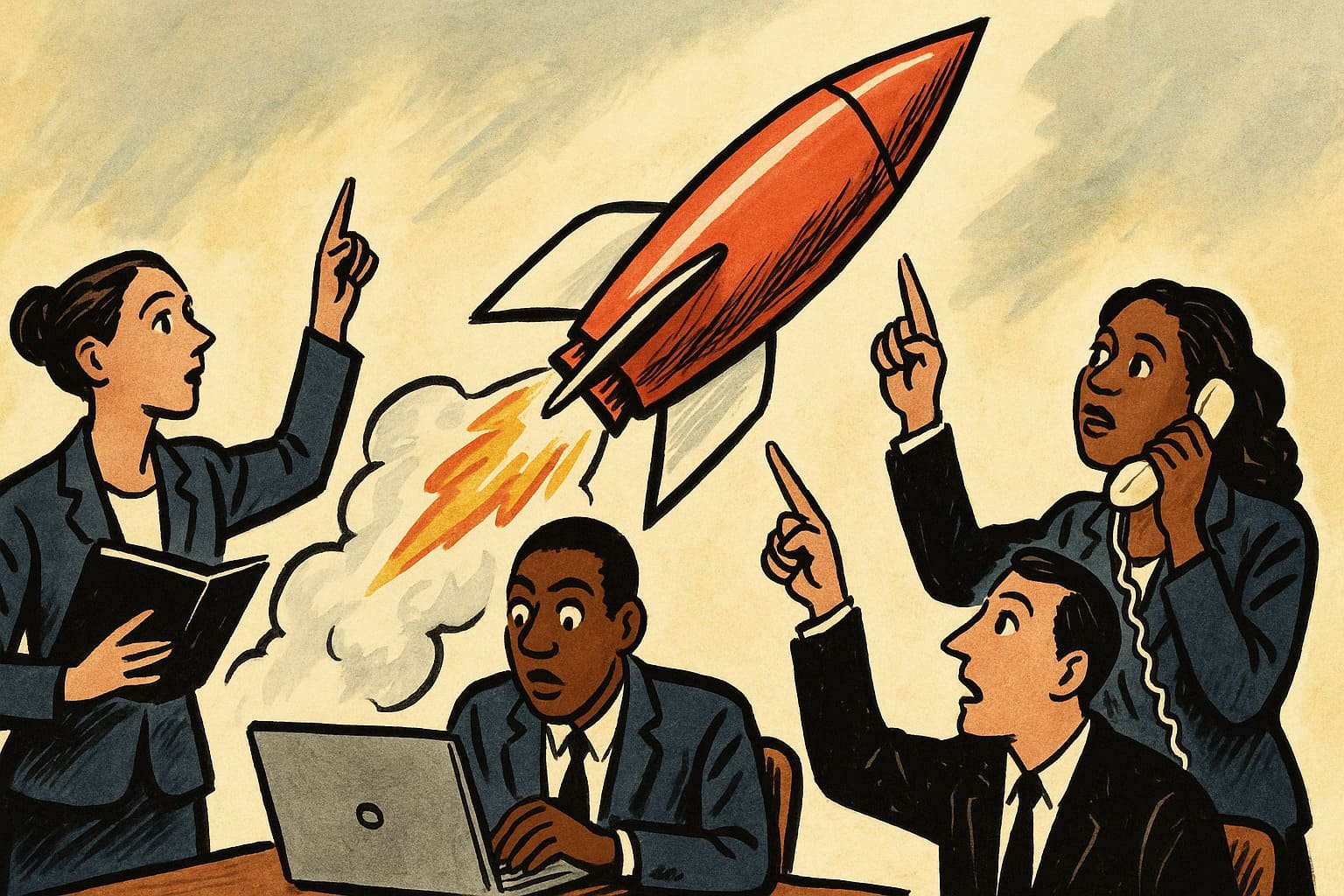
The most lethal weapon in business isn’t money, data, or even influence it’s language. Words have toppled CEOs, ignited billion-dollar brands, and salvaged scandals seconds from catastrophe. At the heart of every powerful enterprise, from Apple to Patagonia, is a symphony of communication hacks executed with near-religious precision. The difference between a floundering startup and a thriving unicorn often boils down to one overlooked superpower: how you talk, type, and translate your intent. If you’re not wielding corporate communication with intention, you’re not just missing out; you’re sabotaging your potential.
In this piece, we dismantle outdated notions of “good communication” and hand you the real tools of high-performing executives. You’ll discover how a single sentence can shift organizational culture, why silence can scream louder than strategy, and what top firms know that everyone else fumbles. But this isn’t theory. It’s an unfiltered guide steeped in corporate battle scars, real-life wins, and insider tricks that transform meetings, memos, and missions. Because if you can master your message, you can move mountains.
Welcome to a tactical guide that rewires your communication DNA-so your success isn’t just fast, it’s legendary.
Quick Notes
- The New Language of Leadership: Great leaders don’t just talk they calibrate tone, pace, and word choice with surgical accuracy. They’re part diplomat, part storyteller, and full-time emotional engineer.
- Emails That Earn Attention: If your emails sound like oatmeal, your results will too. Corporate emails need clarity, structure, personality, and urgency or they die unopened.
- Meetings That Move Need Messaging That Matters: Meetings often flop because the communication before them is lazy. Mastering meeting invites, agendas, and opening remarks rewires engagement.
- Internal Branding Beats External Hype: The story you tell your team matters more than the one you sell your customers. Culture is built (or broken) by the daily drumbeat of internal messages.
- Silence, Satire, and Savage Truths: Sometimes, the boldest communication is what you don’t say. Learn how to use humor, irony, and restraint to sharpen your strategic edge.
Leadership Is a Language: Decode It or Get Left Behind
Leadership isn’t charisma. It’s communication that’s coded in clarity, consistency, and context. CEOs like Satya Nadella didn’t ascend because they had the loudest voice, but because they mastered the subtext; knowing when to speak, what to say, and how to make every word resonate. Think of communication as a software update for your team’s collective brain. One well-placed sentence from a leader can dismantle fear, reset morale, or accelerate innovation faster than an incentive ever could.
Howard Schultz didn’t rebuild Starbucks by shouting from corner offices; he walked into stores and asked baristas how they felt. That act alone signaled a new era of leadership communication: empathetic, embedded, and emotionally intelligent. Corporate cultures rise on cues. Leaders shape those cues through micro-communications like tone in a memo, posture in a Zoom call, or word choice in an all-hands. If you’re not engineering your language intentionally, you’re allowing chaos to narrate for you.
There’s an old saying: culture eats strategy for breakfast. But communication eats culture alive. A well-meaning strategy dies in silence if the leader fails to package it in a way that sticks. Learn the syntax of your team’s psyche. Choose metaphors that make strategy tactile. Use repetition without being robotic. Be the human highlighter.
To lead with words is to orchestrate energy. Anyone can issue a directive. But only a communicative leader can spark belief, build followership, and anchor trust. In times of crisis, it’s not the plan that saves the company. It’s the story. And it better be one worth following.
Inbox Influence: Crafting Emails That Command Action
The average executive receives dozens of emails daily. Most are so dry you could pour them on cereal. But the top communicators treat email like a performance stage; every subject line, every sentence, every call-to-action is designed to pull you in. It’s not about writing longer emails. It’s about writing sharper ones. If your opening line doesn’t create tension, curiosity, or clarity, you’re lost.
Netflix doesn’t waste time in pitch decks. They open with impact, urgency, and clarity. Your email should do the same. Use active voice, break long chunks, and banish buzzwords unless you’re parodying them. And please, stop ending every email with “let me know your thoughts.” Replace that with clear asks and defined next steps. Don’t be polite. Be precise.
Remember: the subject line is your headline. Treat it like an ad. Would you open an email titled “Quarterly Updates” or one that says “Why Q2 Nearly Broke Us (And How We Bounced Back)?” Format matters. Use white space, bolding, bullets not as decoration but as navigation. Make scanning effortless and emotional.
People ignore emails that feel like tasks. They engage with emails that feel like conversations. Build rhythm, vary sentence length, add a touch of personality. Whether you’re asking for a meeting, pitching an idea, or rallying a team, the words you choose determine whether you’re heard or archived.
Meetings Are Theater: Script Every Second
A meeting without communication strategy is a séance for dead ideas. If your agenda lacks punch, your outcomes will too. Every successful meeting is a carefully orchestrated act: the prelude (invite), the opening scene (framing), the conflict (discussion), the climax (decision), and the denouement (follow-up). It’s not dramatic. It’s deliberate.
Steve Jobs rehearsed product reveals like Broadway plays. Why should your budget review be any different? Whether it’s a 15-minute sync or a three-hour quarterly, your message must travel with energy, clarity, and control. Use pre-meeting messages to prime participants. Frame the purpose like a quest. This isn’t a “weekly touch base.” It’s “solving the riddle that’s blocking revenue.”
People don’t remember slides. They remember moments. Like when a leader says, “This metric is bleeding, and it’s on us to stop it,” instead of “We underperformed this quarter.” That emotional frame shifts engagement from passive to personal. Meetings should stir tension, spark insight, and compel clarity not lull people into coffee-induced comas.
Don’t wing it. Even spontaneity is a script. Great communicators don’t just run meetings. They perform them. They know when to pause, when to escalate, and when to shut up. Every line matters. Every silence echoes. Treat meetings like a live broadcast of your leadership.
Internal Branding Is the New External Marketing
Your first customer isn’t outside. It’s your team. And most corporate failures begin when internal messaging fractures from external hype. Leaders obsess over public perception, forgetting that employees are walking billboards of belief or disbelief. When messaging inside the walls doesn’t match the slogans on the website, trust evaporates faster than bonuses in a downturn.
Consider how Airbnb navigated reputational risk. Brian Chesky didn’t just issue public statements. He sent deeply personal internal notes to his team, laced with vulnerability and conviction. That internal truth-telling built external credibility. Internal branding isn’t ping pong tables or free lunch. It’s the emotional consistency in every memo, team huddle, and Slack message.
Culture doesn’t come from policy. It emerges from communication rituals. What stories are repeated? What language is normalized? Are dissenting voices heard or crushed? Internal branding means building emotional glue and the glue is linguistic. It’s the difference between “corporate values” and actual behavior.
Companies like Patagonia don’t just tell the world they care about the planet. They tell their people every week, in internal newsletters, hallway posters, and leadership updates. This coherence between internal messaging and external identity is why people stay, evangelize, and fight for the mission. It’s not alignment. It’s integrity.
When internal communication fails, no amount of external advertising can save you. But when it’s lit from within, your brand becomes bulletproof.
The Silent Genius: Humor, Restraint, and Strategic Silence
Sometimes the most powerful statement is what you withhold. In an era where every opinion feels like a PR minefield, restraint has become a strategic flex. Silence isn’t weakness; it’s design. The best communicators know that you don’t need to comment on everything to control the narrative. Sometimes, ambiguity sparks curiosity more than certainty ever could.
Satire is another underutilized weapon. Done right, it disarms tension, reveals absurdity, and amplifies truth. Think of Wendy’s Twitter account; a masterclass in using wit as a brand differentiator. But even internal emails can carry a wink. It humanizes. It signals trust. It builds rapport faster than another sterile memo filled with corporate gobbledygook.
Not every message needs to be serious. Levity builds psychological safety. It lets teams breathe. But it must be artful, not slapstick. Humor rooted in truth, delivered with timing and care, makes you relatable. And relatability, in leadership, is currency.
And then there’s brutal honesty. Not sugarcoated. Not weaponized. Just the straight, surgical truth. Leaders who can say, “We messed up” or “I don’t know yet” unlock a different tier of trust. Vulnerability isn’t a weakness. It’s a communication multiplier.
Communication isn’t about noise. It’s about resonance. And sometimes, the loudest messages are delivered in whispers, chuckles, or complete, calculated silence.
Speak Like a Giant, Even If You’re Still Growing
There’s a reason some companies ignite revolutions while others barely make the quarterly call. It’s not capital. It’s not talent. It’s communication. The magic trick that makes teams believe, partners commit, and markets swoon. And the truth? You don’t need a C-suite title to wield it. You just need to speak like every word matters; because it does.
The fastest way to transform a culture is through the stories it tells itself. The quickest way to kill a great idea is to wrap it in lazy language. But if you’re bold enough to rewrite how your company speaks; you’re brave enough to redefine its future.
Because in the corporate arena, words don’t just communicate. They conquer. They connect. They catapult.
So ask yourself: is your next sentence going to keep the lights on or turn on a revolution?
