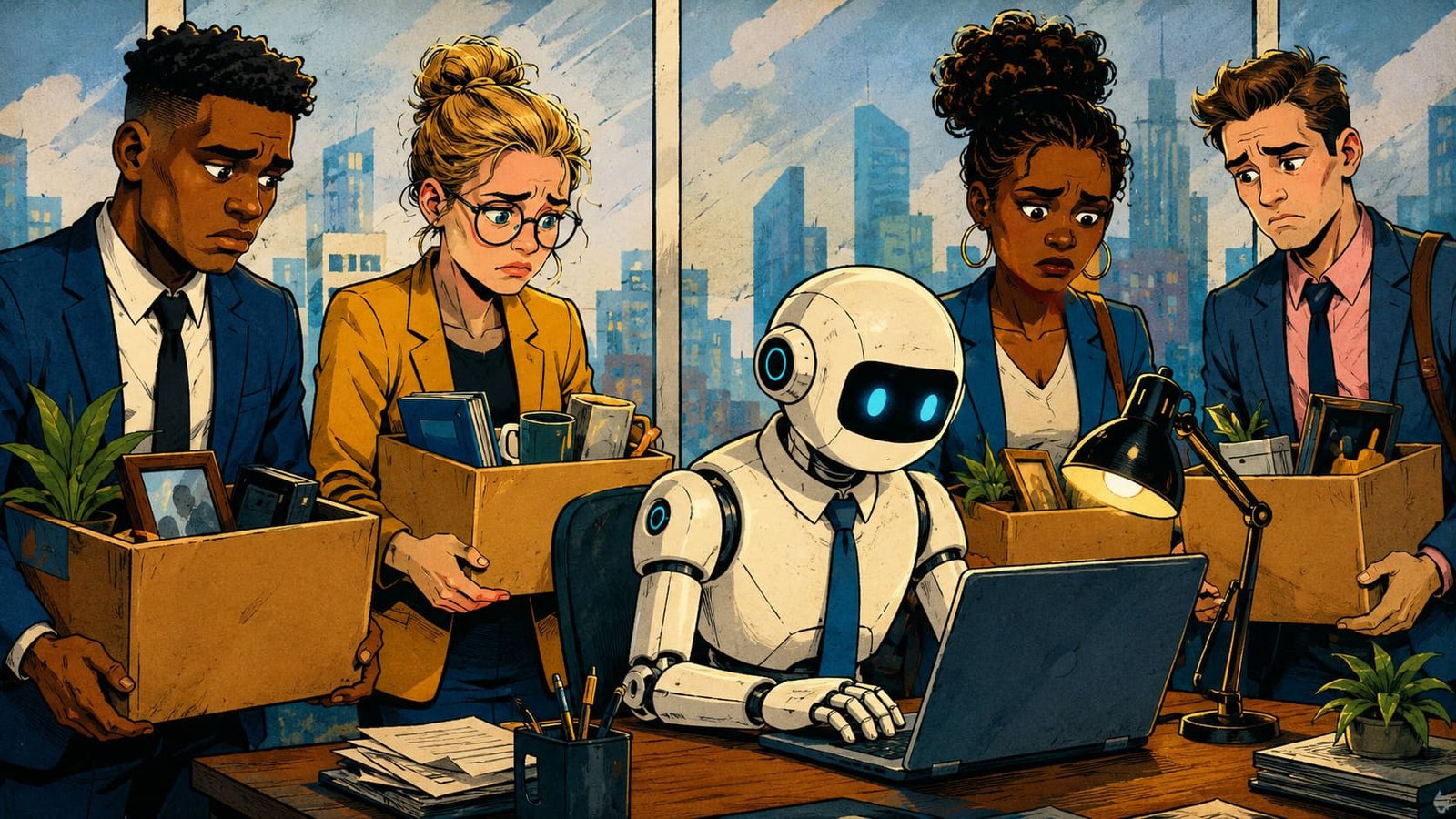
A junior analyst sits before a laptop while an AI assistant quietly performs chores that once filled a first year: sorting notes, drafting summaries, cleaning spreadsheets, checking code. Nothing crashes, nobody is fired, yet a career ladder has begun losing its first rung. Junior employees were never valuable only for what they produced, but for what they became while producing it, learning judgment through repetition, mistakes, awkward meetings, and watching experienced colleagues work. Automation can erase both the task and classroom hidden inside it, making this reckoning consequential for employers.
For decades, entry level work carried a peculiar bargain: modest pay and repetitive assignments in exchange for proximity to experienced people. A graduate learned by watching a manager revise a proposal, listening to a difficult client call, or fixing a mistake after hours. AI can now absorb much of that low judgment workload, making junior roles easier to shrink and harder to define. A U.S. Census working paper found a marked decline in early career hiring in industries most exposed to AI after ChatGPT arrived, raising questions about apprenticeship.
Consider software, where junior developers once learned by wrestling with small bugs before touching architecture. AI coding tools can produce working drafts quickly, which is useful, but speed changes what managers expect from beginners. A study using large vacancy datasets found a relative decline in junior software vacancies alongside rising experience requirements, suggesting that firms may be moving the starting line upward rather than simply removing technology from the equation. If nobody hires beginners, where do experienced workers come from, and who teaches them properly? That is the danger.
Mara receives a complaint that demanded research; an AI system drafts the response in seconds, leaving her staring at an afternoon. At a company, Daniel uses AI to turn research into a briefing before lunch, then discovers his analyst has learned almost nothing about how the argument was built. Klarna offers a revealing example, having said its AI assistant handled queries at a scale that helped reduce staffing through attrition. Efficiency is real, but so is the possibility that machines remove beginner mistakes before beginners learn why those mistakes matter.
Bank of America provides a counterexample because its hiring plan maintained a pipeline of interns and recruits while redesigning roles around AI from the start. That approach points toward a bargain: junior employees do not have to compete with machines at machine work, but can be trained to supervise, question, interpret, communicate, and decide around machine work. For managers, the issue is no longer whether AI can complete an entry-level task, but whether learning still has somewhere to grow. Otherwise productivity today may become a talent shortage tomorrow.
A thing happens when companies remove boring work that taught people how the company operates: the workplace becomes faster and less experienced at once. Junior employees may need to arrive with judgment, yet judgment is what careers developed through exposure, repetition, failure, and coaching. That contradiction makes AI’s reckoning less about jobs disappearing than about pathways disappearing, and leader choosing automation is choosing what ecosystem will exist later. A career cannot begin at the finish line, so ask what your organization builds when it stops teaching people to reach it.
