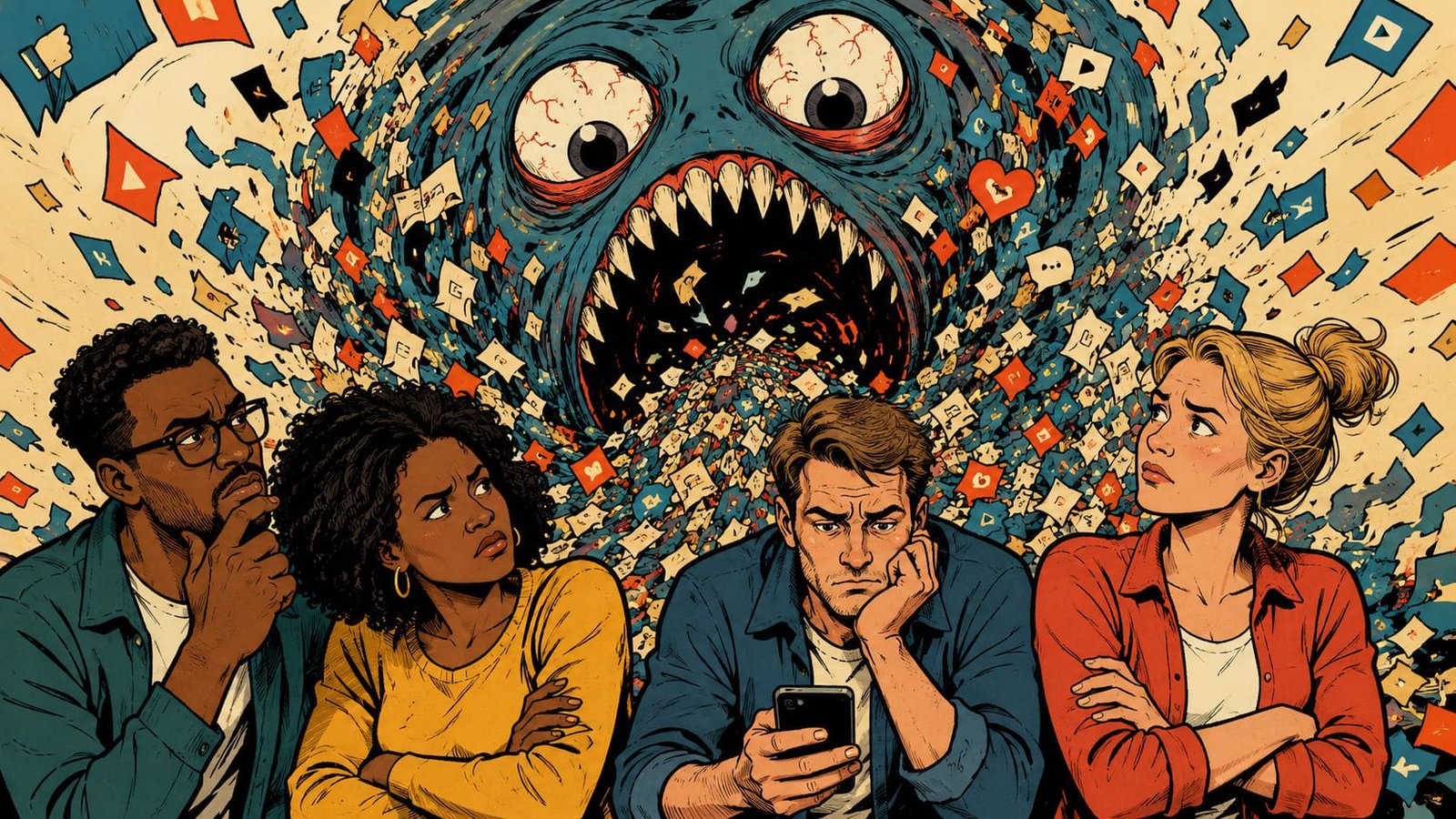
Crowds gather around glowing phone screens while confident headlines race faster than careful verification ever could. Every swipe feels certain until another version of reality appears seconds later, equally polished and equally persuasive. Doubt spreads before facts even leave the starting line. Public trust rarely collapses because people reject truth outright, but because competing stories overwhelm the patience required to separate evidence from emotion, leaving institutions struggling to regain credibility after confidence quietly slips away.
False information thrives because modern communication rewards speed more generously than accuracy. Social platforms amplify content that provokes curiosity, outrage, or fear, creating an environment where dramatic claims often outperform careful reporting. During moments of crisis this imbalance becomes especially dangerous. Researchers studying information ecosystems consistently observe that repeated exposure can make unsupported claims feel familiar, while familiarity gradually begins masquerading as credibility inside everyday conversations, workplaces, and communities searching for certainty.
Aisha managed communications for a regional charity during a severe flooding emergency. Volunteers suddenly stopped arriving after misleading social media posts claimed donation centres had already closed, despite repeated public updates proving otherwise. Phones rang without pause. Hours disappeared correcting rumours instead of helping families, teaching everyone involved that misinformation does more than distort public understanding because it redirects valuable time, energy, and compassion away from people who genuinely need support.
Corporate leaders confront a remarkably similar challenge whenever false narratives gain momentum around products, employees, or business decisions. Starbucks has repeatedly addressed misleading online claims through transparent public communication rather than silence, while airline companies often rely on verified operational updates to counter confusion during widespread disruptions. Both approaches reveal an important lesson. Trust grows through consistent evidence, timely clarification, and visible accountability rather than louder messaging or emotional rebuttals that unintentionally fuel greater uncertainty.
Knowledge systems exist because healthy societies require dependable methods for testing competing claims before accepting them as truth. Academic peer review, investigative journalism, judicial processes, and scientific replication all embrace healthy scepticism instead of unquestioning certainty. Those practices can feel frustratingly slow. Yet their deliberate pace protects public confidence by encouraging verification before conclusion, reminding organisations that credibility depends less upon always being first than upon repeatedly proving reliable under pressure.
Candles flicker inside a darkened hall after voices finally fade and scattered conversations settle into thoughtful silence. One carefully documented fact still carries remarkable strength because evidence endures long after fashionable rumours exhaust themselves chasing attention across another crowded timeline. Confidence returns one verified answer at a time. Every reader now faces a simple challenge: protect truth with the same determination that misinformation uses to dismantle it, because tomorrow’s trust depends upon today’s discipline.
