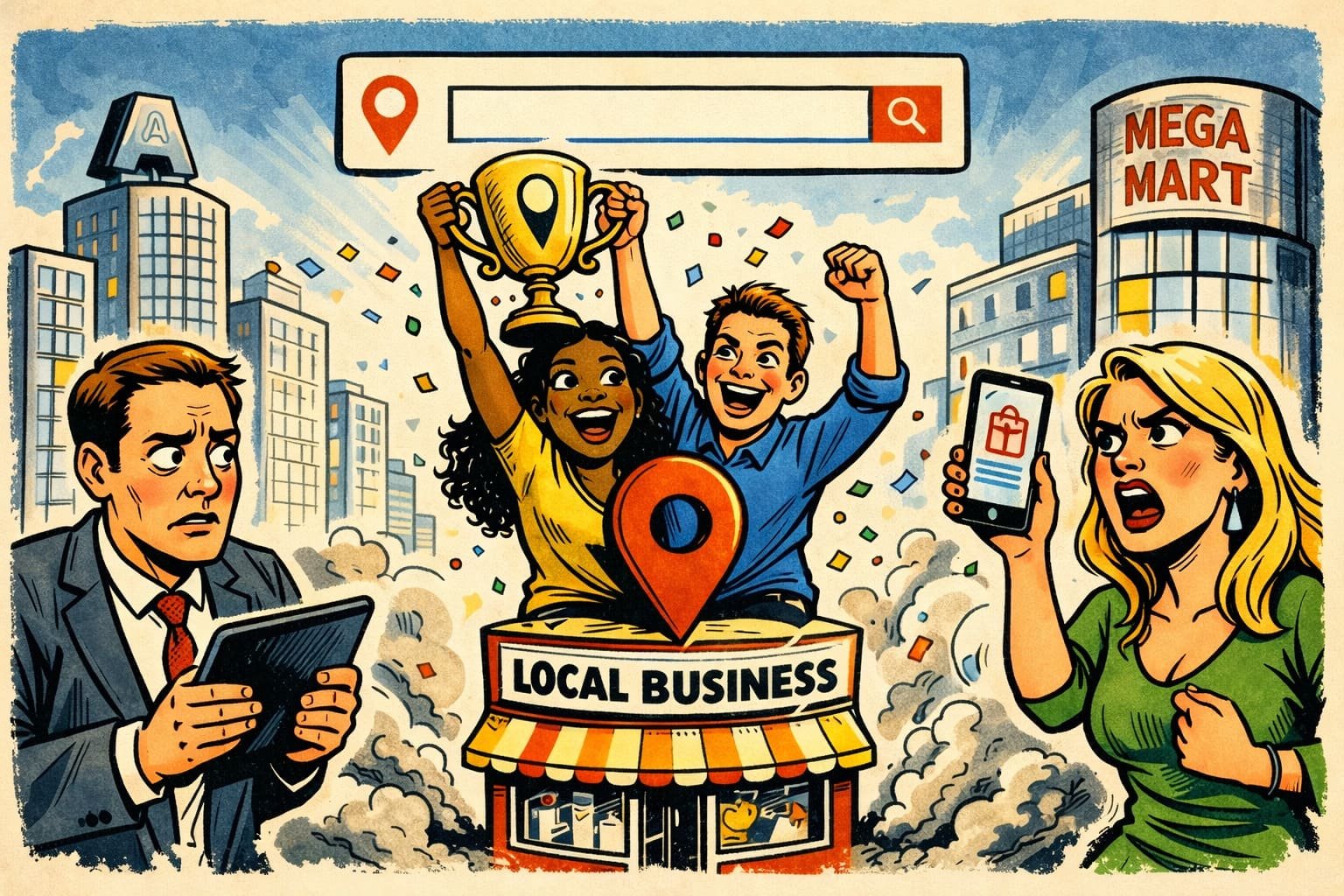
Umbrellas clustered outside a neighborhood bakery while another café, barely fifty steps away, waited with polished tables and empty chairs. Both served excellent coffee. Both hired talented staff. Only one appeared first when hungry commuters searched nearby. That invisible advantage changed everything before either owner greeted a customer. Modern competition often begins on a smartphone instead of a storefront. Local search has quietly become today’s busiest intersection, deciding which businesses stay hidden and which become familiar parts of everyday routines.
Many owners still believe local marketing revolves around maps and addresses. That assumption misses a larger pattern. Search engines increasingly reward businesses demonstrating credibility through consistent information, authentic reviews, useful updates, and meaningful community engagement. Local visibility reflects accumulated trust rather than technical tricks. Every photograph, customer response, opening hour, and frequently asked question becomes another signal helping nearby residents choose confidence over uncertainty. Search rankings simply mirror relationships already forming inside local communities.
Domino’s strengthened neighborhood convenience by making ordering effortless across digital channels while maintaining accurate local information customers could trust. Home Depot supports nearby shoppers through localized inventory, practical advice, and community-focused content rather than relying exclusively on national campaigns. Maya Ferreira experienced this transformation after opening a family-owned flower shop. She began responding personally to every review, added seasonal photographs weekly, and answered common customer questions online. Wedding planners soon recommended her business because online confidence matched the experience visitors discovered inside the store.
An unusual sight appears at busy street markets. Crowds instinctively gather wherever people already seem interested, even before understanding what is being sold. Attention attracts attention. During a consultation with an independent bookstore, strategist Nathan Holloway noticed dozens of unanswered online questions about parking, accessibility, and children’s events. Staff answered every inquiry with warmth instead of corporate efficiency. Foot traffic gradually increased because reassurance quietly removed invisible barriers long before customers crossed the entrance.
Behavioral science explains this momentum through social proof and cognitive ease. People prefer choices requiring less uncertainty, especially when searching nearby under time pressure. Google’s local search experience reflects those tendencies by rewarding relevance, proximity, and trustworthy signals rather than promotional exaggeration alone. Restaurants thriving through consistent reviews and responsive communication demonstrate that local search is fundamentally about reducing hesitation. Visibility follows reliability because communities remember businesses making ordinary decisions feel comfortably predictable.
Lanterns brighten another familiar street while countless nearby businesses wait behind glowing windows, hoping strangers become regular faces before another season quietly passes. Success rarely belongs to whichever storefront shouts loudest across the neighborhood. It belongs to the one already present when curiosity turns into a search and uncertainty seeks reassurance. Local search rewards businesses that earn confidence before conversations even begin. Ask yourself whether your next customer can find your business as easily as they can trust it.
