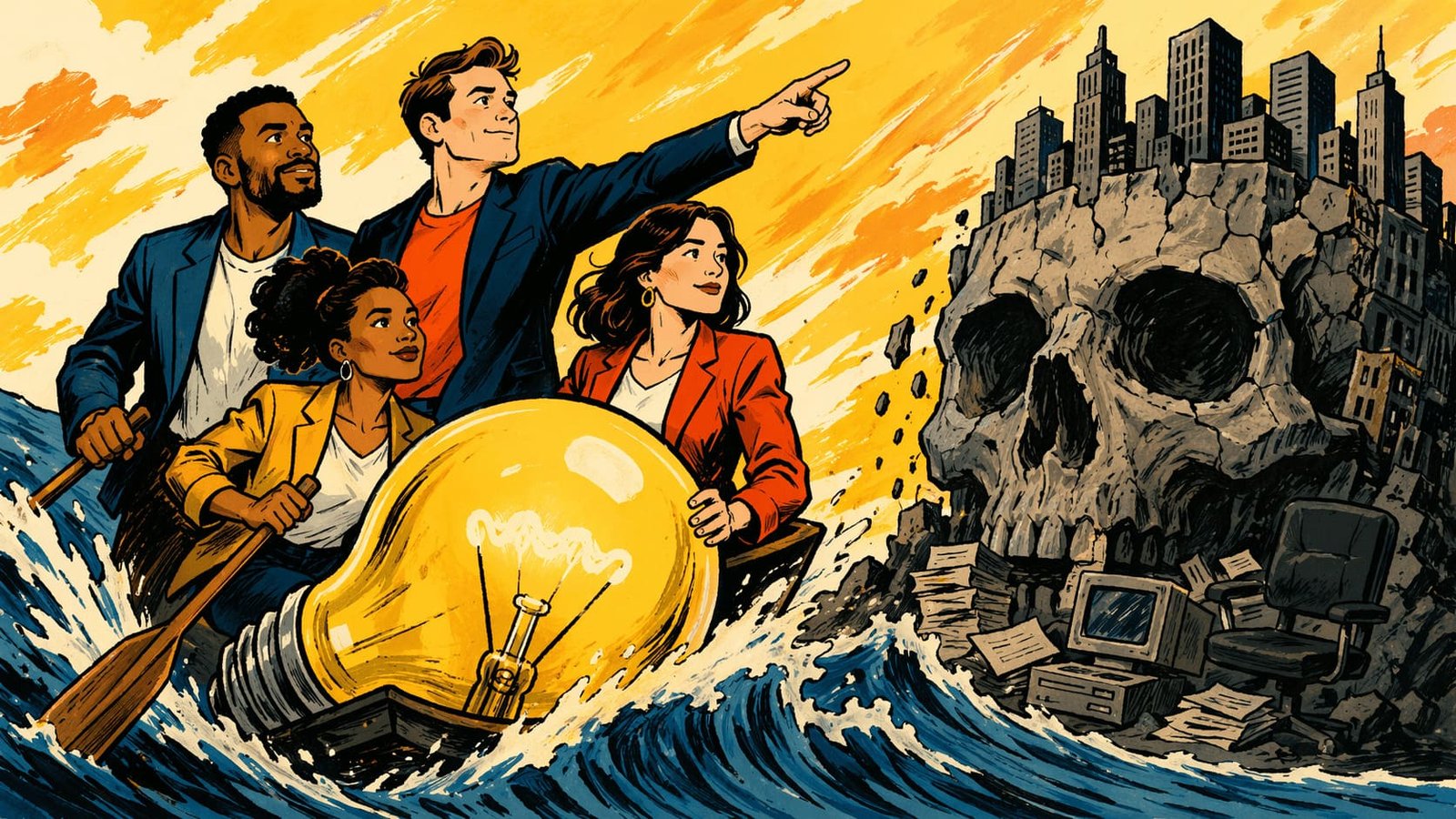
Cold air drifted through an abandoned factory where silent machines waited beneath layers of dust, each one built for a market that no longer existed. Steel remained strong. Demand disappeared first. Markets rarely announce their revolutions with sirens or headlines. They whisper through changing customer habits until yesterday’s winning formula quietly becomes tomorrow’s liability. Companies that survive rarely possess perfect foresight. They simply notice subtle shifts before comfort convinces everyone else that familiar success will last forever.
Innovation is often misunderstood as constant invention. Sustainable businesses know the difference between novelty and meaningful progress. NVIDIA spent years investing in graphics processing before artificial intelligence transformed those chips into strategic infrastructure for an entirely different industry. Adobe reinvented its business model by embracing cloud subscriptions despite criticism from loyal customers. Neither company chased innovation for applause. Each changed because leaders recognized that protecting long-term relevance mattered more than defending short-term certainty.
Omar founded a medical software startup after watching clinics drown beneath paperwork that stole attention from patients. Investors encouraged glamorous features using virtual reality because competitors attracted headlines with futuristic demonstrations. He declined. Instead, engineers eliminated repetitive administrative tasks that frustrated healthcare workers every single day. Doctors noticed immediately. Renewals increased because ordinary improvements solved extraordinary pain. His company never looked revolutionary from the outside, yet customers quietly transformed it into a market leader through unwavering trust.
MIT professor Eric von Hippel has long argued that valuable innovation frequently begins with users adapting products before companies recognize emerging demand. That insight explains why enduring organizations stay remarkably close to customer experience. LEGO rebuilt momentum by listening carefully to devoted communities instead of relying solely upon executive assumptions. Toyota strengthened manufacturing through continuous improvement, proving that thousands of thoughtful refinements often outperform one dramatic breakthrough. Innovation becomes powerful when curiosity replaces executive certainty as an organizational habit.
A watchmaker’s workshop tucked inside a narrow street carried an unexpected lesson about technological change. Tiny gears rested beside modern electronic instruments without competing for attention. Master craftswoman Elena adjusted both with identical patience before smiling at a curious apprentice. “Tools change,” she whispered, “precision doesn’t.” Businesses frequently confuse technology with innovation. Customers rarely reward whichever company adopts fashionable systems first. They reward whoever improves real experiences with discipline, imagination, and remarkable consistency over time.
Stars emerged above distant mountain ridges while ancient paths remained visible only because generations kept walking them despite changing skies. Enduring companies follow a similar rhythm. Innovation is not abandoning every proven idea whenever fashionable technology appears. It is protecting purpose while reinventing methods before markets demand painful surrender. Startups that survive longest rarely fear change itself. They fear standing still while customers quietly move elsewhere. Real innovation begins the moment comfort stops making decisions on behalf of ambition.
