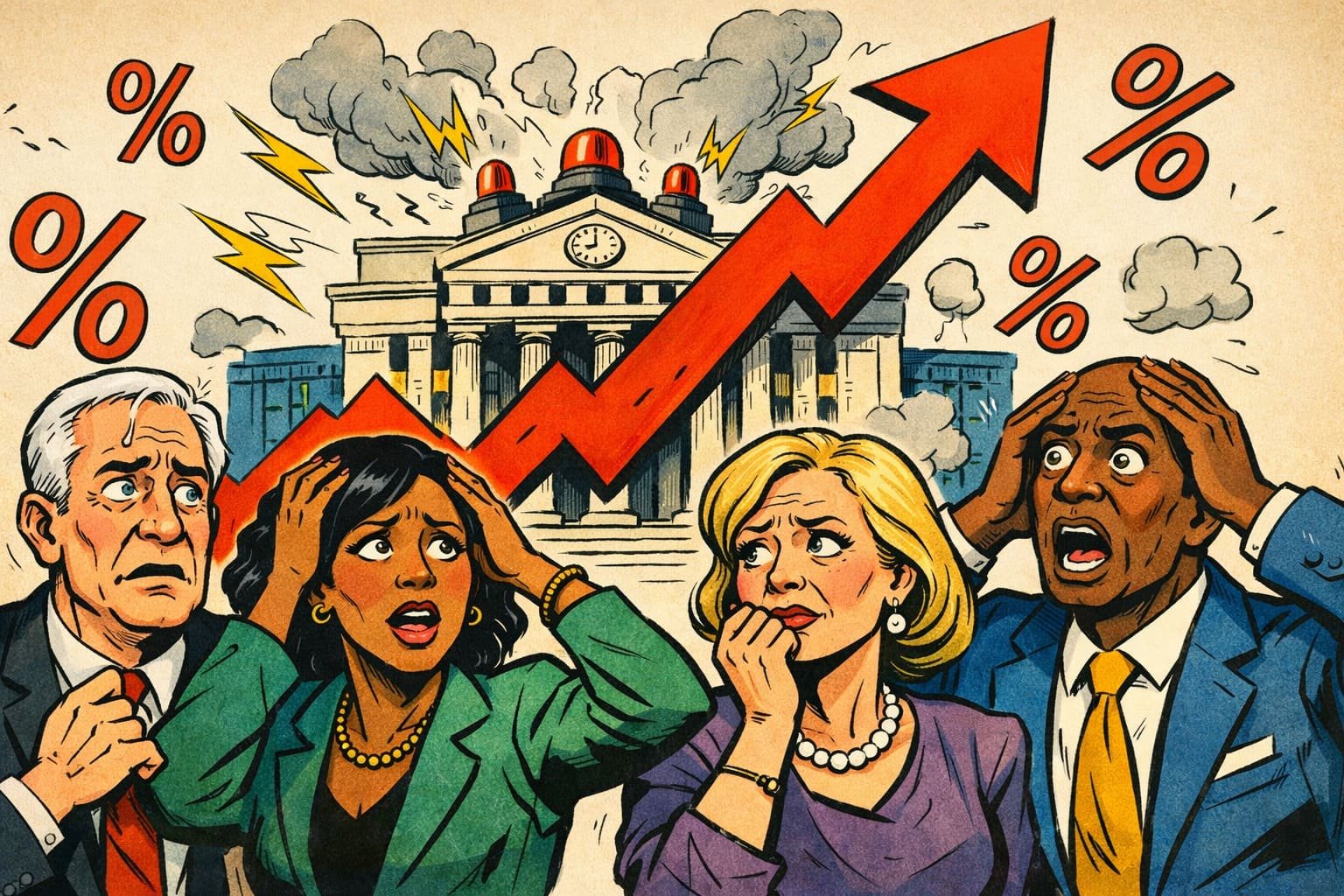
Alarm screens flicker across trading floors before dawn, while coffee grows cold beside stacks of market reports no one expected to revisit. Investors had already written the next chapter in their minds. Interest rates would fall, borrowing would become cheaper, and growth would regain momentum. Then everything stopped. Inflation refused to cooperate, labor markets remained surprisingly resilient, and central banks found themselves postponing the relief that households, businesses, and financial markets had eagerly priced into their expectations.
Interest rate decisions are never simple switches pulled inside marble headquarters. Central bankers weigh inflation, employment, consumer spending, credit conditions, housing activity, and financial stability before moving a single percentage point. Cutting rates too early can reignite inflation, eroding purchasing power and damaging long-term confidence. Waiting too long risks slowing investment and weakening economic growth. Every delayed decision therefore carries opportunity costs that ripple through mortgages, business loans, corporate expansion plans, and government borrowing alike.
Financial markets often react more dramatically to expectations than to the decisions themselves. Bond yields shift, equity valuations adjust, and currency markets respond within moments because investors continuously price future monetary policy into today’s assets. Federal Reserve Chair Jerome Powell repeatedly emphasized that policy would remain guided by incoming economic data rather than market optimism, reminding investors that patience is sometimes a monetary tool. Businesses depending on cheaper financing suddenly found ambitious acquisitions, factory expansions, and hiring plans becoming noticeably more expensive.
Camila led a manufacturing company preparing to modernize aging production equipment through borrowed capital. Months earlier, lenders projected lower financing costs as economists anticipated rate reductions. Those expectations evaporated when central banks delayed easing, forcing her executive team to reconsider every investment timeline. Instead of abandoning expansion altogether, they prioritized projects delivering immediate productivity gains while postponing less urgent upgrades. Careful capital allocation preserved cash without sacrificing the company’s longer-term competitive position. Prudence quietly defeated impatience.
Accounting departments feel the consequences long before many consumers notice. Higher borrowing costs reduce profitability, alter discounted cash flow valuations, and increase pressure on companies carrying significant debt. Investors become more selective, rewarding businesses with strong balance sheets, predictable earnings, and disciplined financial management. Commercial real estate offers a powerful illustration. Developers facing expensive financing frequently delay projects, creating fewer construction opportunities while slowing related industries that depend upon new commercial activity. Monetary policy quietly shapes entire business ecosystems.
Rain taps gently against the windows of central bank headquarters where policy meetings conclude without dramatic applause or visible celebration. Every unchanged interest rate carries invisible consequences stretching from multinational boardrooms to kitchen tables where families rethink budgets and entrepreneurs redraw business plans. Delayed rate cuts rarely signal indecision alone. They reveal an institution choosing caution over popularity while navigating uncertain economic currents. Tomorrow’s prosperity often depends upon today’s uncomfortable restraint, even when almost everyone wishes the waiting would finally end.
